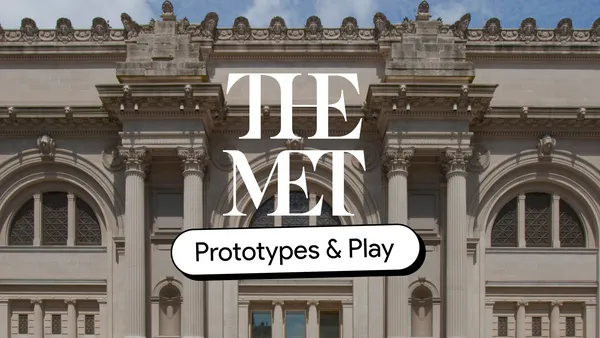
生成AIでメトロポリタン美術館を新たな方法で探索Explore The Met in new ways with generative AI
匿名の公開いいねです。記事の保存・お気に入りではなく、Featured、Top 3、重要度、掲載順位には影響しません。仕組みとプライバシーAnonymous public likes are reactions, not saved articles or bookmarks. They do not affect Featured, Top 3, importance, or listing order.How it works and privacy
- Googleはメトロポリタン美術館と連携し、生成AIを活用して膨大なコレクションをより直感的に探索できる新機能を導入した。
- 文化施設へのAI応用が進む中、アート鑑賞体験の民主化に向けた重要な取り組みとして注目される。
Google partnered with The Metropolitan Museum of Art to introduce generative AI-powered tools that help visitors discover and explore its vast collection in more intuitive ways, marking a meaningful step in applying AI to cultural heritage experiences.
本ページの本文と要約は AI による自動生成です。日本語版と英語版は言語ごとに独立して生成されるため、表現や詳しさが異なる場合があります。正確性は元記事 (blog.google) をご確認ください。The body and summaries are AI-generated independently for each language, so wording and detail may differ. Verify accuracy at the original source (blog.google).
要約と収集メタデータに基づく AI 解説。元記事全文の転載・翻訳ではありません。AI explainer based on the summaries and collected metadata, not a copy or translation of the full source article.
Googleは、メトロポリタン美術館(The Met)と連携し、生成AIを用いて膨大な所蔵作品をより直感的に探索できる新機能を導入した。文化遺産のデジタル公開にAIを組み込む動きの一例であり、専門知識を持たない人でもアートに触れやすくする試みとして注目される。
今回の取り組みは、Googleが長年運営してきた「Google Arts & Culture」プラットフォーム上で展開されるとみられる。同プラットフォームは、世界各地の美術館や博物館と協力し、高解像度の作品画像やオンライン展示を無料で提供してきた実績を持つ。The Metは約150万点ともいわれる幅広いコレクションを抱えており、従来のキーワード検索やカテゴリー分類だけでは、来館者や利用者が目的の作品や関心に合う作品にたどり着きにくいという課題があった。
生成AIの活用により、利用者は自然言語による問いかけや、色・雰囲気・テーマといった曖昧な手がかりからでも作品を見つけやすくなると期待される。例えば「静けさを感じる風景画」といった抽象的な要望から関連作品を提示したり、時代や地域を横断して作品同士のつながりを示したりする機能が想定される。作品の背景や技法をわかりやすく解説する対話的な体験も、こうしたAIの得意分野とされる。
背景には、文化施設におけるAI応用の広がりがある。Googleはこれまでにも、機械学習を使って類似作品を並べる「Art Selfie」や色調で作品を探せる機能などを提供してきた。他社でもMicrosoftやOpenAIなどがデジタルアーカイブや教育分野でのAI連携を進めており、大規模言語モデルや画像認識技術を文化領域に応用する流れは加速している。美術館側にとっても、来館前後の関与を高め、収蔵品の認知を広げる手段として期待が寄せられている。
一方で、生成AIによる作品解説には、事実誤認や文脈の欠落といったリスクも指摘されている。歴史的・文化的に慎重な扱いを要する作品も多く、AIの出力をどこまで信頼できるかは今後の検証課題となる可能性がある。学芸員による監修や出典の明示といった仕組みが、こうした取り組みの信頼性を左右するとみられる。アート鑑賞体験の民主化に向けた一歩として、実際の利用実態や利用者の反応が注目される。
Google has partnered with The Metropolitan Museum of Art to introduce a set of generative AI features intended to help people explore one of the world's largest and most varied art collections. Announced through Google Arts & Culture, the collaboration frames AI as a means of lowering the barriers to art discovery, an area where large institutions have long struggled to engage audiences beyond scholars and committed enthusiasts. For a museum whose holdings vastly exceed what can be shown at any one time, the effort is positioned as a way to make more of the collection visible and understandable.
The central idea appears to be making The Met's holdings approachable through natural, intuitive interaction rather than rigid keyword search or linear catalog browsing. The museum stewards more than 1.5 million objects spanning roughly 5,000 years, from ancient artifacts to modern and contemporary works, and only a small share is on physical display at any given moment. Generative AI is being applied to help visitors ask open-ended questions, surface unexpected connections, and follow themes across cultures and periods in ways that conventional database interfaces make difficult. The result is likely a more conversational experience, where a curious prompt can lead to related works, historical context, or comparisons that a user might not have known to search for.
This builds on a long relationship between Google and the cultural sector. Google Arts & Culture launched in 2011 as the Google Art Project, digitizing gallery interiors and high-resolution images of individual works, and it has since grown into a platform hosting collections from thousands of institutions worldwide. The Met has been an early and prominent participant, in part because of its Open Access program, which since 2017 has released images of hundreds of thousands of public-domain works under a Creative Commons Zero designation. That openness matters here: a large, well-documented, and freely usable image set provides the kind of structured material that AI systems can draw on to generate reliable descriptions and links between objects.
The new tools also reflect Google's broader push to embed its generative models, including the Gemini family, across consumer-facing products. Over the past few years the company has folded AI into search, translation, and creative applications, and cultural platforms offer a relatively low-risk venue to demonstrate the technology's usefulness. Earlier Arts & Culture experiments hinted at this direction, including Art Selfie, which matched users' photos to portraits, and Art Palette, which let people search works by color. The generative features appear to extend that experimental lineage toward richer, language-based interaction rather than single-purpose novelties.
The initiative sits within a wider industry trend of applying AI to cultural heritage. Museums and archives around the world have begun testing machine learning for tasks such as cataloging, restoration analysis, and audience engagement, while other technology firms have pursued similar partnerships. Proponents argue that these tools can help democratize access, allowing someone without specialist training to explore complex collections meaningfully. That aligns with the stated framing of this collaboration as a step toward broadening who feels able to engage with art.
At the same time, the approach invites familiar caveats. Generative systems can produce plausible-sounding but inaccurate statements, a concern that is heightened in a scholarly context where provenance, attribution, and historical detail carry weight. Neither Google nor The Met has suggested the technology replaces curatorial expertise, and the tools are best understood as an additional entry point rather than an authoritative source. How well the features handle nuance, contested histories, and the limits of the underlying data will likely determine their long-term value.
For now, the partnership is a notable example of a major museum embracing generative AI as part of its public offering rather than treating it cautiously from a distance. Whether it meaningfully changes how people encounter art will depend on adoption and on the accuracy of what the systems surface. As one of the more visible collaborations of its kind, however, it offers a useful test case for how cultural institutions and technology companies might work together as these tools mature.





