Gemini SparkがChromeと統合、Webブラウジング機能を追加Gemini Spark now integrates with Chrome
匿名の公開いいねです。記事の保存・お気に入りではなく、Featured、Top 3、重要度、掲載順位には影響しません。仕組みとプライバシーAnonymous public likes are reactions, not saved articles or bookmarks. They do not affect Featured, Top 3, importance, or listing order.How it works and privacy
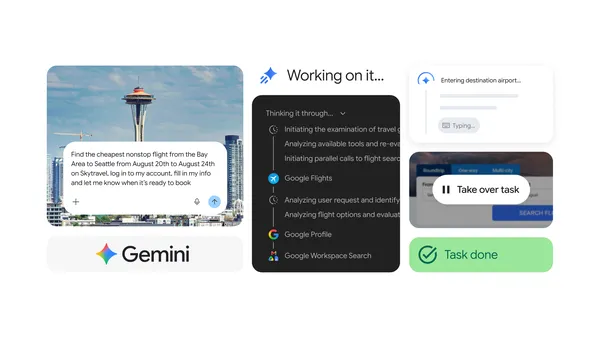
- GeminiのSparkモデルがChromeブラウザと連携し、Web閲覧中にAI支援を直接利用できるようになった。
- これによりユーザーの日常的なブラウジング体験が大きく向上する。
Gemini Spark gains native Chrome integration, enabling AI-powered web browsing assistance directly within the browser and expanding its utility for everyday users.
本ページの本文と要約は AI による自動生成です。日本語版と英語版は言語ごとに独立して生成されるため、表現や詳しさが異なる場合があります。正確性は元記事 (blog.google) をご確認ください。The body and summaries are AI-generated independently for each language, so wording and detail may differ. Verify accuracy at the original source (blog.google).
要約と収集メタデータに基づく AI 解説。元記事全文の転載・翻訳ではありません。AI explainer based on the summaries and collected metadata, not a copy or translation of the full source article.
Googleは、生成AI「Gemini」のSparkモデルをWebブラウザ「Chrome」と統合し、閲覧中にAIによる支援を直接受けられる機能を追加したと明らかにした。ブラウザを離れて別のアプリやタブに切り替えることなくAIを呼び出せるようになり、日常的なブラウジング体験の向上につながると見られる。
今回の統合により、ユーザーはChrome上での閲覧の流れを保ったまま、AIの支援を利用できるようになるとされる。従来、多くの利用者はWeb上の情報整理や調べ物の際に、別途AIサービスのページを開いて内容を貼り付け、質問するといった手間をかけていた。ブラウザにAIが組み込まれることで、こうした往復の作業が減り、必要な情報へたどり着きやすくなる可能性がある。
ブラウザとAIの融合は、業界全体で進む潮流でもある。MicrosoftはEdgeにAIアシスタント「Copilot」を組み込み、閲覧支援や質問応答を提供してきた。AIを前面に押し出す新興ブラウザやスタートアップも登場しており、各社が「AIを起点とするWeb体験」の主導権を競っている。世界的に高いシェアを持つとされるChromeにGeminiが深く組み込まれることは、この競争の中で相応の意味を持つと考えられる。
Geminiは、Googleが開発する大規模言語モデルを基盤とするAIアシスタントで、テキスト生成や要約、質問応答など幅広い用途に対応している。SparkはそのGeminiに関する一連の更新の中で示されたもので、今回のChrome連携はその一環に位置づけられる。具体的な提供範囲や対応環境、利用条件などの詳細については、今後の公式情報での確認が望ましい。
ブラウザは多くの人が日々最初に触れるインターネットの入り口であり、そこにAIが溶け込むことの影響は小さくない。検索や情報収集のあり方が緩やかに変わっていく可能性があり、利用者にとっての使い勝手だけでなく、Web上のトラフィックや情報流通の構造にも中長期的な変化をもたらす契機となるか、今後の動向が注目される。
Google appears to be tightening the connection between its Gemini AI models and its Chrome web browser, with the latest Gemini Spark update introducing native web browsing capabilities directly inside the browser. The move matters because it places AI assistance at one of the most common points of everyday computing activity, potentially changing how users search, read, and act on information without switching between separate apps or tabs.
According to the update overview, Gemini Spark now integrates with Chrome to offer AI-powered assistance while people browse. In practice, this suggests that users can call on the model to help interpret, summarize, or interact with web content in the moment, rather than copying text into a separate chatbot window. Google frames the change as an expansion of Gemini Spark's utility for everyday users, positioning the browser itself as a surface where the assistant is always within reach. The company has not, in this overview, detailed every function, so the precise scope of what the browsing feature can and cannot do is likely to become clearer as the rollout proceeds.
Gemini is Google's family of generative AI models, and "Spark" refers to a specific configuration within that lineup. Integrating such a model with Chrome is a logical step for Google, which controls both the dominant browser by market share and one of the leading AI research operations. By connecting the two, Google can reduce friction for users who already spend much of their time inside Chrome, while also deepening the strategic role of Gemini across its product ecosystem. This mirrors the company's broader pattern of embedding Gemini into Search, Workspace apps such as Gmail and Docs, and the Android operating system.
The browser has become a notable battleground for AI assistants. Microsoft has built its Copilot assistant into the Edge browser, drawing on OpenAI's models to summarize pages and answer questions about on-screen content. Perplexity has released its own AI-centric browser, Comet, and other startups have experimented with agentic browsing tools that can navigate sites and complete tasks on a user's behalf. Against that backdrop, Google's decision to bring Gemini Spark into Chrome can be read as a defensive and competitive measure, ensuring that its own assistant is the default option for the large base of Chrome users rather than ceding that ground to rivals.
For readers less familiar with the underlying concepts, browser-based AI assistance generally works by giving the model access to the content of the current page or session, allowing it to respond to questions grounded in what the user is viewing. This is distinct from a standalone chatbot, which typically relies only on its training data and any text a user manually provides. When an assistant can read live web pages, it can offer more context-specific help, though it also raises familiar questions about privacy, data handling, and how much page content is transmitted for processing. Google has historically addressed such concerns through settings and disclosures, and similar controls are likely to accompany this feature, although the current overview does not spell out those details.
The practical benefit that Google emphasizes is convenience. Rather than treating web browsing and AI queries as separate steps, the integration aims to fold them together, so that assistance is available at the moment a question arises. Whether this materially changes user behavior will depend on the reliability and accuracy of the responses, as generative models remain prone to errors and occasional fabricated information. As with other AI features, users are generally advised to verify important outputs rather than accept them at face value.
It is worth noting that the announcement is presented as part of an ongoing series of Gemini Spark updates rather than a wholly new product, suggesting an incremental approach in which capabilities are added over time. Google has not, in this overview, disclosed specifics such as regional availability, pricing tiers, or which versions of Chrome are required, and those factors will help determine how broadly the feature reaches everyday users. For now, the headline is the closer coupling of Gemini Spark and Chrome, and the arrival of browsing assistance as a native part of that experience.
ポコとTECHガイドPoko & TECH Guide
ポコと当サイトのTECHガイドが、記事の要約と収集した情報から読みどころを語るAI生成の対話です。Poko and TECH Dashboard's own TECH Guide discuss the article's highlights in an AI-generated conversation based on its summary and collected source details.
- ポコPokoChromeと統合って、それって何? ブラウザを見ながらGemini Sparkを使えるの?What does Chrome integration mean? Can I use Gemini Spark while browsing?
- TECHガイドTECH Guide簡単に言うとじゃな、記事によればWeb閲覧中にGemini SparkのAI支援をブラウザ内で直接使えるようになったんじゃよ。Simply put, the article says Gemini Spark can now provide AI assistance directly within Chrome while you browse.
- ポコPokoへえ、すごい! それって普段のWeb閲覧で何が嬉しいの?Oh, nice! What makes that useful for everyday web browsing?
- TECHガイドTECH Guide記事では、ブラウザから離れずAIの支援を受けられ、日常的なブラウジング体験が大きく向上すると説明されておるよ。According to the article, getting AI help without leaving the browser can significantly improve everyday browsing.
- ポコPokoつまり、Gemini SparkがChromeの中でWeb閲覧を手伝ってくれて、普段使いしやすくなったんだね。So Gemini Spark can help with web browsing inside Chrome, making it more useful day to day.
- TECHガイドTECH Guideその理解でよいぞ。今後は実際の閲覧でどう役立つかが見どころじゃが、今回の情報では具体的な支援内容までは示されておらん。Exactly. The key question is how it helps in real browsing, though the information provided doesn’t detail the specific assistance yet.