シークレットスキャンの信頼性向上:大規模な誤検知削減への取り組みMaking secret scanning more trustworthy: Reducing false positives at scale
匿名の公開いいねです。記事の保存・お気に入りではなく、Featured、Top 3、重要度、掲載順位には影響しません。仕組みとプライバシーAnonymous public likes are reactions, not saved articles or bookmarks. They do not affect Featured, Top 3, importance, or listing order.How it works and privacy
- GitHubはシークレットスキャンの検証ステップにコンテキスト認識型のLLM推論を導入し、誤検知を大規模に削減した。
- これによりアラートのノイズが減り、セキュリティ通知の信頼性と実用性が向上している。
GitHub added context-aware LLM reasoning to its secret scanning verification step to cut false positives at scale, reducing noise and making security alerts more trustworthy and actionable.
本ページの本文と要約は AI による自動生成です。日本語版と英語版は言語ごとに独立して生成されるため、表現や詳しさが異なる場合があります。正確性は元記事 (github.blog) をご確認ください。The body and summaries are AI-generated independently for each language, so wording and detail may differ. Verify accuracy at the original source (github.blog).
要約と収集メタデータに基づく AI 解説。元記事全文の転載・翻訳ではありません。AI explainer based on the summaries and collected metadata, not a copy or translation of the full source article.
GitHubは、コードに含まれる認証情報の漏えいを検出する「シークレットスキャン」の検証プロセスに、文脈を理解するLLM(大規模言語モデル)を組み込み、誤検知を大規模に削減したと明らかにした。アラートのノイズが減ることで、開発者やセキュリティ担当者がより信頼して対処できるようになるという。
シークレットスキャンは、GitHub Advanced Securityの中核機能の一つで、APIキーやアクセストークン、パスワードなどがリポジトリに誤ってコミットされていないかを継続的に監視する。検出は主に、各サービスのトークン形式に合わせた正規表現パターンによって行われる。しかし、テスト用のダミー値やドキュメント中のサンプル、プレースホルダーなど、本物の認証情報に似た文字列も拾ってしまうため、一定の誤検知が避けられなかった。
誤検知が多いと、担当者が大量のアラートに忙殺される「アラート疲れ」を招き、結果として本当に危険な漏えいを見落とすリスクが高まる。GitHubはこれまでも、検出したトークンを発行元サービスに照会して有効性を確認する「検証チェック」などで精度を高めてきたが、すべての種類の秘密情報がこの方式に対応できるわけではない。
今回の取り組みでは、検出した文字列の周辺コードや変数名、ファイルの性質といったコンテキストをLLMに与え、それが実際に有効な秘密情報である可能性が高いかどうかを推論させる。パターンマッチングだけでは判別が難しかったケースでも、文脈を踏まえた判断を加えることで、誤検知を大幅に減らせるとしている。
秘密情報の検出はセキュリティ業界全体で関心が高く、TruffleHogやGitleaks、GitGuardianといったツールやサービスが類似の領域で競合している。近年はこうしたスキャン精度の向上やリスク評価の自動化にLLMを活用する動きが、各社で広がりつつある。
GitHubにとって今回の改善は、シークレットスキャンを単なる検出ツールから、より実用的で信頼できるセキュリティ基盤へと近づけるものと位置づけられる。一方でLLMを用いた判定には推論コストや誤った除外のリスクも伴うため、運用上はパターンマッチングや検証チェックと組み合わせ、多層的に精度を担保していく形になると見られる。
GitHub has added context-aware large language model reasoning to the verification stage of its secret scanning service, a change the company says reduces false positives at scale and makes security alerts more trustworthy and actionable. The update matters because alert fatigue is one of the most persistent problems in application security: when a tool flags too many strings that turn out to be harmless, developers and security teams begin to ignore its output, and genuine leaked credentials can slip through unnoticed.
Secret scanning works by inspecting code, commit history, issues, and other repository content for patterns that resemble credentials such as API keys, access tokens, private keys, and connection strings. Much of this detection has historically relied on regular expressions and known token formats supplied by GitHub and its partner issuers. That approach catches a wide range of real secrets, but pattern matching alone cannot always tell the difference between a live credential and a string that merely looks like one. Example values in documentation, placeholder tokens in test fixtures, randomly generated identifiers, and hashes can all trigger alerts that waste reviewer time.
The new step inserts an LLM into the verification pipeline so the system can reason about the surrounding context of a candidate secret rather than judging the string in isolation. According to GitHub, this context-aware analysis helps determine whether a detected pattern is plausibly a real, active credential or a benign lookalike. Reading nearby code, variable names, file paths, and usage patterns gives the model signals that a static regular expression cannot capture, which appears to be the main mechanism behind the reduction in noise.
This builds on existing capabilities rather than replacing them. GitHub already offers validity checks for many supported secret types, in which a detected token is checked against the issuing provider to see whether it is still active. That partner-backed validation is highly reliable when available, but it only covers credentials from participating services. The LLM-based reasoning is likely most useful for the long tail of secret types and ambiguous cases where direct validation is not possible, complementing the deterministic checks already in place.
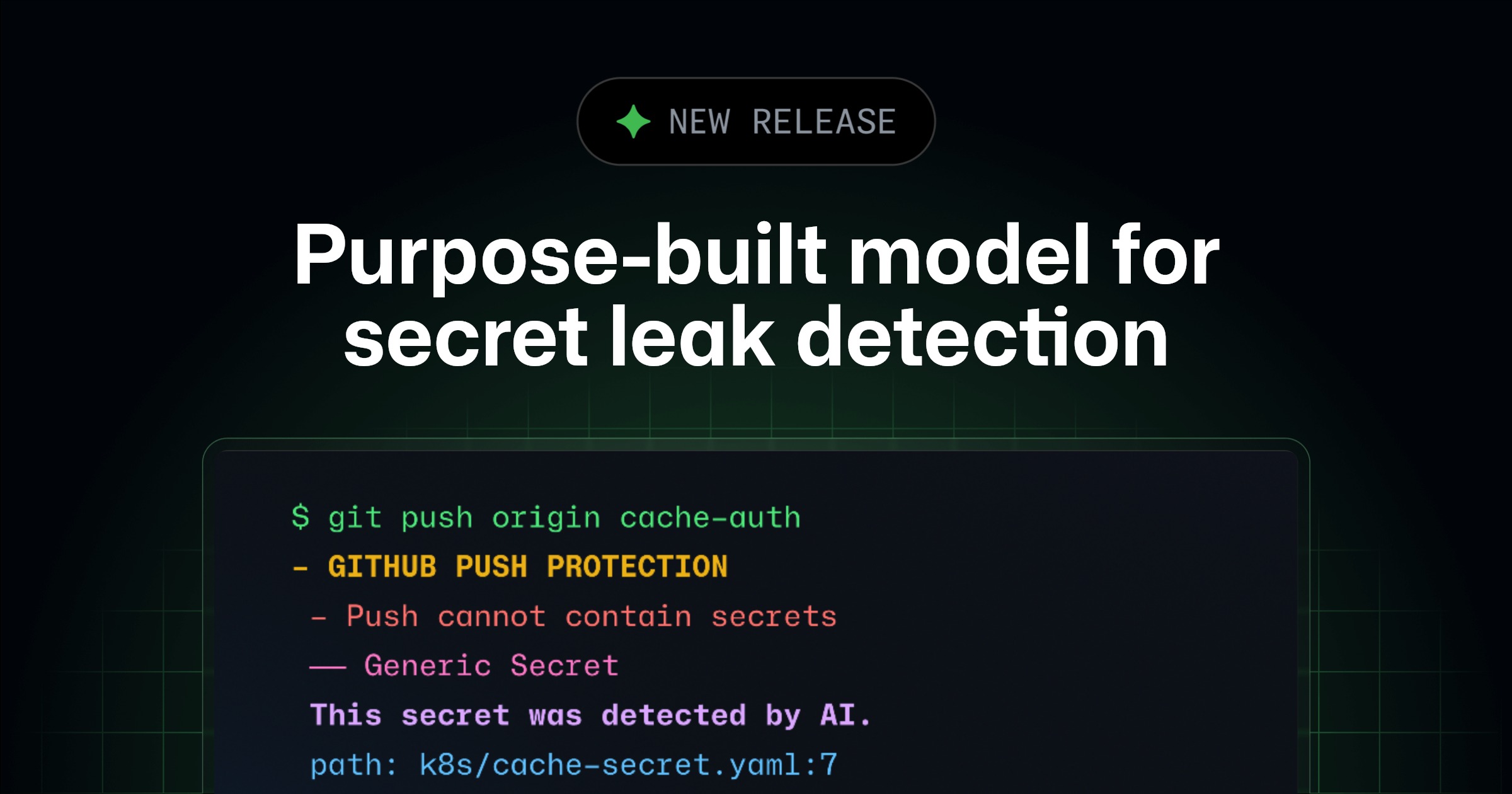
Reducing false positives also has practical implications for push protection, a related feature that blocks commits containing detected secrets before they reach a remote branch. When detection is more precise, push protection is less likely to interrupt developers with spurious blocks, which tends to improve adoption and reduce the temptation to bypass the control. More accurate alerts similarly lower the triage burden on security teams who must review and dismiss findings, freeing attention for credentials that genuinely need rotation.
Secret scanning and push protection are part of GitHub Advanced Security, the paid add-on that also includes code scanning powered by CodeQL and dependency analysis through Dependabot. GitHub has been gradually expanding secret protection availability and repackaging some of these capabilities, and the broader direction is toward catching exposed credentials earlier in the development lifecycle. The company frames this LLM enhancement as part of that ongoing effort to make findings more dependable.
The move also reflects a wider industry trend of applying machine learning and language models to security tooling. Competing products from vendors such as GitGuardian and open-source scanners like TruffleHog have long grappled with the same precision-versus-recall trade-off, and several have introduced their own heuristics, entropy analysis, and validation steps to suppress noise. Using an LLM specifically to weigh contextual evidence is a notable application of the technology to a problem where accuracy directly affects whether a tool is trusted.
As with any LLM-based system, there are caveats worth keeping in mind. Model-driven classification is probabilistic, so it can introduce its own errors, and organizations handling sensitive code will want clarity on how content is processed during analysis. GitHub presents the feature as an improvement to verification rather than a guarantee, and the reported gains are described in terms of reducing noise at scale rather than eliminating false positives entirely. Teams evaluating the change should still treat any confirmed alert as a prompt to revoke and rotate the affected credential, since a real leaked secret remains a risk regardless of how it was detected.
ポコとTECHガイドPoko & TECH Guide
ポコと当サイトのTECHガイドが、記事の要約と収集した情報から読みどころを語るAI生成の対話です。Poko and TECH Dashboard's own TECH Guide discuss the article's highlights in an AI-generated conversation based on its summary and collected source details.
- ポコPoko「コンテキスト認識型のLLM推論」って何?シークレットスキャンの確認で、何を変えたの?What is “context-aware LLM reasoning”? What changed in the secret scanning verification step?
- TECHガイドTECH Guide簡単に言うとじゃな、前後の文脈も見て、検出結果が警告すべきものか判断する仕組みじゃ。記事によれば、GitHubが検証ステップに加えたんじゃよ。Simply put, it considers the surrounding context to judge whether a detection warrants an alert. According to the article, GitHub added this to the verification step.
- ポコPokoそれで誤検知が減ると、何がそんなに嬉しいの?アラートが少なくなるだけ?So what’s the real benefit of fewer false positives? Is it just about having fewer alerts?
- TECHガイドTECH Guide記事によれば、不要な通知のノイズが減り、アラートを信頼しやすく、対応にもつなげやすくなるんじゃ。数だけでなく実用性も上がるわけじゃな。According to the article, less noise makes alerts more trustworthy and easier to act on. So it improves usefulness, not just the alert count.
- ポコPokoなるほど!LLMで文脈を見て、間違った警告を大規模に減らし、見るべき通知を分かりやすくしたんだね。Got it! The LLM uses context to cut false alerts at scale, making the notifications that matter easier to spot.
- TECHガイドTECH Guideその理解でよいぞ。記事で見るべきはLLM導入そのものより、誤検知の削減が通知の信頼性と実用性につながった点じゃよ。Exactly. As the article frames it, the key point isn’t merely adding an LLM, but using it to reduce false positives and make alerts more trustworthy and actionable.