Defconの新バッジは中身が見える「セキュリティキー」Defcon's new badge is a security key you can see inside
匿名の公開いいねです。記事の保存・お気に入りではなく、Featured、Top 3、重要度、掲載順位には影響しません。仕組みとプライバシーAnonymous public likes are reactions, not saved articles or bookmarks. They do not affect Featured, Top 3, importance, or listing order.How it works and privacy
- Defconが、取り外し可能なチップでハッカーが内部を検査できるセキュリティキー型バッジを発表。
- イベント後も実用的なセキュリティキーとして使い続けられる点が注目される。
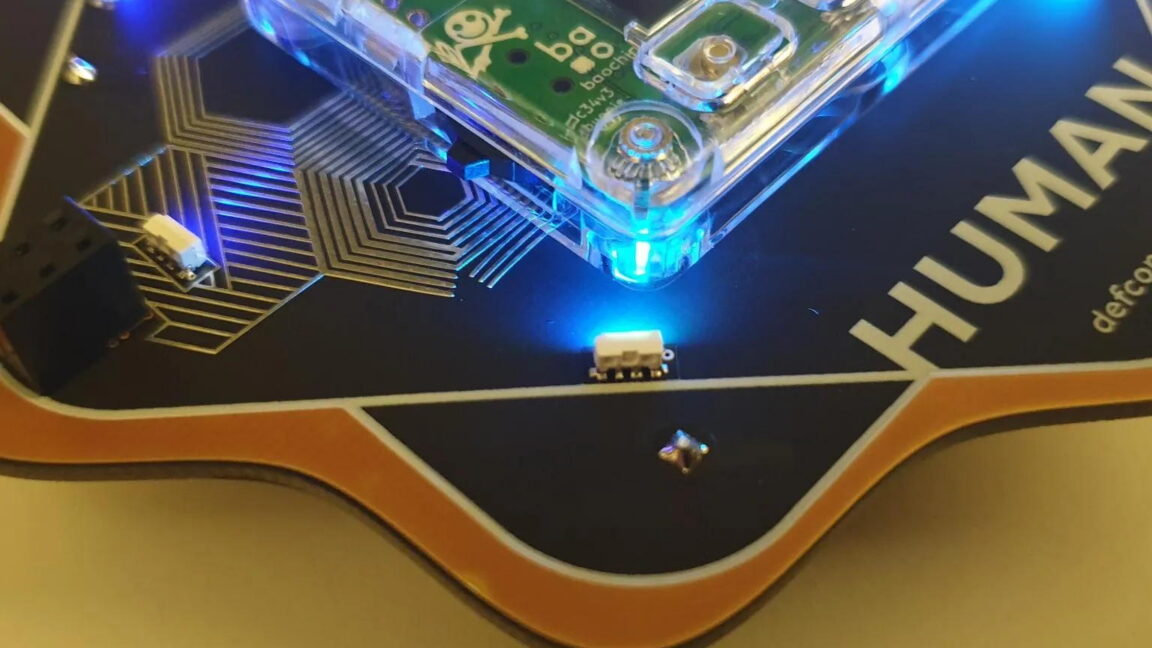
Defcon's 2026 badge doubles as a functional security key with a removable chip, letting attendees inspect its internals and continue using it as a real authentication device after the conference.
本ページの本文と要約は AI による自動生成です。日本語版と英語版は言語ごとに独立して生成されるため、表現や詳しさが異なる場合があります。正確性は元記事 (arstechnica.com) をご確認ください。The body and summaries are AI-generated independently for each language, so wording and detail may differ. Verify accuracy at the original source (arstechnica.com).
要約と収集メタデータに基づく AI 解説。元記事全文の転載・翻訳ではありません。AI explainer based on the summaries and collected metadata, not a copy or translation of the full source article.
米国で開催されるハッカーの祭典Defconが、2026年の公式バッジを「セキュリティキー」型として発表した。取り外し可能なチップによって参加者が内部を検査でき、さらにイベント終了後も実用的な認証デバイスとして使い続けられる点が特徴だ。
Defconのバッジは、単なる入場証にとどまらず、毎年凝った電子回路やパズルを組み込んだ「電子バッジ」の文化で知られてきた。今回のバッジはその延長線上にありながら、実際に使えるセキュリティキーとしての機能を前面に押し出している。抜粋によれば、チップは取り外し可能で、ハッカーが自らの手でバッジの内部構造を調べられるという。
セキュリティキーは、FIDOと呼ばれる業界標準に基づく物理的な認証デバイスを指すことが多い。パスワードの代わり、あるいはパスワードに加える二要素認証の手段として、Webサービスやアカウントへのログイン時に本人確認を行う。フィッシングに強いとされ、YubicoのYubiKeyやGoogleのTitanなどが代表的な製品として普及してきた。タグにFIDOが含まれることから、今回のバッジも同様の標準に対応している可能性がある。
ハードウェアの中身を「見える化」する設計は、Defconの参加者層と親和性が高いと見られる。セキュリティ研究者やハッカーにとって、認証デバイスの内部を検査できることは、その信頼性を自ら確かめる機会になり得る。ブラックボックス化しがちなセキュリティ製品に対し、透明性を重視する姿勢とも受け取れる。
イベント限定のノベルティが会期後に用途を失いがちな中で、日常的に使える認証デバイスとして手元に残る点も実用面での利点だろう。ただし、対応するサービスや具体的な仕様、配布の詳細などは、現時点で公開された情報の範囲を超えている。実際の使い勝手やセキュリティキーとしての完成度については、今後の追加情報を待つ必要がある。
Defcon, the long-running hacker gathering held each summer in Las Vegas, has unveiled a 2026 conference badge designed to function as a real hardware security key rather than a disposable novelty. The design matters because it addresses two things the security community cares about deeply: hardware that outlives the event it was made for, and transparency into what that hardware actually does.
According to the description, the badge includes a removable chip that attendees can detach to inspect the internals of their badge. Rather than becoming a shelved souvenir after the conference ends, the device is meant to keep working as a functional authentication token, an actual security key that people can register with online accounts and continue to use in daily life.
Hardware security keys are physical devices used for phishing-resistant multi-factor authentication. Under standards developed by the FIDO Alliance, such as FIDO2 and the related WebAuthn specification, a key stores cryptographic secrets and proves a user's identity to a website or service without transmitting a reusable password. Commercial examples include Yubico's YubiKey line and Google's Titan keys. Making a conference badge that speaks the same protocols means, at least in principle, that attendees leave with a working authenticator instead of a keepsake.
The removable-chip approach is notable for an audience predisposed to distrust closed hardware. Security keys are, by design, small black boxes that users are asked to trust with sensitive credentials, and supply-chain integrity is a recurring concern at events like Defcon. Letting owners physically remove and examine the component that handles authentication appears intended to invite exactly the kind of scrutiny this crowd enjoys, from reverse engineering and teardowns to independent verification of what the silicon is doing.
The badge also fits a well-established Defcon tradition often called "badgelife." For years, official and unofficial badges at the conference have been elaborate electronic artifacts, featuring circuit boards, microcontrollers, LEDs, puzzles, and games, and they have spawned a subculture of hardware hackers who design, trade, and modify them. Turning that creative energy toward a device with a practical post-conference use is a logical extension of that culture, giving the badge utility beyond the challenge and collectible value it normally carries.
The move arrives as the broader industry pushes toward passwordless authentication. Major platform vendors, including Apple, Google, and Microsoft, have promoted passkeys, a consumer-friendly application of the same FIDO2 and WebAuthn foundations, as a replacement for passwords across phones, browsers, and operating systems. Standalone hardware keys remain a stronger option for users who want credentials tied to a dedicated physical device rather than synced through a cloud account, and they are widely used by journalists, activists, and enterprise security teams.
Details about the badge's exact specifications, the standards it supports, and how many will be produced were not fully described in the initial announcement. As with prior Defcon hardware, the final product's capabilities and any limitations will likely become clearer once attendees receive the badges and begin dismantling and documenting them, as the community reliably does. It is also worth noting that a device intended as a real security key would need to reliably protect its stored secrets to be trusted for sensitive accounts, and independent review is the usual way such claims get tested.
Still, the concept captures something specific about Defcon's ethos: hardware you are encouraged to open, inspect, and question rather than take on faith. If the badge works as described, it offers attendees a rare combination, a conference collectible that is also a genuinely useful tool, while inviting the community to verify those claims for itself long after the event in Las Vegas has ended.
For anyone who follows the badgelife scene, the more interesting test may come in the weeks after the conference, when teardown photos, firmware analysis, and compatibility notes typically circulate online. That collective examination tends to determine whether an ambitious badge is remembered as a clever gimmick or as a piece of hardware worth keeping on a keychain.
ポコとTECHガイドPoko & TECH Guide
ポコと当サイトのTECHガイドが、記事の要約と収集した情報から読みどころを語るAI生成の対話です。Poko and TECH Dashboard's own TECH Guide discuss the article's highlights in an AI-generated conversation based on its summary and collected source details.
- ポコPoko取り外せるチップで「内部を検査できる」って、つまりどういうこと?A removable chip lets people “inspect the internals”? What does that actually mean?
- TECHガイドTECH Guide記事によれば、2026年のバッジはチップを外して中身を調べられる設計なんじゃ。しかも本人確認に使うセキュリティキーでもあるぞ。According to the article, the 2026 badge lets attendees remove its chip and examine the internals. It also works as a security key for authentication.
- ポコPokoへえ、見て学べるだけじゃなくて、イベント後も使えるの?それって何がうれしいの?Wow, so it’s not just for examining—you can use it after the event too? Why is that useful?
- TECHガイドTECH Guideそうじゃ。記事では、終了後も実用的なセキュリティキーとして使い続けられる点が注目されておる。イベント限りではないんじゃな。Exactly. The article highlights that it remains a practical security key after the conference, rather than becoming useless once the event ends.
- ポコPokoつまり、中身を調べられる教材みたいな面と、実際の認証機器という面を両方持つバッジなんだね!So it’s both something attendees can examine and a real authentication device. That’s pretty neat!
- TECHガイドTECH Guideその理解でよいぞ。記事から分かるのは発表された仕組みまでで、実際にどんな検査結果が出るかは今後の見どころじゃな。That’s right. The article describes the announced design, but not what attendees may discover when inspecting it—that will be the interesting part to watch.