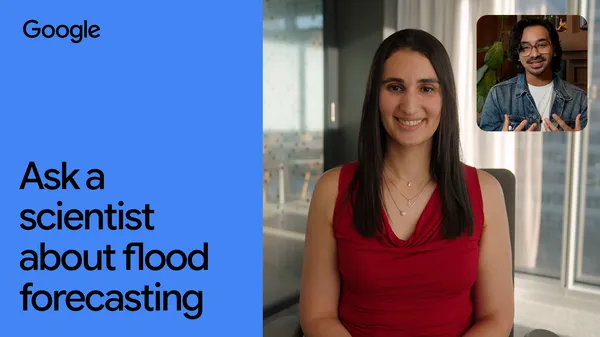
科学者に聞く:AIは洪水をどのように予測できるか?Ask a Scientist: How can researchers use AI to predict a flood?
匿名の公開いいねです。記事の保存・お気に入りではなく、Featured、Top 3、重要度、掲載順位には影響しません。仕組みとプライバシーAnonymous public likes are reactions, not saved articles or bookmarks. They do not affect Featured, Top 3, importance, or listing order.How it works and privacy
GoogleのFlood HubやGroundsourceといったAI技術が洪水予測に活用されており、世界中の人々の早期警戒や避難支援に貢献している。
A Google researcher details how AI-powered tools like Flood Hub and Groundsource enable earlier, more accurate flood predictions to protect communities worldwide.
本ページの本文と要約は AI による自動生成です。日本語版と英語版は言語ごとに独立して生成されるため、表現や詳しさが異なる場合があります。正確性は元記事 (blog.google) をご確認ください。The body and summaries are AI-generated independently for each language, so wording and detail may differ. Verify accuracy at the original source (blog.google).
要約と収集メタデータに基づく AI 解説。元記事全文の転載・翻訳ではありません。AI explainer based on the summaries and collected metadata, not a copy or translation of the full source article.
洪水は世界で最も被害の大きい自然災害の一つとされ、その発生を事前に予測できれば多くの命を守れる可能性がある。Googleの研究者が、同社のAI技術「Flood Hub」や「Groundsource」がどのように洪水を予測し、世界中の人々を支援できるのかを説明した。
洪水予測の難しさは、河川の水位や降雨、地形といった多様な要素が複雑に絡み合う点にある。従来の予測は観測データや物理モデルに頼ってきたが、観測網が十分に整っていない地域では精度を確保しにくかった。ここで、過去のデータからパターンを学習するAIが、より広い範囲でより早い予測を可能にすると期待されている。
GoogleのFlood Hubは、こうしたAI技術を活用して河川の氾濫リスクを予測し、情報を提供する取り組みとされる。Groundsourceと組み合わせることで、地域ごとの状況に即したより精緻な予測につなげる狙いがあると見られる。これらの技術は、早期警戒や避難の判断を支える情報源として活用されている。
背景には、気候変動によって極端な気象現象が増えているという認識がある。豪雨や河川氾濫の頻度・規模が変化するなか、迅速で正確な予測の重要性はこれまで以上に高まっている。特に、防災インフラや観測体制が限られる地域では、AIによる予測が住民の安全確保に寄与する可能性がある。
一方で、AIによる予測はあくまで確率的な情報であり、実際の避難行動には現地の判断や公的機関の警報との連携が欠かせない。予測の精度は入力データの質や地域特性にも左右されるため、継続的な検証と改善が求められる。
洪水予測におけるAIの活用は、Googleに限らず研究機関や各国の気象当局でも進められている分野である。今回の研究者による解説は、こうした技術がどのように機能し、世界中のコミュニティを守る助けとなり得るのかを一般に伝える試みと言える。
Flooding ranks among the most frequent and destructive natural hazards, affecting hundreds of millions of people each year and causing significant economic damage. In a recent interview, a Google researcher explained how artificial intelligence tools such as Flood Hub and Groundsource are being used to forecast floods earlier and more accurately, with the goal of helping communities around the world prepare and respond.
Flood Hub is Google's public-facing flood forecasting platform, which grew out of a research effort the company began several years ago. The system applies machine learning to a combination of data sources, including historical flood records, real-time river level measurements, rainfall data, and satellite imagery, to predict when and where rivers are likely to overflow. According to Google, the platform can issue riverine flood forecasts up to seven days in advance in many locations, giving residents, emergency services, and aid organizations more lead time to act.
One of the central challenges the researcher describes is data scarcity. Reliable flood prediction has traditionally depended on dense networks of river gauges and long records of local hydrological data, infrastructure that many vulnerable regions simply do not have. A key advantage of the AI approach is its ability to make forecasts for so-called ungauged or poorly monitored basins by learning patterns from areas where more data is available and transferring that knowledge. This is particularly relevant in parts of Africa, Asia, and Latin America, where flooding is common but monitoring resources are limited.
Groundsource appears to complement this work by focusing on ground-level information. As described, it is aimed at gathering local, on-the-ground observations that can validate model outputs and improve their reliability. Combining large-scale model predictions with localized data is a recurring theme in flood science, because a forecast is only useful if it reflects real conditions on the ground and reaches the people who need it in a form they can act on.
The broader context is a rapid expansion of AI in weather and climate applications. Google DeepMind, for example, has published research on machine learning weather models such as GraphCast and GenCast, which aim to produce forecasts faster and, in some cases, more accurately than traditional physics-based methods. Established institutions like the European Centre for Medium-Range Weather Forecasts and national meteorological agencies have also been experimenting with AI-driven models. Flood forecasting sits downstream of weather prediction, since accurate rainfall estimates are a prerequisite for anticipating how rivers will respond.
It is important to note the limits of these systems. AI models are only as good as the data they are trained on, and flood dynamics can be influenced by local factors such as dams, urban drainage, land use changes, and rapidly shifting weather that are difficult to capture. Forecasts are probabilistic rather than certain, and effective early warning still depends on communication channels, local authorities, and community preparedness. The researcher frames the technology as a tool to extend and improve existing efforts rather than a replacement for on-the-ground expertise.
Access and reach are also part of the story. Google has worked to make Flood Hub forecasts freely available and to distribute warnings through channels such as Search, Maps, and Android notifications in supported regions, as well as through partnerships with humanitarian organizations. The stated aim is to close the gap between a technically accurate forecast and an alert that actually reaches an at-risk household in time.
As climate change is expected to intensify extreme rainfall and flooding in many parts of the world, interest in scalable, low-cost forecasting is likely to grow. Tools like Flood Hub and Groundsource illustrate how AI is being applied not only to consumer products but to disaster resilience, though their long-term impact will depend on continued data collection, validation, and integration with local warning systems. For now, the technology is best understood as one layer in a larger response system, where accurate prediction is a necessary but not sufficient step toward reducing the human cost of floods.
ポコとTECHガイドPoko & TECH Guide
ポコと当サイトのTECHガイドが、記事の要約と収集した情報から読みどころを語るAI生成の対話です。Poko and TECH Dashboard's own TECH Guide discuss the article's highlights in an AI-generated conversation based on its summary and collected source details.
- ポコPokoFlood HubやGroundsourceって何? AIが洪水を予測してくれるの?What are Flood Hub and Groundsource? Do they use AI to predict floods?
- TECHガイドTECH Guide簡単に言うと、洪水予測に使われるGoogleのAI技術じゃな。記事によれば、より早く正確な予測を可能にするそうじゃよ。Simply put, they’re Google AI technologies used for flood prediction. According to the article, they enable earlier, more accurate forecasts.
- ポコPoko早く正確に分かると、何が嬉しいの? 予測するだけじゃないんだよね?What’s the benefit of knowing earlier and more accurately? It’s not just about making a forecast, right?
- TECHガイドTECH Guide記事では、世界中の人々への早期警戒や避難支援につながり、地域を守る助けになると説明されておるよ。The article says this supports early warnings and evacuations worldwide, helping protect communities.
- ポコPokoなるほど! 洪水を早めに予測して、逃げる準備を助けるAIなんだね。Got it! The AI predicts floods earlier so people can prepare to evacuate.
- TECHガイドTECH Guideその理解でよいぞ。記事の要約では詳しい予測の仕組みまでは示されていないので、そこは分けて見るのが大切じゃな。That’s right. The summary doesn’t explain the detailed prediction process, so it’s important not to assume more than the article states.





