BQ Search の革新で構造化・非構造化データのインサイトを統合Unifying Structured and Unstructured Data Insights with BQ Search Innovations
匿名の公開いいねです。記事の保存・お気に入りではなく、Featured、Top 3、重要度、掲載順位には影響しません。仕組みとプライバシーAnonymous public likes are reactions, not saved articles or bookmarks. They do not affect Featured, Top 3, importance, or listing order.How it works and privacy
BigQueryが新たな検索機能により、PDF・音声・画像などの非構造化データをウェアハウス内で直接分析できるようになり、複雑なLLMパイプラインや外部インデックスが不要になった。
BigQuery's new search innovations allow enterprises to analyze unstructured data such as PDFs, audio, and images directly within the warehouse, eliminating the need for fragmented LLM pipelines and separate search indexes.
本ページの本文と要約は AI による自動生成です。日本語版と英語版は言語ごとに独立して生成されるため、表現や詳しさが異なる場合があります。正確性は元記事 (cloud.google.com) をご確認ください。The body and summaries are AI-generated independently for each language, so wording and detail may differ. Verify accuracy at the original source (cloud.google.com).
要約と収集メタデータに基づく AI 解説。元記事全文の転載・翻訳ではありません。AI explainer based on the summaries and collected metadata, not a copy or translation of the full source article.
BQ Search
BQ Searchの新たな検索機能は、構造化データと非構造化データから得られるインサイトをBigQuery内で統合するものだ。PDF、音声、画像、非構造化テキストをウェアハウス内で直接分析できる点が重要となる。
非構造化データ
企業は大量の非構造化データを保有する一方、その管理や価値の抽出に大きな課題を抱えている。従来、こうしたデータに隠れた情報を引き出すには、データをウェアハウスの外へ移動し、複雑なLLMパイプラインを組み合わせ、個別の検索インデックスを管理する分断された構成が必要だった。
ウェアハウス内
BigQueryの検索機能では、非構造化データをウェアハウス内に置いたまま扱える。これにより、分析のためにデータを外部へ移す構成や、複数の仕組みをつなぐLLMパイプライン、独立した検索インデックスが不要になった。データの保存場所と分析環境を分けずに、PDFや音声、画像などからインサイトを得られる形となる。
5段階ライフサイクル
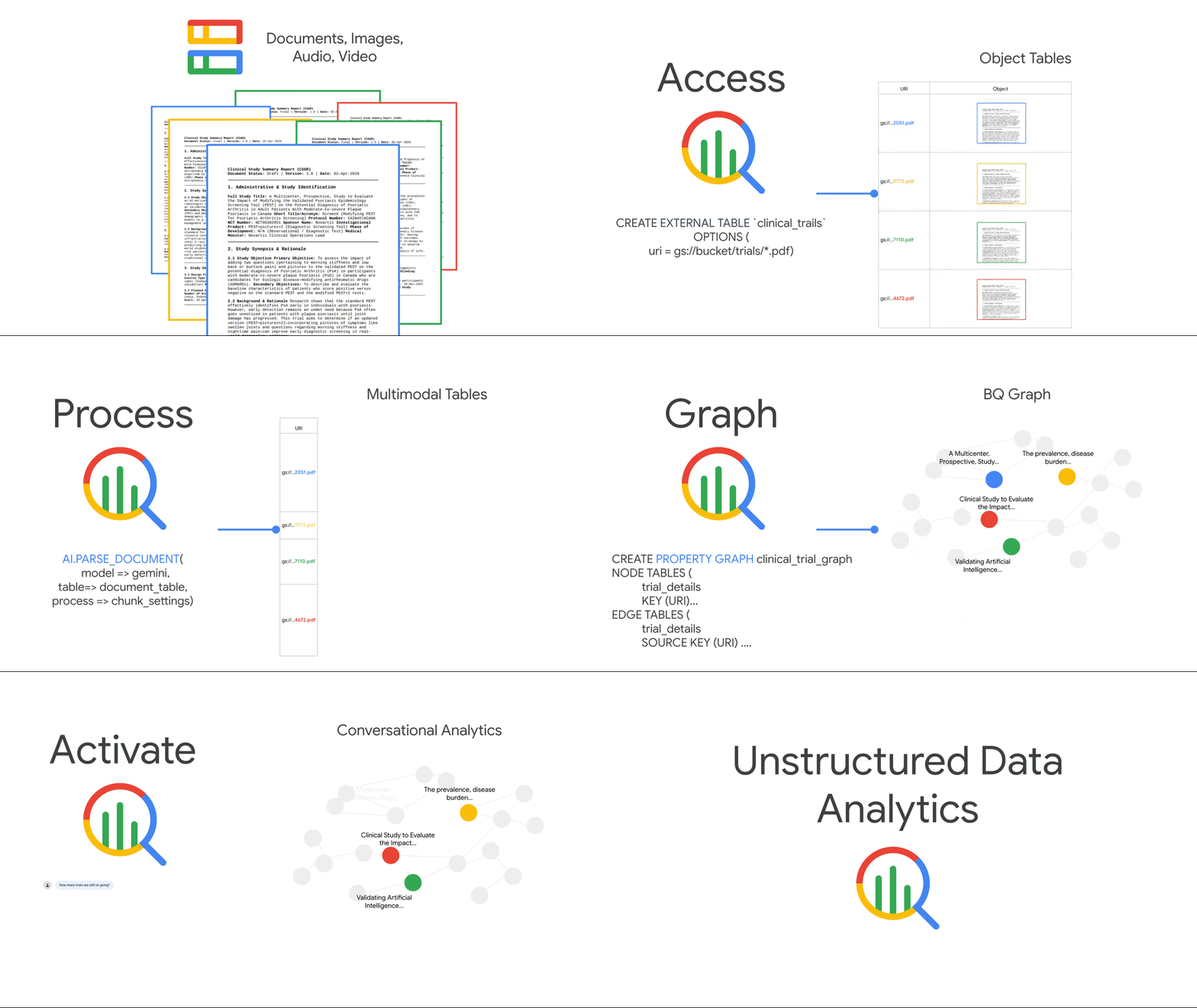
例として、数千件の臨床試験文書をPDF形式で管理する先進的な医療企業が挙げられている。BigQueryは、これらの文書から情報を引き出す流れを、Access、Process、Ground、Relate、Activateという5段階のライフサイクルで支援する。大量のPDFを対象に、アクセスから処理、根拠付け、関連付け、活用までを一連の流れとして扱う構成だ。
BigQuery Search Innovations
BigQuery’s new search capabilities bring insights from structured and unstructured data together. This matters because enterprises can analyze content such as PDFs, audio files, images, and unstructured text directly within the warehouse rather than relying on a fragmented architecture.
Modern enterprises possess large amounts of unstructured data but often face significant challenges managing it and extracting value from it. The search innovations are intended to make those sources accessible within the same environment used for warehouse data.
Directly Within the Warehouse
Historically, uncovering insights in unstructured content required data to be moved out of the warehouse. Enterprises then had to connect complex large language model pipelines and manage separate search indexes.
BigQuery’s approach removes the need for those fragmented LLM pipelines and external indexes. Instead, unstructured sources can be processed and analyzed within the warehouse. This provides a direct path for working with multiple data formats without first separating them from warehouse-based analysis.
Access, Process, and Ground
BigQuery describes a simple five-step lifecycle for unlocking insights from unstructured data: Access, Process, Ground, Relate, and Activate. Together, these stages provide the stated framework for taking unstructured sources from initial access through their use in analysis.
The lifecycle applies to content that may otherwise be difficult to manage through conventional warehouse workflows. It covers the progression from reaching and processing the source material to grounding it, relating it to other information, and activating the resulting insights.
Clinical Trial Documents
An advanced healthcare company managing thousands of clinical trial documents in PDF form illustrates the intended use. BigQuery can help unlock insights from those documents through the five-step lifecycle while keeping the analysis within the warehouse.
The example shows how the search capabilities address document-heavy collections alongside other supported unstructured formats, including audio and images. The central change is a unified approach to structured and unstructured insights without separate search indexes or stitched-together LLM pipelines.
ポコとTECHガイドPoko & TECH Guide
ポコと当サイトのTECHガイドが、記事の要約と収集した情報から読みどころを語るAI生成の対話です。Poko and TECH Dashboard's own TECH Guide discuss the article's highlights in an AI-generated conversation based on its summary and collected source details.
- ポコPoko数千件の臨床試験PDFを5段階で扱えるって、これって大きいこと?Thousands of clinical-trial PDFs can go through a five-step flow? That sounds huge—is it really a big deal?
- TECHガイドTECH Guideこの記事では大きな変化として描かれておる。PDFや音声、画像を外へ移さず、BigQuery内で直接分析できるからじゃ。The article presents it as a major shift: PDFs, audio, and images can be analyzed inside BigQuery instead of being moved elsewhere.
- ポコPoko「複雑なLLMパイプライン」って何? 仕組みがバラバラって、つまりどういうこと?What’s a “complex LLM pipeline”? What does it mean for the setup to be fragmented?
- TECHガイドTECH Guide複数の処理や道具をつないで動かす流れのことじゃ。本文が示す従来方式では、データ移動や別々の検索インデックス管理が必要だったんじゃよ。It’s a chain of tools and processing steps. In the previous setup described here, teams had to move data and manage separate search indexes.
- ポコPoko僕ならPDFも音声も画像も、倉庫から出さずにまとめて分析してみたいな。管理もすっきりしそう!I’d want to analyze PDFs, audio, and images together without taking them out of the warehouse. That sounds much tidier!
- TECHガイドTECH Guide紹介された範囲ではBigQuery内で行い、アクセス、処理、根拠付け、関連付け、活用の5段階で進める形じゃ。そこは押さえたいのう。In the approach presented, it stays within BigQuery and follows five stages: Access, Process, Ground, Relate, and Activate. That workflow is worth keeping in mind.