エージェント型ソースコードレビューで敵対的AIの脅威に先手を打つStaying Ahead of Adversarial AI Through Agentic Source Code Review
匿名の公開いいねです。記事の保存・お気に入りではなく、Featured、Top 3、重要度、掲載順位には影響しません。仕組みとプライバシーAnonymous public likes are reactions, not saved articles or bookmarks. They do not affect Featured, Top 3, importance, or listing order.How it works and privacy
GoogleのMandiantチームが、AIエージェントと人間の専門知識を組み合わせた構造化パイプラインでソースコードの脆弱性を自動発見する手法を公開し、防御側が攻撃者より先に脆弱性を特定できる体制を実現した。
Google Mandiant details an agentic vulnerability discovery framework that pairs AI models with expert-driven orchestration to find source code vulnerabilities faster than adversaries can exploit them after a data breach.
本ページの本文と要約は AI による自動生成です。日本語版と英語版は言語ごとに独立して生成されるため、表現や詳しさが異なる場合があります。正確性は元記事 (cloud.google.com) をご確認ください。The body and summaries are AI-generated independently for each language, so wording and detail may differ. Verify accuracy at the original source (cloud.google.com).
要約と収集メタデータに基づく AI 解説。元記事全文の転載・翻訳ではありません。AI explainer based on the summaries and collected metadata, not a copy or translation of the full source article.
Googleのセキュリティ部門であるMandiantが、AIエージェントと人間の専門家による制御層を組み合わせ、ソースコードの脆弱性を高速に発見する枠組みを公開した。攻撃者がAIを悪用してデータ窃取や恐喝を仕掛ける時代に、防御側が先手を打つための手法として注目される。
同社のAlex Tselevich氏とMichael Maturi氏によるブログ投稿によれば、背景にあるのはAIの敵対的な悪用の増加だ。独自のソースコードが流出した場合、防御側は脆弱性の特定とパッチ適用に追われる一方、攻撃者は機械の速度で動くAIツールを投入してくる。この非対称な状況では、時間の勝負が被害の大きさを左右しかねない。
Mandiantが用いるのは「Agentic Vulnerability Discovery Harness(AVDH)」と呼ぶ仕組みだ。プロアクティブなレビューやペネトレーションテストの場面でコードを高速に解析し、実際に悪用可能な経路(exploit path)を洗い出すという。単にAIモデルにコードを読ませるのではなく、解析プロセスを構造化し、懐疑的な検証ステップを課す点が特徴とされる。
鍵となるのは、AIモデルとドメイン固有の人間の専門知識を組み合わせたオーケストレーション層である。AIは大量のコードを高速に走査できる一方、誤検知や文脈の取り違えが起きやすい。そこで人間の専門知を検証の各段階に直接組み込むことで、有効性を大きく高めたと同社は説明している。
こうしたエージェント型のアプローチは、業界全体でも関心が高まっている領域だ。大規模言語モデルを使ったコード解析やセキュリティ支援の取り組みは各所で広がっており、AIが攻撃と防御の双方で使われるなか、いかに防御側が優位を保つかが問われている。
一方で、AIによる脆弱性発見は万能ではなく、検証を欠けば誤りを増幅させる可能性もある。Mandiantの手法が人間の関与を重視するのは、こうした限界を踏まえたものと見られる。自動化の速度と専門家の判断をどう両立させるかが、今後の実運用における課題となりそうだ。
Google's Mandiant team has published details of an agentic approach to source code review that aims to help defenders find and fix software vulnerabilities before attackers can exploit them. The work matters because the same generative and agentic AI tools that accelerate legitimate engineering are increasingly being turned against organizations, raising the stakes when proprietary source code is stolen or leaked.
According to authors Alex Tselevich and Michael Maturi, adversarial misuse of AI has heightened the risk of data theft and extortion events. When proprietary source code is exposed, defenders must scramble to identify and patch vulnerabilities, often while attackers deploy machine-speed AI tools against the same code. That asymmetry is the core problem the framework is designed to address: closing the window between a breach and a working exploit.
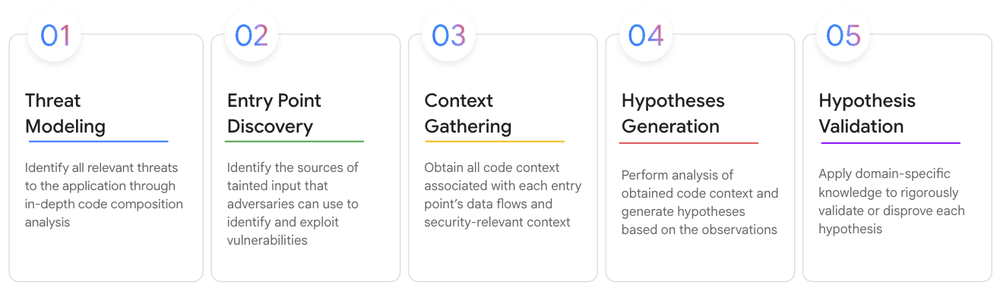
At the center of the effort is what Mandiant calls the Agentic Vulnerability Discovery Harness, or AVDH. The team describes using AVDH to rapidly analyze code and surface exploit paths during proactive reviews and penetration testing engagements. Rather than treating a large language model as a standalone oracle, the approach wraps AI models in what the authors describe as a deeply structured, human expert-driven orchestration layer. The stated goal is to tip the scales so defenders can, in their words, beat adversaries to the punch.
The technical emphasis is less on the raw capability of any single model and more on how the analysis process is organized. The team highlights three levers that it credits for a leap in efficacy: structuring the analysis process, enforcing skeptical validation steps, and injecting domain-specific human expertise directly into the pipeline. The skeptical validation element is notable, because a recurring weakness of AI-assisted security tooling is the tendency to produce plausible but incorrect findings, sometimes called hallucinations or false positives. Building explicit verification into the workflow appears intended to filter out spurious results before they reach a human reviewer, which is often the most expensive part of a security assessment.
This orchestration-heavy design reflects a broader pattern in agentic AI, where systems are given the ability to plan, call tools, and iterate across multiple steps rather than answering a single prompt. In a vulnerability discovery context, that can mean tracing data flows, reasoning about how untrusted input reaches sensitive functions, and chaining observations into a candidate exploit path. Keeping human experts in the loop is a way to supply the contextual judgment that models still tend to lack, such as understanding an application's threat model or distinguishing an exploitable bug from a benign one.
The framework sits alongside a long history of automated code analysis. Traditional static application security testing tools and fuzzing systems, including Google's own OSS-Fuzz for open-source projects, have found large numbers of bugs for years, but they can generate noise and struggle with complex, multi-step logic flaws. More recently, the industry has experimented with LLM-driven vulnerability research, and Google has publicly discussed related efforts such as its Big Sleep project. Government-backed initiatives like DARPA's AI Cyber Challenge have similarly pushed automated systems to find and patch vulnerabilities at scale. Mandiant's contribution is framed less as a new model and more as a methodology for orchestrating existing models with human oversight.
Context around Mandiant itself is relevant. The company is a well-known threat intelligence and incident response firm that Google acquired and folded into Google Cloud, and its work is often informed by real-world investigations into breaches and extortion campaigns. That background likely shapes the framing here, which treats leaked source code as a live operational threat rather than a hypothetical one.
The published details describe a defensive workflow used in proactive reviews and penetration tests, and the authors present the efficacy gains as their own results rather than independently benchmarked figures. As with any agentic security tooling, the practical value will depend on how well the skeptical validation and human review steps scale, and how the approach performs against varied codebases. Still, the emphasis on disciplined orchestration and expert judgment reflects a pragmatic view that, for now, the most effective defensive AI systems are likely to be hybrids of automation and human expertise.
ポコとTECHガイドPoko & TECH Guide
ポコと当サイトのTECHガイドが、記事の要約と収集した情報から読みどころを語るAI生成の対話です。Poko and TECH Dashboard's own TECH Guide discuss the article's highlights in an AI-generated conversation based on its summary and collected source details.
- ポコPoko「エージェント型」のコードレビューって何? AIが勝手に脆弱性を探すの?What does “agentic” code review mean? Does the AI just hunt for vulnerabilities on its own?
- TECHガイドTECH Guide簡単に言うと、AIだけに任せず、人間の専門知識と構造化した手順を組み合わせる仕組みじゃ。記事ではAVDHと呼んでおるよ。Put simply, it combines AI with human expertise and a structured process rather than leaving everything to the model. The article calls this framework AVDH.
- ポコPokoそれって何が嬉しいの? 普通に人がコードを調べるのとは違う?So what’s the benefit? How is that different from having people review the code normally?
- TECHガイドTECH Guide記事によれば、コード流出後に攻撃者がAIを使う状況でも、防御側が脆弱性や悪用経路を素早く見つけ、先に対処しやすくなるのじゃ。According to the article, even if attackers use AI after source code is exposed, defenders can quickly find vulnerabilities and exploit paths, making it easier to act first.
- ポコPokoなるほど。AIの速さに、人の知識と疑うチェック手順を足して、防御側が先手を狙うんだね!Got it! The idea is to pair AI speed with human expertise and skeptical checks so defenders can try to stay one step ahead.
- TECHガイドTECH Guideその通りじゃ。記事の要点は、速さだけでなく、専門家の知識と厳格な検証をパイプラインに組み込むことじゃよ。Exactly. The article’s key point is that speed alone isn’t enough; expert knowledge and rigorous validation need to be built into the pipeline.



