15時間から1分へ:AI/MLがGMの開発プロセスを劇的に加速 From 15 hours to one minute: How AI/ML is speeding up GM's development
- GMがAI・機械学習を活用し、CFDやFEAなどのシミュレーション処理時間を最大15時間から約1分に短縮していることが明らかになった。
- デジタルツインを含む仮想化技術の積極導入により、自動車開発の効率が根本から変わりつつある。
English summary
- From CFD and FEA to digital twins, carmaking now involves a lot of virtualization.
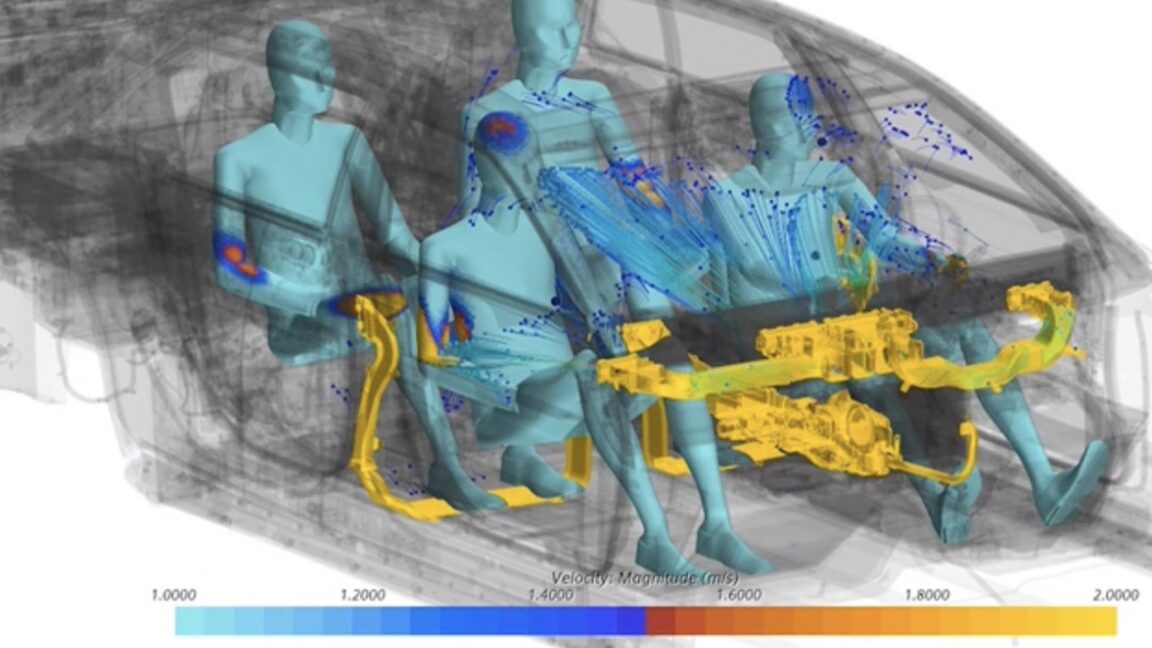
自動車開発の現場が、AIと機械学習によって根本的に変わろうとしている。GMは計算流体力学(CFD)や有限要素解析(FEA)といった従来型シミュレーションにAI/MLを組み合わせることで、かつて15時間以上かかっていた処理を約1分にまで圧縮することに成功したと報告されている。
CFDは空力特性や熱管理の解析に、FEAは衝突安全性や構造強度の評価に欠かせないツールだが、いずれも膨大な計算リソースと時間を要してきた。GMのアプローチは、こうした物理シミュレーションの結果を学習データとしてAIモデルを訓練し、新しい設計案に対してほぼリアルタイムで近似解を提示できる「サロゲートモデル」を構築するものだ。これにより、エンジニアは設計変更のたびに数時間待つ必要がなくなり、反復的な最適化サイクルを大幅に短縮できると見られる。
さらにGMはデジタルツイン技術の活用も進めている。デジタルツインとは、実際の車両や生産設備を仮想空間上に再現した動的モデルであり、センサーデータと連動させることでリアルタイムの状態監視や予測保全にも応用できる。製造ラインへの展開が進めば、品質管理コストの削減にもつながる可能性がある。
GMがAI・機械学習を活用し、CFDやFEAなどのシミュレーション処理時間を最大15時間から約1分に短縮していることが明らかになった。
自動車業界全体でこうした仮想化・AI活用の動きは加速している。BMWやフォードもデジタルツインや生成AIを設計プロセスに取り込む実証実験を行っており、NVIDIAのOmniverseプラットフォームが複数メーカーに採用されるなど、エコシステムの整備も進んでいる。開発コストの削減と市場投入までの期間短縮は自動車メーカーにとって長年の課題であり、AI活用はその切り札として期待が高まっている。
一方で課題も残る。サロゲートモデルの精度は学習データの質と量に依存するため、エッジケースや従来にない設計では予測精度が低下するリスクがある。また、AIが提示した設計案の妥当性を検証する仕組みや、エンジニアのスキル維持をどう両立するかも議論が続いている。GMの取り組みは業界の方向性を示す先行事例として注目されるが、実用化の深度や信頼性の担保については、引き続き検証が求められるところだ。
General Motors is making a striking claim: simulation tasks that once took 15 hours can now be completed in roughly one minute, thanks to the integration of artificial intelligence and machine learning into its core engineering workflows. The development, reported by Ars Technica, signals a broader transformation underway in how the auto industry designs and validates vehicles.
At the heart of the shift are two workhorses of engineering simulation: computational fluid dynamics (CFD) and finite element analysis (FEA). CFD models how air and heat flow around and through a vehicle, while FEA evaluates structural integrity under stress conditions like crashes. Both disciplines are indispensable, but they have historically demanded enormous compute time — sometimes many hours per run — which bottlenecks the iterative design process engineers depend on.
GM's approach appears to center on so-called surrogate models: AI systems trained on large libraries of existing simulation results that can then predict outcomes for new design configurations in near real-time. Rather than replacing physics-based solvers entirely, these models act as fast approximators, allowing engineers to explore a much wider design space before committing to full-resolution simulations. The productivity gains, if validated at scale, could meaningfully compress vehicle development timelines.
Digital twins are another pillar of GM's virtualization strategy. By creating dynamic virtual replicas of vehicles and manufacturing systems — continuously updated with real-world sensor data — the company can monitor performance, detect anomalies, and run predictive maintenance scenarios without taking physical assets offline. Applied to production lines, this could reduce quality-control costs and unplanned downtime, though the full operational benefits would depend on implementation maturity.
GM is far from alone in pursuing this direction. BMW has been running experiments with generative AI in design, Ford has explored AI-assisted crash simulation, and NVIDIA's Omniverse platform has become a common infrastructure layer for several automakers building digital twin environments. The competitive pressure to cut development costs and shrink time-to-market is universal, and AI is increasingly seen as the lever that makes both achievable simultaneously.
That said, surrogate models carry inherent limitations worth noting. Their accuracy is bounded by the quality and diversity of training data, meaning performance on novel or edge-case designs may degrade in ways that aren't immediately obvious. Establishing robust validation pipelines — ensuring AI-recommended designs still meet regulatory and safety standards — remains an open engineering challenge. There are also softer concerns about how heavy reliance on AI tools affects the long-term expertise of human engineers.
GM's reported results are compelling, and the trajectory is consistent with where the industry appears to be heading. Whether the one-minute benchmark holds across the full complexity of real-world vehicle programs is a question that will likely be answered over the next few development cycles. For now, the company's public commitment to AI-driven virtualization marks it as one of the more aggressive adopters among legacy automakers navigating a rapidly changing technology landscape.
本ページの本文・要約は AI による自動生成です。正確性は元記事 (arstechnica.com) をご確認ください。