ガジャ・マダ大学、インドサット、NVIDIAがインドネシア初の大学AIセンターを開設Universitas Gadjah Mada, Indosat and NVIDIA Open Indonesia’s First University AI Center to Develop Local AI Talent
匿名の公開いいねです。記事の保存・お気に入りではなく、Featured、Top 3、重要度、掲載順位には影響しません。仕組みとプライバシーAnonymous public likes are reactions, not saved articles or bookmarks. They do not affect Featured, Top 3, importance, or listing order.How it works and privacy
インドネシアのガジャ・マダ大学、インドサット、NVIDIAが共同でジョグジャカルタにAIテクノロジーセンター(NVAITC)を設立し、国内AI人材の育成と技術力強化を目指す。
UGM, Indosat, and NVIDIA have jointly launched Indonesia's first university-based AI Technology Center in Yogyakarta, aiming to cultivate local AI talent and advance the country's AI capabilities.
本ページの本文と要約は AI による自動生成です。日本語版と英語版は言語ごとに独立して生成されるため、表現や詳しさが異なる場合があります。正確性は元記事 (blogs.nvidia.com) をご確認ください。The body and summaries are AI-generated independently for each language, so wording and detail may differ. Verify accuracy at the original source (blogs.nvidia.com).
要約と収集メタデータに基づく AI 解説。元記事全文の転載・翻訳ではありません。AI explainer based on the summaries and collected metadata, not a copy or translation of the full source article.
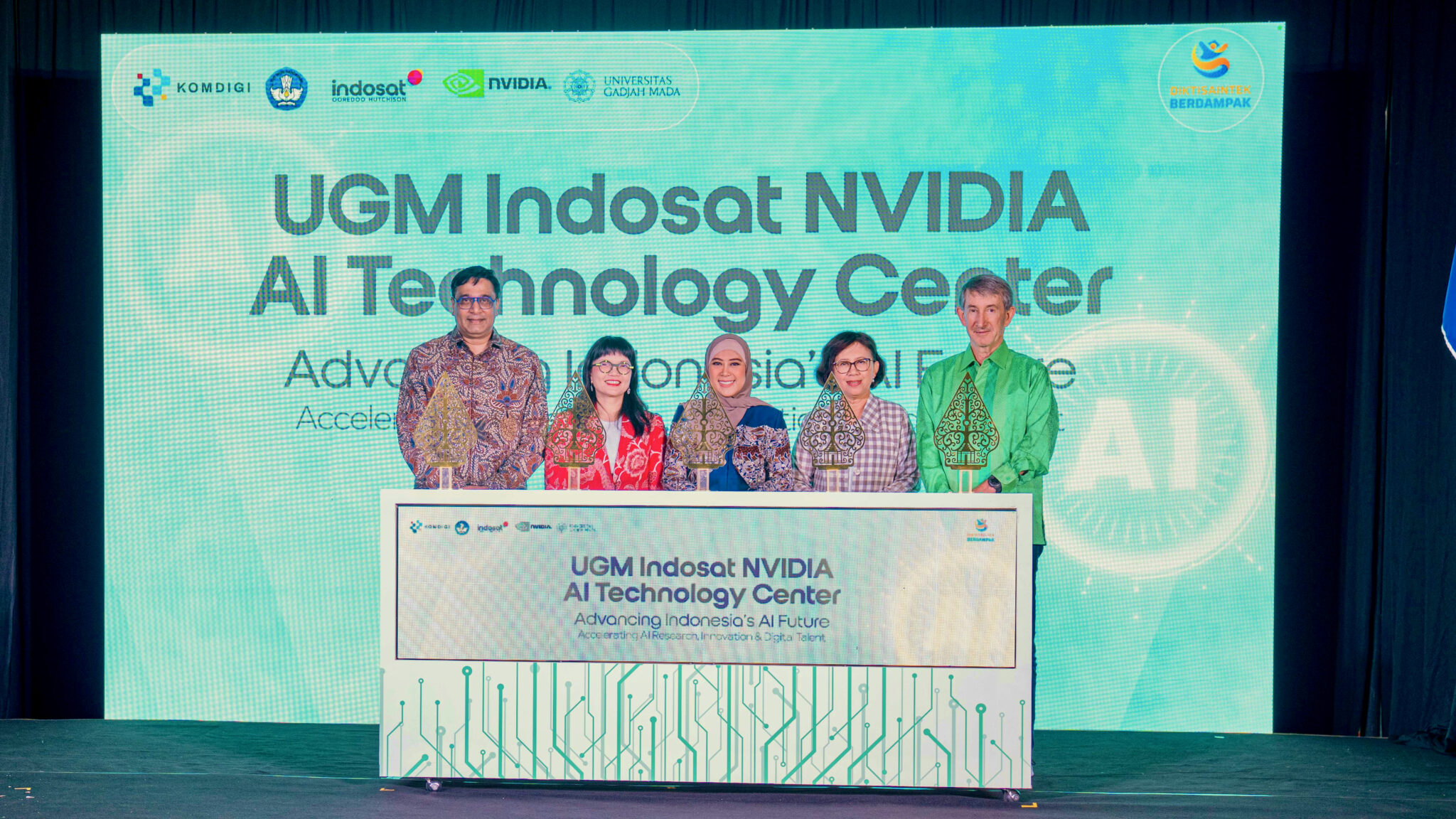
インドネシアが自国のAI基盤づくりを本格化させている。同国の名門ガジャ・マダ大学(UGM)、通信大手インドサット・ウーレドゥ・ハチソン(Indosat/IOH)、そしてNVIDIAが、通信・デジタル省(Komdigi)の関与のもと、ジョグジャカルタに国内初となる大学拠点のAIテクノロジーセンター「UGM Indosat NVIDIA AI Technology Center(NVAITC)」を開設した。国内のAI人材育成と技術力の底上げを狙う取り組みだ。
NVAITCは、NVIDIAが各国の大学や研究機関と連携して展開しているプログラムで、研究者や学生が実践的にAI開発へ取り組む場として位置づけられる。今回のセンターは、大学の教育・研究力と、通信事業者が持つインフラや事業基盤、そしてNVIDIAの計算基盤やソフトウェア資産を結び付ける形をとる。地元での人材育成と応用研究の双方を後押しする狙いがあると見られる。
背景には、東南アジア各国が生成AIの普及を受けてAI関連の投資と人材確保を競い合っている状況がある。インドサットは近年、国内でのAIインフラ整備に力を入れており、NVIDIAとの連携を通じて計算資源の拡充を進めてきたと伝えられている。政府機関であるKomdigiが関わる点は、国家戦略の一環として大学発のAI能力を育てようとする姿勢を示すものと言える。
大学を起点にする方式には、教育・研究と産業応用を近接させやすいという利点がある。学生が最新のツールやハードウェアに触れる機会が増えれば、卒業後に国内のAI産業を支える人材層が厚くなる可能性がある。一方で、こうしたセンターの効果は、継続的な資金や指導体制、企業との連携がどこまで維持されるかに左右される面もある。
インドネシアは人口規模が大きく、デジタル経済の成長が続く市場として注目される。今回のNVAITC開設は、外部の技術供給に頼るだけでなく、自国内でAIを開発・運用できる基盤を整えようとする動きの一例と位置づけられる。同様の大学連携型センターは他の新興国でも広がりつつあり、今後の展開が注目される。
Indonesia is moving to build its artificial intelligence capabilities from the ground up, and its universities are becoming a central part of that effort. This week, the country's Ministry of Communication and Digital Affairs (Komdigi), Indosat Ooredoo Hutchison (Indosat or IOH), NVIDIA and Universitas Gadjah Mada (UGM) launched the UGM Indosat NVIDIA AI Technology Center (NVAITC) in Yogyakarta. The partners describe it as Indonesia's first university-based AI technology center, and its significance lies in how it links a national government ministry, a major telecommunications operator, a leading chip and software company and one of the country's oldest and most respected universities in a single, coordinated push.
The stated goal is to cultivate local AI talent and advance Indonesia's broader AI capabilities. That framing reflects a wider ambition, captured in the source material's assertion that "Indonesia is taking charge of its AI future." Rather than relying solely on imported models, tools and expertise, the center appears designed to create a domestic pipeline of researchers, engineers and students who can build and apply AI systems suited to local languages, industries and public-sector needs.
The NVAITC label refers to NVIDIA's AI Technology Center model, a program the company has established with research institutions in several countries. These centers typically pair NVIDIA's technical staff and platforms with a host institution's faculty and students to work on applied research projects, provide training, and help translate academic work into practical outcomes. Placing such a center at UGM, based in Yogyakarta—a city long regarded as one of Indonesia's education hubs—gives the initiative a foundation in an established academic community rather than a purely commercial setting.
For Indosat, the launch fits a strategy the operator has been pursuing to position itself as an AI infrastructure provider inside Indonesia, not only a connectivity company. Indosat has publicly aligned itself with the idea of an "AI Nation" and has worked with NVIDIA on efforts to bring accelerated computing capacity into the country. A university center complements that infrastructure focus by addressing the skills side of the equation: powerful hardware is of limited value without people trained to use it. The presence of Komdigi signals government backing, which is often important for scaling such programs, coordinating with national digital policy, and connecting them to public services and regulation.
The educational dimension is likely to draw on NVIDIA's existing training resources. The company runs the Deep Learning Institute (DLI), which offers hands-on courses and certifications in areas such as deep learning, data science, accelerated computing and generative AI. Centers of this kind frequently use software frameworks like CUDA and libraries for model training and inference, alongside NVIDIA's enterprise AI tools. While the announcement centers on the launch itself, initiatives structured this way commonly combine curriculum development, workshops and joint research to build both foundational knowledge and specialized expertise over time.
The move also sits within a broader regional context. Across Southeast Asia, governments and companies have been investing in what is often described as sovereign AI—the capacity to develop and operate AI systems using domestic data, infrastructure and talent. Countries including Vietnam, Malaysia and Singapore have announced comparable partnerships involving data centers, cloud capacity and skills programs, and NVIDIA has been an active participant in many of them as demand for its accelerators has grown. Indonesia, with a large population and a rapidly digitizing economy, represents a substantial potential market, which helps explain the interest from multiple parties.
Several practical questions remain open. The announcement emphasizes the center's establishment and its talent and capability goals, but does not, in the provided material, detail specific research programs, student intake numbers, funding figures or timelines. How quickly the center produces measurable results will depend on factors such as the availability of computing resources, the strength of curriculum partnerships and the ability to retain trained graduates within the country. Those outcomes are difficult to assess at launch and will become clearer as the program matures.
Even so, the opening of the UGM Indosat NVIDIA AI Technology Center is a notable marker in Indonesia's AI trajectory. By combining a university, a telecom operator, a technology vendor and a government ministry, the effort reflects a model that many countries are adopting to build local AI expertise. Its long-term impact will hinge on execution, but as a statement of intent, it underscores how education is increasingly treated as core infrastructure for national AI ambitions.
ポコとTECHガイドPoko & TECH Guide
ポコと当サイトのTECHガイドが、記事の要約と収集した情報から読みどころを語るAI生成の対話です。Poko and TECH Dashboard's own TECH Guide discuss the article's highlights in an AI-generated conversation based on its summary and collected source details.
- ポコPokoインドネシア初の「大学AIセンター」って、それって何をする場所なの?Indonesia’s first university-based AI center—what exactly happens there?
- TECHガイドTECH Guide記事によれば、3者がジョグジャカルタに設立した、国内のAI人材育成と技術力強化を目指す拠点じゃよ。According to the article, it’s a center the three partners launched in Yogyakarta to develop local AI talent and strengthen the country’s AI capabilities.
- ポコPokoそれって何がうれしいの?AIを学ぶ人やインドネシアには、どんな意味があるの?What’s the benefit? What could it mean for people learning AI and for Indonesia?
- TECHガイドTECH Guide簡単に言うとじゃな、国内でAIを担う人を育て、国全体のAI能力を高める狙いがあるということじゃよ。Simply put, the goal is to nurture people who can work with AI locally and advance Indonesia’s overall AI capabilities.
- ポコPokoなるほど、3者で学びの拠点をつくって、インドネシアのAI人材と技術を伸ばそうとしているんだね!Got it! The three partners are creating a place to learn and aiming to grow Indonesia’s AI talent and technology.
- TECHガイドTECH Guideその理解でよいぞ。記事が掲げる人材育成と技術力強化に、実際につながるかが今後の見どころじゃな。That’s right. The key thing to watch is whether the center delivers on the article’s goals of developing talent and strengthening AI capabilities.