データカナリア:Netflixのカタログメタデータ検証の仕組みThe Data Canary: How Netflix Validates Catalog Metadata
匿名の公開いいねです。記事の保存・お気に入りではなく、Featured、Top 3、重要度、掲載順位には影響しません。仕組みとプライバシーAnonymous public likes are reactions, not saved articles or bookmarks. They do not affect Featured, Top 3, importance, or listing order.How it works and privacy
- Netflixが「データカナリア」と呼ぶ検証フレームワークで、カタログメタデータの品質と整合性を継続的にチェックする仕組みを解説。
- 問題のあるデータが本番環境に反映される前に検出し、ストリーミング体験の品質低下を防ぐ。
Netflix details its "Data Canary" framework that continuously validates catalog metadata quality and consistency, catching problematic data before it reaches production to protect the streaming experience.
要約と収集メタデータをもとに生成した AI 解説本文です。元記事全文の転載・翻訳ではありません。This AI explainer is generated from the summaries and collected metadata, not from a reproduction or translation of the full source article.
Netflixが、配信カタログのメタデータ品質を継続的に検証する社内フレームワーク「データカナリア(Data Canary)」を技術ブログで紹介した。膨大な作品情報を扱う同社にとって、メタデータの不整合は視聴体験を直接損なう問題であり、その早期検知の仕組みは大規模配信サービスの裏側を知る手がかりとなる。
カタログメタデータとは、作品のタイトルや説明文、ジャンル、出演者、サムネイル画像、対応言語や字幕、地域ごとの配信可否といった情報を指す。これらは複数のシステムやデータパイプラインを経由してユーザーの画面に届くため、途中のどこかで欠損や誤りが生じると、誤った作品情報の表示や画像の欠落、検索・レコメンドの精度低下につながる可能性がある。
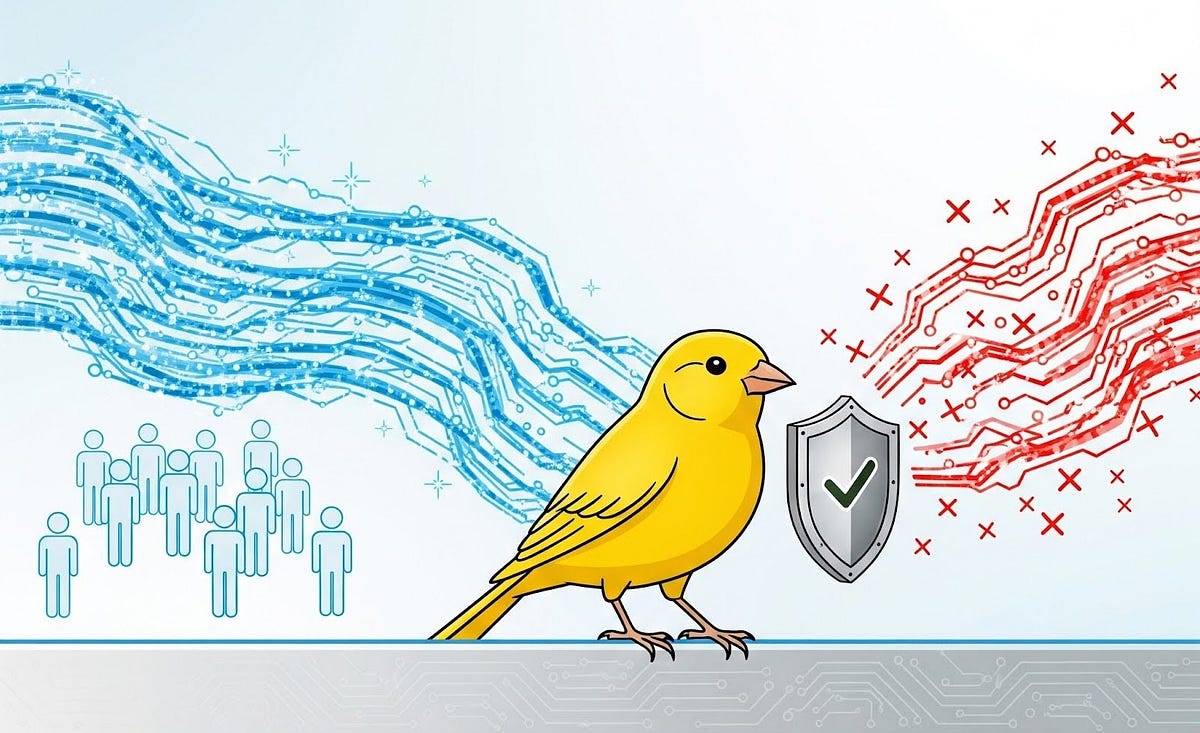
データカナリアという名称は、炭鉱でガスを検知するために用いられたカナリアになぞらえたものと見られ、ソフトウェア開発で変更を段階的に反映する「カナリアリリース」と同様に、問題が本番に広がる前へ小さく捕まえる発想が背景にあると考えられる。具体的には、パイプライン上を流れるデータに期待される条件を定義し、それに反する異常を自動で検出・通知する仕組みが想定される。
Netflixが「データカナリア」と呼ぶ検証フレームワークで、カタログメタデータの品質と整合性を継続的にチェックする仕組みを解説。
データ品質の検証は近年「データオブザーバビリティ」として注目を集める分野で、Great Expectationsやdbtのテストフレームワークによるルールベースのチェック、Monte Carloのような異常検知ツールが普及しつつある。データの送り手と受け手が形式や品質を取り決める「データコントラクト」の考え方も広がっている。Netflixは過去にMetaflowなどのデータ基盤ツールを公開しており、今回の取り組みも同社が重視するデータ駆動型の文化を反映したものといえる。
メタデータの誤りは、ユーザーから見れば些細に映る一方、作品の発見性や満足度、ひいては視聴時間に影響しうる。検証を後工程の手作業に頼るのではなく、パイプラインに組み込んで継続的に監視する「シフトレフト」的なアプローチは、多数の作品と多言語・多地域展開を抱える同社の運用において合理的な選択と考えられる。同種の課題は他の大規模サービスにも共通しており、こうした事例の公開は業界全体の参考になりそうだ。
Netflix has detailed a validation framework it calls the Data Canary, a system designed to continuously check the quality and consistency of the catalog metadata that underpins its streaming service. The topic matters because metadata is the connective tissue of any large media catalog: titles, synopses, cast and crew credits, genre tags, language availability, content ratings, artwork, and regional licensing windows all flow into the experiences that members actually see. When that information is inaccurate or inconsistent, the effects ripple outward into search results, recommendations, merchandising rows, and the basic question of whether a title can even be played in a given country.
The name borrows from two established engineering ideas. The first is the "canary in a coal mine" metaphor, an early-warning signal that surfaces danger before it becomes catastrophic. The second is the canary deployment pattern, in which a change is exposed to a small slice of traffic and monitored before a wider rollout. Applied to data, a canary approach appears to focus on catching anomalies and rule violations close to the point where data is produced or changed, rather than waiting for downstream systems or, worse, customers to reveal the problem.
According to the blog, the Data Canary works by validating metadata against a set of expectations as it moves through Netflix's pipelines. In practice, frameworks of this kind typically combine several layers of checking. Schema and type validation confirms that fields exist and hold the right shape of value. Referential checks confirm that relationships hold, for example that a title links to valid cast records or that an availability window references a real region. Semantic or business-rule checks encode domain knowledge, such as a film needing a rating before it can be published in certain markets, or a series requiring episode ordering that is complete and monotonic. Statistical or distribution checks look for sudden shifts, like an unexpected spike in null values or a drop in the number of localized descriptions, which can indicate an upstream regression even when individual records look superficially valid.
The "continuous" aspect is central. Catalogs are not static; titles are added, removed, re-licensed, re-translated, and re-merchandised constantly, and metadata arrives from many internal teams and external partners. A one-time audit cannot keep pace with that churn, so a canary system is likely run repeatedly and automatically, emitting alerts or blocking promotion of bad data when a check fails. The value of such a design is that it shortens the feedback loop, turning data quality from a reactive cleanup task into a guardrail that engineers and content operators encounter early.
This work fits into a broader industry movement often described as data observability and data quality engineering. Open-source tools such as Great Expectations and dbt tests let teams declare assertions about datasets, while platforms like Monte Carlo, Soda, and Amazon Deequ emphasize anomaly detection and monitoring at scale. The underlying philosophy, sometimes called treating "data as a product," argues that datasets deserve the same rigor long applied to software: versioning, testing, ownership, and service-level expectations. Related concepts include data contracts, which formalize the agreement between data producers and consumers, and lineage tracking, which maps how a field flows from source to destination so that the blast radius of an error can be understood quickly.
Netflix has a long history of publishing engineering practices in this space, from chaos engineering tools like Chaos Monkey to metadata and data-platform projects such as Metacat and Maestro, and the Data Canary reads as a continuation of that culture of building internal infrastructure to manage complexity at scale. For an organization whose catalog spans many languages, regions, and content types, even small inconsistencies can multiply across millions of member sessions.
The post is primarily a description of an internal approach rather than a released product, so the precise implementation details, performance characteristics, and coverage are specific to Netflix's environment. Still, the general lessons appear transferable. Any team managing a large, frequently changing dataset that feeds customer-facing features faces similar risks, and the idea of placing automated, continuously running validation as close as possible to where data changes is a pattern that generalizes well beyond streaming. The Data Canary illustrates how metadata quality, often invisible when it works, becomes a meaningful engineering discipline at scale.
本ページの本文と要約は AI による自動生成です。日本語版と英語版は言語ごとに独立して生成されるため、表現や詳しさが異なる場合があります。正確性は元記事 (netflixtechblog.com) をご確認ください。The body and summaries are AI-generated independently for each language, so wording and detail may differ. Verify accuracy at the original source (netflixtechblog.com).