Data Projects: Netflixスケールでのデータ資産管理Data Projects: Managing Data Assets at Netflix Scale
匿名の公開いいねです。記事の保存・お気に入りではなく、Featured、Top 3、重要度、掲載順位には影響しません。仕組みとプライバシーAnonymous public likes are reactions, not saved articles or bookmarks. They do not affect Featured, Top 3, importance, or listing order.How it works and privacy
- Netflixが導入したデータ資産管理フレームワーク「Data Projects」を紹介。
- 関連するデータセットやテーブルを論理的にまとめることで、PBスケールのデータの発見性・ガバナンス・チーム間連携を大幅に改善する仕組みを解説している。
Netflix details 'Data Projects,' a framework that logically groups related datasets and tables to improve discoverability, governance, and cross-team collaboration across its petabyte-scale data estate.
要約と収集メタデータをもとに生成した AI 解説本文です。元記事全文の転載・翻訳ではありません。This AI explainer is generated from the summaries and collected metadata, not from a reproduction or translation of the full source article.
Netflixは、社内に蓄積したペタバイト規模のデータ資産を体系的に整理・管理するためのフレームワーク「Data Projects」を、自社の技術ブログで公開した。膨大なテーブルやデータセットの発見性を高め、ガバナンスとチーム間の連携を改善する狙いがあり、大規模データ基盤を運用する企業にとって参考になる取り組みといえる。
背景にあるのは、データの「スプロール(無秩序な拡散)」という課題だ。動画配信からレコメンド、広告、コンテンツ制作まで多様な事業を抱えるNetflixでは、無数のチームが日々データを生成・加工しており、テーブル数は人手で管理しきれない規模に膨らんでいく。どのデータが信頼でき、誰が所有し、どう使うべきかが曖昧になると、重複した集計作業や品質低下、コンプライアンス上のリスクを招きやすい。
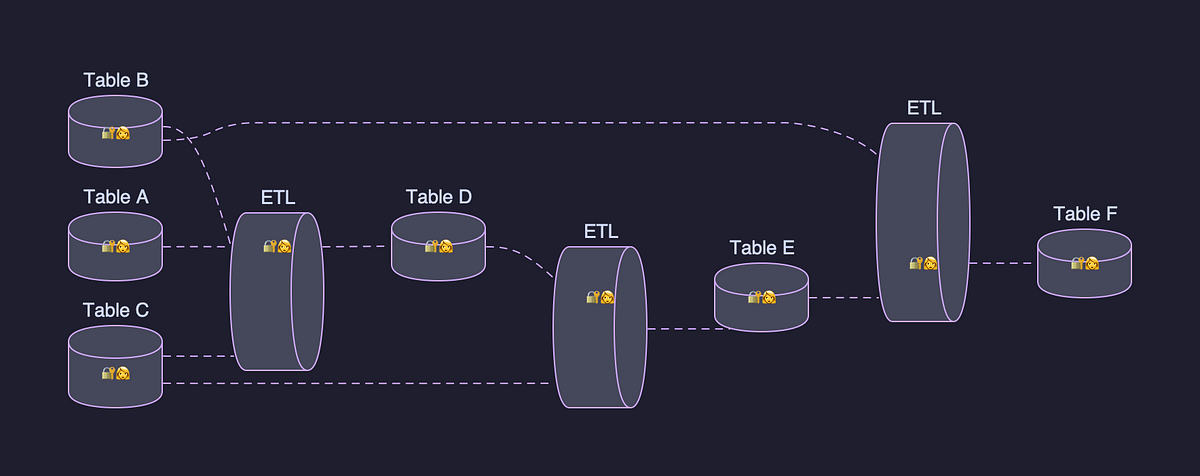
Data Projectsは、関連するデータ資産を「プロジェクト」という論理的な単位でまとめ、所有者・用途・アクセス権限・ライフサイクルといったメタデータを一元的に紐付ける考え方とみられる。これにより、利用者は目的のデータを探しやすくなり、管理者はアクセス制御や保持ポリシーといったガバナンスを一貫して適用しやすくなる。データを「散在するテーブルの集合」ではなく、責任の所在が明確な単位として扱う点に特徴がある。
Netflixはこれまでも、テーブルフォーマットの「Apache Iceberg」やメタデータ管理基盤の「Metacat」など、データ基盤分野で多くの技術をオープンソースとして公開してきた実績がある。Data Projectsはそうした蓄積の上に立つ仕組みと位置づけられる。
関連するデータセットやテーブルを論理的にまとめることで、PBスケールのデータの発見性・ガバナンス・チーム間連携を大幅に改善する仕組みを解説している。
近年は、データを部門ごとに製品(プロダクト)として扱う「データメッシュ」の考え方や、DataHub、Amundsenといったデータカタログツールが業界で広がりつつある。データの所有権と発見性を重視するData Projectsの発想は、こうした潮流とも親和性が高いといえる。
組織が大きくなるほど、技術そのもの以上にデータの「整理の仕方」が生産性を左右する。Netflixの事例は、新しいツールの導入だけでなく、データを扱うための組織的な枠組みづくりが重要であることを改めて示している。同様の課題を抱える企業にとって、設計思想の面で示唆を与える可能性がある。
Netflix has detailed a framework it calls Data Projects, an organizational layer designed to bring structure to the petabyte-scale data assets that accumulate across a company of its size. As covered on the Netflix Tech Blog, the framework aims to improve three persistent pain points in large data organizations: discoverability, governance, and collaboration between teams. The topic matters because the difficulty of managing data at scale is no longer primarily about storage capacity or raw compute, but about making vast collections of tables, pipelines, and datasets understandable, trustworthy, and reusable by the people who depend on them.
At its core, Data Projects appears to introduce a higher-level unit of ownership and organization than the individual table or dataset. In many large data platforms, assets proliferate without a clear sense of who owns them, what they are for, or whether they are safe to depend on. By grouping related assets into a coherent project structure, Netflix is attempting to give teams a consistent way to express intent, assign responsibility, and apply policy across many underlying objects at once. This kind of grouping is significant because it shifts management from a per-asset chore to a more scalable, project-level model that mirrors how engineering teams already organize code.
The framework is described as improving discoverability, which is one of the most common challenges in large analytics environments. When a company stores millions of tables, the marginal cost of creating yet another dataset is low, but the cumulative cost of not being able to find the right one is high. Engineers and analysts frequently rebuild data that already exists simply because they cannot locate or trust it. A project-oriented organization, combined with metadata and clear ownership, is likely intended to reduce this duplication and shorten the time it takes to answer the question of which dataset is the authoritative source for a given purpose.
Governance is the second pillar. At Netflix's scale, considerations such as data retention, access control, data quality expectations, and compliance obligations cannot realistically be handled asset by asset. Framing governance around projects allows policies to be defined and enforced consistently across an entire group of related assets, which tends to make rules easier to reason about and audit. This reflects a broader industry trend toward treating data governance as a built-in property of the platform rather than a manual process layered on afterward, an approach that becomes increasingly important as privacy regulations and internal data-handling standards grow more demanding.
The third area, cross-team collaboration, addresses the reality that data rarely stays within a single team. Datasets produced by one group are consumed by many others, and without clear contracts and ownership, those dependencies become fragile. By making projects an explicit, shareable construct, the framework appears intended to clarify the boundaries and interfaces between producers and consumers, reducing the ambiguity that often leads to broken pipelines and conflicting definitions of the same metric.
For context, Data Projects sits alongside a broader movement in the data engineering world toward better organization and stewardship of analytical data. Concepts such as data mesh, which promotes domain-oriented ownership and treating data as a product, share similar motivations. Open-source and commercial tools including data catalogs, lineage trackers such as those built around OpenLineage, and metadata platforms like DataHub, Amundsen, and Apache Atlas address overlapping problems of discovery and governance. Netflix itself has a long history of building and open-sourcing data infrastructure, including the Iceberg table format, which originated at the company and is now widely adopted, as well as workflow and metadata tooling. Data Projects can be read as a continuation of that work, focused less on the storage and execution layers and more on the human and organizational layer that determines whether data is actually usable.
It is worth noting that the framework reflects Netflix's specific scale and internal practices, so the exact implementation may not transfer directly to smaller organizations. Even so, the underlying principles of grouping assets by ownership, embedding governance into the platform, and making data discoverable by design are broadly relevant. For teams grappling with sprawling data estates, the account offers a useful illustration of how a large engineering organization is approaching the increasingly important discipline of data asset management.
本ページの本文と要約は AI による自動生成です。日本語版と英語版は言語ごとに独立して生成されるため、表現や詳しさが異なる場合があります。正確性は元記事 (netflixtechblog.com) をご確認ください。The body and summaries are AI-generated independently for each language, so wording and detail may differ. Verify accuracy at the original source (netflixtechblog.com).