BigQuery Graphsのメジャー対応で信頼性の高いエージェント型ワークロードを実現Using BigQuery Graphs with measures for trusted agentic workloads
匿名の公開いいねです。記事の保存・お気に入りではなく、Featured、Top 3、重要度、掲載順位には影響しません。仕組みとプライバシーAnonymous public likes are reactions, not saved articles or bookmarks. They do not affect Featured, Top 3, importance, or listing order.How it works and privacy
- BigQuery Graphsがメジャー(指標)機能をプレビューサポートし、グラフ上の複雑なエンティティ間依存関係と統制されたメトリクスを統合。
- AIエージェントがより正確なインサイトを導き出せるようになる。
BigQuery Graphs now supports measures in preview, combining governed metrics with relationship mapping so AI agents can reason accurately across complex, interconnected business entities rather than relying on raw flat tables.
本ページの本文と要約は AI による自動生成です。日本語版と英語版は言語ごとに独立して生成されるため、表現や詳しさが異なる場合があります。正確性は元記事 (cloud.google.com) をご確認ください。The body and summaries are AI-generated independently for each language, so wording and detail may differ. Verify accuracy at the original source (cloud.google.com).
要約と収集メタデータに基づく AI 解説。元記事全文の転載・翻訳ではありません。AI explainer based on the summaries and collected metadata, not a copy or translation of the full source article.
Google Cloudは、BigQueryのグラフ機能「BigQuery Graph」において、指標(メジャー)のプレビューサポートを開始した。統制されたメトリクスとエンティティ間の関係性マッピングを統合することで、AIエージェントが複雑に絡み合ったビジネス実体をより正確に推論できるようにする狙いだ。
企業が単純なチャットアシスタントから、自律的に動く「エージェント型」のワークロードへ移行する際、しばしば直面するのが精度の問題である。Google Cloudのブログによれば、生のテーブルを直接扱うエージェントは不正確なインサイトを生み出しやすいという。売上や在庫といった数値が並ぶ平坦なテーブルは、その背後にある取引先や部門、依存関係といった文脈を持たないため、AIが誤った運用判断を下す一因になりやすい。
BigQuery Graphは、こうした平坦で静的なテーブルの限界を超え、企業を現実世界に存在する通りに表現することを目指す。すなわち、相互に接続されたビジネスエンティティと、それらの間にある実世界の依存関係としてデータを捉える。従来のデータ構造は複数のホップ(多段的なつながり)をまたぐビジネス文脈を把握できず、これがエージェントの判断ミスにつながっていたとされる。
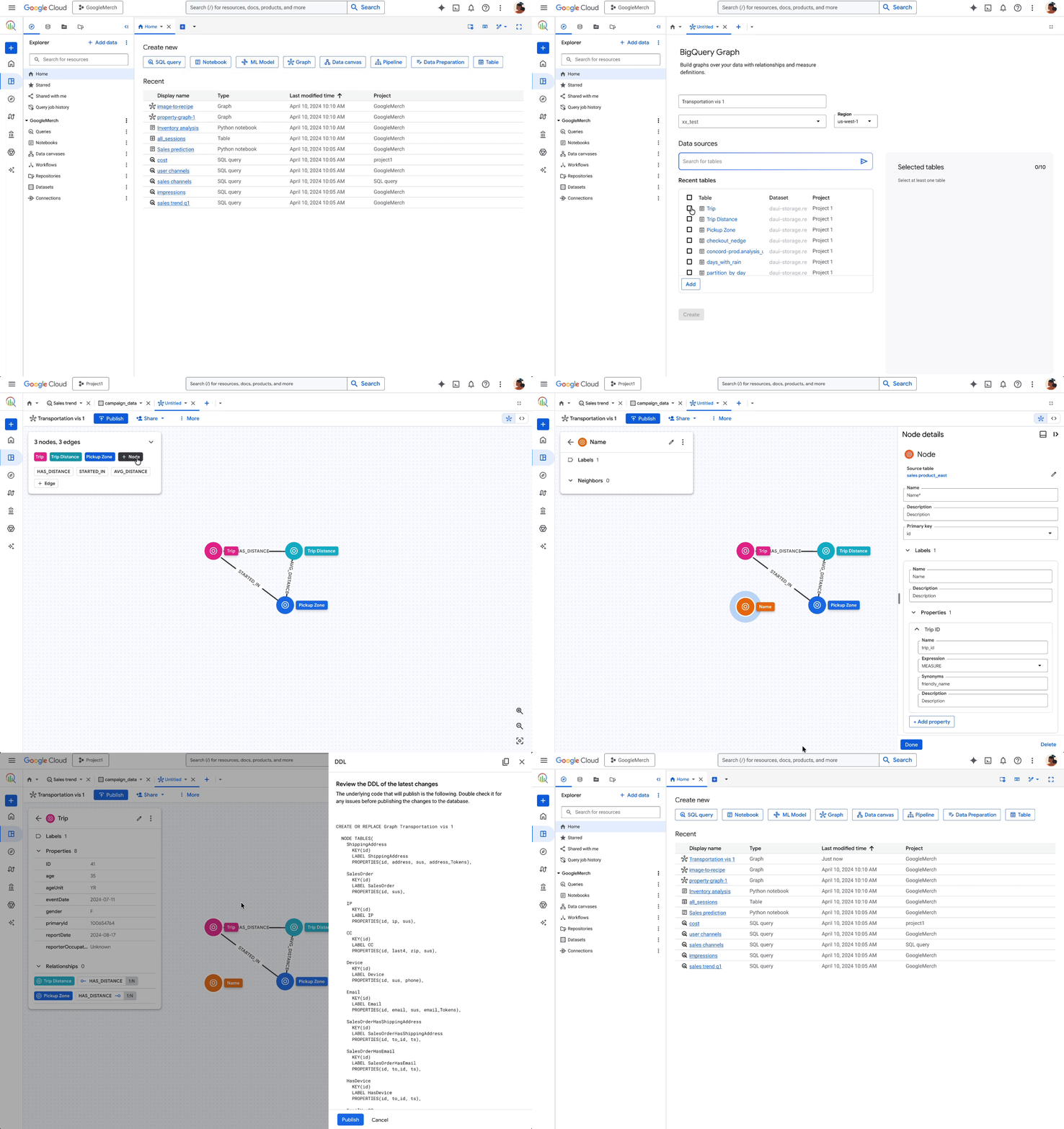
今回のメジャー対応では、グラフ上の関係性マッピングに、統制されたメトリクスを組み合わせる。これによりエージェントは、グラフに記録された複雑な依存関係を、指標が持つ精度を保ったまま横断的に推論できるようになるという。関係性という「つながり」と、指標という「正確な数値」を同じ基盤で扱える点が特徴と言える。
BigQuery自体はGoogle Cloudのデータ分析基盤の中核であり、近年はGeminiをはじめとする生成AI機能との連携を強めてきた。エージェント型AIの実用化に向けては、正確なデータへのアクセスと、企業ルールに沿った統制(ガバナンス)の両立が課題として指摘されている。グラフとメジャーを統合する今回の取り組みは、その両立を意識したものと見られる。
現時点ではプレビュー段階であり、正式提供に向けた仕様や対象範囲は今後変化する可能性がある。ただ、データの「関係性」を重視するアプローチは、信頼性の高いエージェント基盤を構築するうえでの一つの方向性を示していると言えそうだ。
Google Cloud has expanded BigQuery Graph with support for measures, now available in preview, in a move aimed at making autonomous, agentic AI workloads more reliable when they operate on enterprise data. The update matters because organizations increasingly want AI agents to move beyond answering simple questions and instead take actions or make operational recommendations, a shift that exposes the limitations of feeding models raw, disconnected tables.
The core problem the feature addresses is accuracy. According to Google, when enterprises transition from simple chat assistants to autonomous agentic workloads, they encounter a hard truth: agents are prone to inaccurate insights when working directly with raw tables. Flat, static tables strip away the relationships that define how a business actually operates. As a result, traditional data structures are effectively blind to multi-hop business context, which can lead AI agents to make incorrect operational decisions when a question depends on tracing dependencies across several connected entities.
BigQuery Graph is designed to close that gap by representing enterprises the way they exist in the physical world: as interconnected business entities with real-world dependencies. Rather than treating customers, orders, suppliers, products, and accounts as isolated rows in separate tables, a graph model captures the edges between them. This allows queries and, by extension, AI agents to follow chains of relationships, for example linking a delayed shipment to the supplier, the affected orders, and the customers downstream, without the brittle joins that flat schemas require.
The new element is the addition of measures. In this context, measures refer to governed metrics, the standardized, centrally defined calculations that ensure a term like revenue, churn, or margin is computed consistently across an organization. By adding measures support to BigQuery Graph, Google is unifying these governed metrics with relationship mapping. The stated goal is to let agents reason across the complex dependencies captured in graphs while applying the precision of measures, so that the numbers an agent produces are both relationship-aware and consistent with the organization's official definitions.
This combination is significant because relationships and metrics have often lived in separate layers of the data stack. Graph structures excel at modeling connections but do not inherently enforce how a metric should be calculated, while semantic layers define metrics but typically assume tabular data. Bringing the two together in one system appears intended to reduce the risk that an agent traverses the right relationships but then computes a value in an inconsistent or ungoverned way. The feature remains in preview, so behavior, coverage, and interfaces may change before general availability, and organizations should treat it as an early-stage capability rather than a production-hardened one.
For context, BigQuery is Google Cloud's serverless data warehouse, and it already supports property graph modeling and the GQL graph query language, positioning graph analytics as a native capability alongside traditional SQL. The measures work also aligns with a broader industry trend toward semantic layers and governed metric definitions, an area where tools such as Looker's modeling layer and dbt's metrics have pushed the idea that a single source of truth for business definitions is essential once multiple systems, and now AI agents, consume the same data.
The announcement sits within Google's larger agentic AI strategy, reflected in its Gemini models and Vertex AI platform, where the emphasis has shifted from chat interfaces toward agents capable of planning and executing multi-step tasks. Reliability is a recurring concern across the sector, because an agent that acts on a flawed inference can cause tangible operational harm, unlike a chatbot that merely returns a wrong answer. Grounding agents in governed, relationship-rich data is one way vendors are attempting to address that risk.
Enterprises evaluating the capability will likely want to weigh how their existing data is modeled, since realizing the benefit requires representing entities and dependencies as graphs and defining measures rather than relying on raw tables. The degree of improvement in agent accuracy will depend on the quality of that modeling and the specific workloads involved. As with any preview feature, prospective adopters should confirm current availability, supported regions, and integration details directly through Google Cloud's documentation before planning production deployments.
ポコとTECHガイドPoko & TECH Guide
ポコと当サイトのTECHガイドが、記事の要約と収集した情報から読みどころを語るAI生成の対話です。Poko and TECH Dashboard's own TECH Guide discuss the article's highlights in an AI-generated conversation based on its summary and collected source details.
- ポコPokoBigQuery Graphsが「メジャー」に対応って、それって何? グラフと数字を一緒に扱うの?BigQuery Graphs supports “measures” now—what does that mean? Does it combine relationships with business numbers?
- TECHガイドTECH Guide簡単に言うとじゃな、メジャーは共通ルールで管理された指標じゃ。記事によれば、エンティティ同士の関係と指標を統合する機能がプレビュー対応したんじゃよ。Simply put, measures are metrics managed under consistent rules. According to the article, preview support now combines those metrics with relationships between entities.
- ポコPokoそれって何がうれしいの? AIエージェントが生の表を読むのと、どう違うのかな。What’s the benefit? How is that different from an AI agent reading raw tables?
- TECHガイドTECH Guide記事では、生の平面的な表だけだと複数の関係をまたぐ文脈を見落とし、不正確な判断につながりやすいとしておる。グラフなら複雑な依存関係もたどれるんじゃ。The article says raw, flat tables can miss context spanning multiple relationships, leading to inaccurate decisions. Graphs let agents follow complex dependencies instead.
- ポコPokoなるほど! 関係の地図と、ルールがそろった指標を合わせて、AIがより正確に考えられるようにするんだね。Got it! It gives AI both a relationship map and consistently defined metrics, helping it reason more accurately.
- TECHガイドTECH Guideその理解でよいぞ。記事ではまだプレビュー対応なので、まずはこの統合がエージェント型ワークロードでどう生かされるかが見どころじゃな。Exactly. Since the article describes it as preview support, the key thing to watch is how this combination is used in agentic workloads.