AIグラス・インパクト助成金の受賞者発表:仕事・学習・自立した生活を支援Announcing the AI Glasses Impact Grant Recipients: Helping People Work, Learn, and Live More Independently
匿名の公開いいねです。記事の保存・お気に入りではなく、Featured、Top 3、重要度、掲載順位には影響しません。仕組みとプライバシーAnonymous public likes are reactions, not saved articles or bookmarks. They do not affect Featured, Top 3, importance, or listing order.How it works and privacy
- MetaはAIグラスを活用して障害者や高齢者の自立を支援するプロジェクトへの助成金受賞者を発表した。
- テクノロジーのアクセシビリティ向上に向けた具体的な取り組みとして注目される。
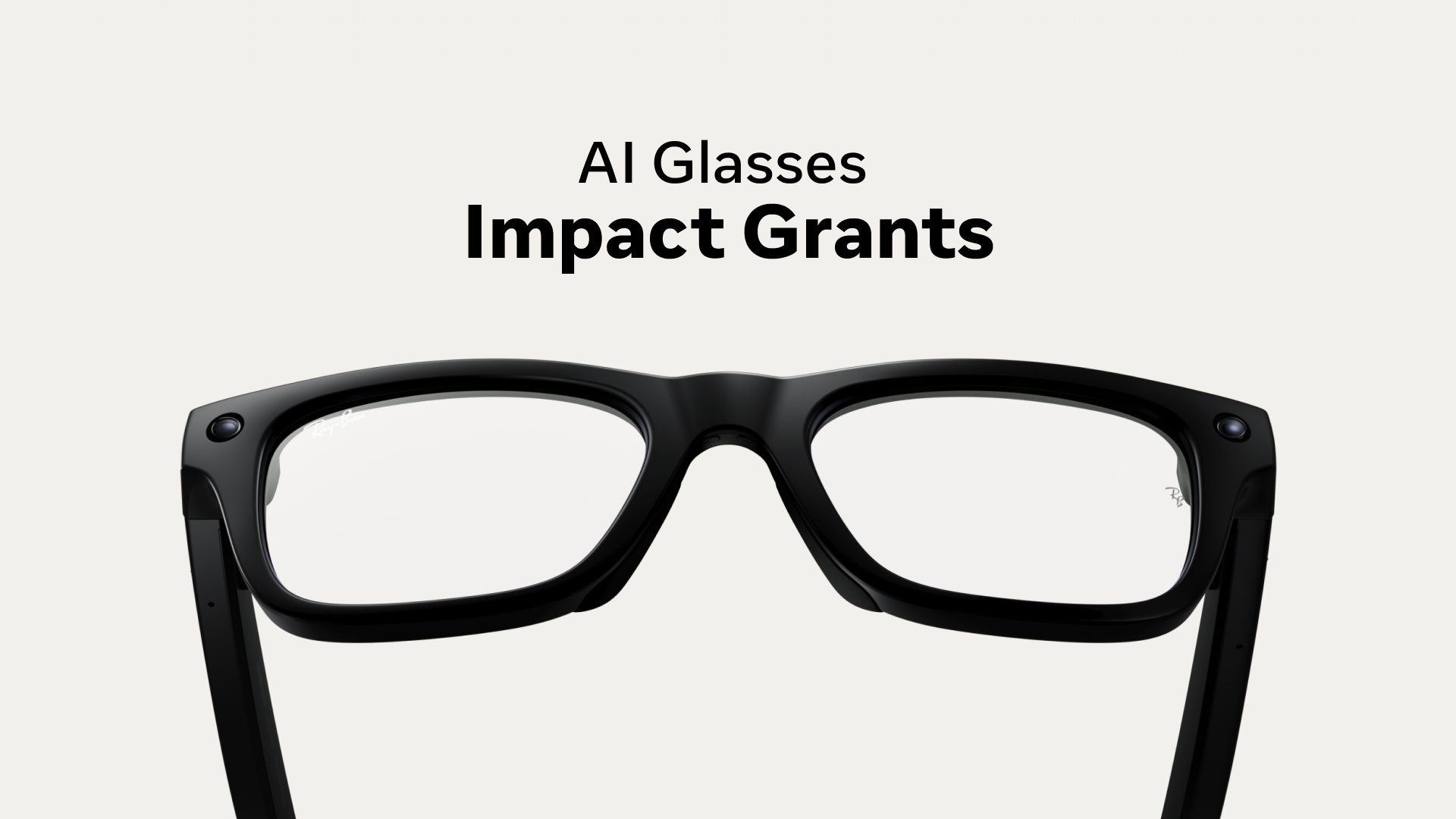
Meta announced the recipients of its AI Glasses Impact Grant, funding projects that use AI-powered glasses to help people with disabilities and older adults live, work, and learn more independently.
本ページの本文と要約は AI による自動生成です。日本語版と英語版は言語ごとに独立して生成されるため、表現や詳しさが異なる場合があります。正確性は元記事 (about.fb.com) をご確認ください。The body and summaries are AI-generated independently for each language, so wording and detail may differ. Verify accuracy at the original source (about.fb.com).
要約と収集メタデータに基づく AI 解説。元記事全文の転載・翻訳ではありません。AI explainer based on the summaries and collected metadata, not a copy or translation of the full source article.
Metaは、AIグラスを活用して障害のある人や高齢者の自立した生活・就労・学習を支援するプロジェクトを対象とした「AIグラス・インパクト助成金(AI Glasses Impact Grant)」の受賞者を発表した。日常のさまざまな場面でテクノロジーへのアクセスを広げる具体策として注目される。
この助成金は、同社のスマートグラス「Ray-Ban Meta」などに搭載されたAI機能を、アクセシビリティ向上に役立てる取り組みを後押しするものだ。Ray-Ban Metaは内蔵カメラやマイク、スピーカー、音声アシスタントを組み合わせ、装着者が見ている景色をAIが解釈して音声で説明したり、質問に答えたりできる。こうした機能は、視覚に障害のある人が周囲の状況を把握したり、文字情報を読み取ったりする用途と親和性が高いと見られる。
受賞プロジェクトは、視覚や聴覚に困難を抱える人、高齢者などを対象に、移動や読書、対人コミュニケーション、就労といった場面での支援を想定しているとされる。ハンズフリーで使えるグラス型デバイスは、スマートフォンを取り出しにくい人や、両手を使う作業中でも情報を得たい人にとって利点があると考えられる。
背景には、ウェアラブル端末とAIを組み合わせたアクセシビリティ活用の広がりがある。視覚障害者向けには、スマートフォンのカメラで物体や文字、紙幣を認識するアプリや、遠隔のボランティアや専門オペレーターが映像越しに支援するサービスが以前から存在する。近年は生成AIの画像認識能力が高まり、その場の状況をより柔軟に説明できるようになりつつある。
一方で、常時装着するカメラ付き端末には、プライバシーや誤認識、通信環境への依存といった課題も指摘されている。AIが生成する説明が必ずしも正確とは限らず、重要な判断を委ねる際には注意が必要になる可能性がある。助成の成果がどこまで実用的な支援につながるかは、今後の実装と検証にかかっていると言えそうだ。
Metaのほか、AppleやGoogleもアクセシビリティ機能の拡充を進めており、支援技術は各社の競争と協調が交錯する領域になっている。今回の助成は、当事者や開発者を巻き込みながら、AIグラスの社会的な価値を具体的に示そうとする動きの一つと位置づけられる。
Meta has announced the recipients of its AI Glasses Impact Grant, a funding program supporting organizations that use AI-powered smart glasses to help people with disabilities and older adults live, work, and learn more independently. The announcement matters because it connects a mainstream consumer wearable, the Ray-Ban Meta line, to concrete accessibility goals, an area where hands-free cameras and voice assistants can quietly address everyday tasks that are difficult for people who are blind, have low vision, or face mobility and cognitive challenges.
The grants appear designed to back real-world deployments rather than pure research, funneling money to nonprofits, universities, and community groups that put the hardware into the hands of people who could benefit. According to Meta's framing, the projects span the three broad themes of independent living, employment, and education, suggesting a mix of navigation aids, workplace assistance, and learning tools built on top of the glasses rather than a single flagship application.
The technical foundation is the current generation of Ray-Ban Meta glasses, which combine a small camera, open-ear speakers, microphones, and an on-device gateway to Meta AI, the company's multimodal assistant. Users can trigger the assistant by voice and ask it to describe what is in front of them, read printed text aloud, identify objects, or answer questions about their surroundings. This "look and ask" pattern pairs a captured image with a natural-language query, then returns a spoken response. For someone with a visual impairment, that can mean confirming a label or expiration date, reading a menu, or getting a quick summary of a room without needing to ask a nearby person for help.
It is worth understanding how this fits into a wider accessibility toolkit. Meta already integrates Be My Eyes, a service that connects blind and low-vision users to sighted volunteers or to AI-generated descriptions, into the glasses. Comparable tools include Microsoft's Seeing AI app, Google's Lookout, the Envision smart glasses, and OrCam's wearable readers, all of which use cameras and machine learning to turn visual information into audio. The distinguishing feature of glasses-based approaches is that the camera sits at eye level and leaves both hands free, which can be significant for tasks like cooking, navigating a building, or handling documents.
The grants also reflect a broader industry trend toward positioning AI wearables as assistive technology. Apple has expanded features such as VoiceOver, Live Recognition, and door detection across its devices, while Amazon and Google have invested in accessible voice interfaces. Framing AI glasses as tools for independence gives Meta a socially resonant use case at a moment when the company is heavily promoting its glasses lineup, including a display-equipped model and its longer-term augmented reality ambitions. Grant programs of this kind can also generate practical feedback from users with disabilities, whose needs often surface usability issues that benefit all customers.
Several caveats are worth keeping in mind. Camera-equipped glasses that continuously observe the environment raise ongoing privacy questions, both for wearers and for bystanders who may be captured. Many AI features rely on cloud processing and therefore need a network connection, which can affect reliability, latency, and data handling. Accuracy is another consideration, because scene descriptions and text recognition can still make errors, and users who depend on them for safety-critical tasks are likely to need to verify results. Cost and availability may also limit reach, since the glasses are sold in a subset of markets and languages.
Meta has not, in this announcement, published detailed outcome metrics, so the real measure of the program will be how the funded projects perform once deployed and whether independent evaluations follow. For now, the grant signals that assistive use cases are becoming a deliberate part of the smart glasses roadmap rather than an afterthought. If the funded work demonstrates durable benefits, it could strengthen the case that everyday AI wearables have a meaningful role in accessibility, complementing rather than replacing established tools such as screen readers, guide services, and specialized devices that many people already rely on.
ポコとTECHガイドPoko & TECH Guide
ポコと当サイトのTECHガイドが、記事の要約と収集した情報から読みどころを語るAI生成の対話です。Poko and TECH Dashboard's own TECH Guide discuss the article's highlights in an AI-generated conversation based on its summary and collected source details.
- ポコPokoAIグラス・インパクト助成金って何? 誰が選ばれたの?What is the AI Glasses Impact Grant, and who received it?
- TECHガイドTECH Guide記事によれば、Meta AIグラスを活用する全米30団体が選ばれたそうじゃ。助成金は活動を資金面で後押しするものじゃよ。According to the article, 30 organizations across the US using Meta AI glasses were selected. Put simply, a grant provides funding to support their work.
- ポコPokoそれって何が嬉しいの? AIグラスで暮らしがどう変わるのかな。What makes that helpful? How could AI glasses change someone’s daily life?
- TECHガイドTECH Guide障害者や高齢者が、より安全に働き、速く学び、自立して暮らせるよう支えるプロジェクトだと記事は伝えておるよ。The article says these projects aim to help people with disabilities and older adults work more safely, learn faster, and live more independently.
- ポコPokoなるほど、AIグラスを便利な道具で終わらせず、仕事や学び、自立の支援に生かすんだね!I see! So the idea is to use AI glasses not just for convenience, but to support work, learning, and independent living.
- TECHガイドTECH Guideその通りじゃ。各団体の取り組みが、アクセシビリティ向上にどうつながるかが今後の見どころじゃな。Exactly. The key thing to watch is how each organization’s work may improve accessibility in practice.