WPPがAIマーケティング向けにプラットフォームとデータエンジニアリングを実用化する方法How WPP operationalizes platform and data engineering for AI marketing
匿名の公開いいねです。記事の保存・お気に入りではなく、Featured、Top 3、重要度、掲載順位には影響しません。仕組みとプライバシーAnonymous public likes are reactions, not saved articles or bookmarks. They do not affect Featured, Top 3, importance, or listing order.How it works and privacy
WPPはGoogle Cloudを活用し、数百のシステムに分散していたマーケティングデータを統合することで、エージェント型マーケティングシステム「WPP Open」にAIを適用できる基盤を構築した。
WPP consolidated fragmented marketing data spread across hundreds of systems onto Google Cloud, enabling its agentic AI marketing platform WPP Open to deliver predictive insights and confident ad-spend decisions for brands.
本ページの本文と要約は AI による自動生成です。日本語版と英語版は言語ごとに独立して生成されるため、表現や詳しさが異なる場合があります。正確性は元記事 (cloud.google.com) をご確認ください。The body and summaries are AI-generated independently for each language, so wording and detail may differ. Verify accuracy at the original source (cloud.google.com).
要約と収集メタデータに基づく AI 解説。元記事全文の転載・翻訳ではありません。AI explainer based on the summaries and collected metadata, not a copy or translation of the full source article.
世界的な広告・マーケティング大手のWPPが、Google Cloudを活用してマーケティングデータの統合基盤を構築し、エージェント型マーケティングシステム「WPP Open」にAIを適用するための土台を整えた。市場の断片化と経済の変動が進むなか、従来の人間の直感に頼った意思決定を、データに基づく予測へと置き換える取り組みである。
WPPによれば、マーケティングやコミュニケーションを担うエージェンシーは、市場の細分化と景気の不安定さによって、顧客獲得や広告予算の最適化を勘や経験だけで進めることが難しくなっている。同社はこうした「推測」を、変化する市場の動きをAIで捉えた視点に置き換え、ブランドが確信を持って投資判断を下し、市場の速度に合わせて動けるようにすることを狙う。これがWPP Openの提供価値だとしている。
ただし、高度なAIモデルを適用する前に、WPPは大きなエンジニアリング上の課題に直面していた。モデルの土台となるマーケティングデータが、世界中の数百に及ぶエージェンシーやシステムにまたがって分散していたのだ。データがサイロ化した状態では、AIツールを効率的かつ安全に展開することはほぼ不可能だったとされる。
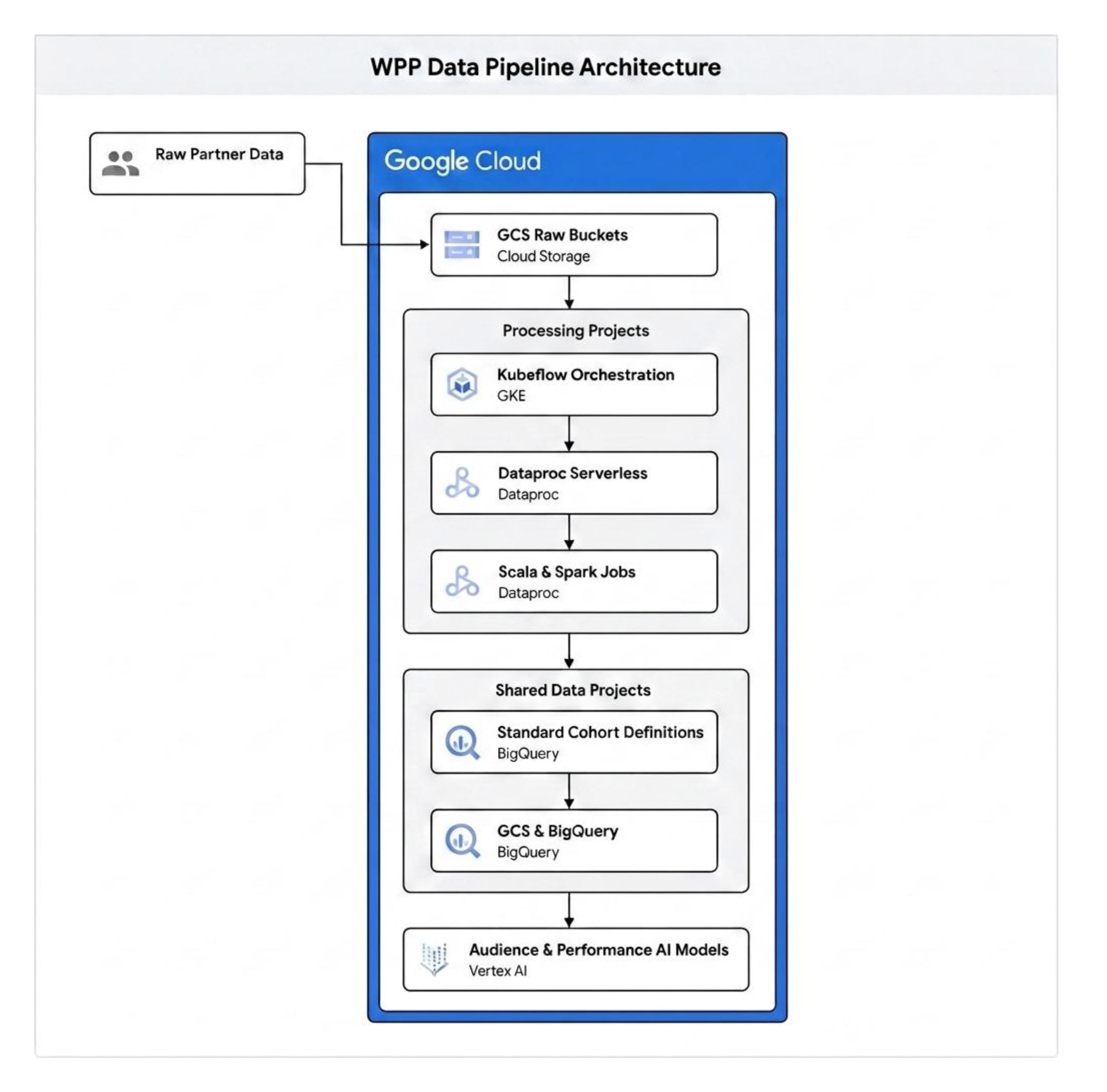
そこでWPPは、散在していたデータをGoogle Cloud上に集約し、一貫した形で扱えるデータエンジニアリングの基盤を整備した。統合されたデータを起点とすることで、予測的なインサイトの生成や、広告費に関するより確度の高い意思決定を支えられるようになるという。
マーケティング領域では、生成AIやエージェント型AIの導入が各社で加速しており、Google CloudのGeminiをはじめとする基盤モデルやデータ分析ツールを組み合わせる動きも広がっている。WPPの事例は、AI活用の成果を左右するのが最先端のモデルそのものだけでなく、その前提となるデータ統合や整備の巧拙にもある可能性を示すものと言えそうだ。今後、同様の課題を抱える他の大手代理店や事業会社が、データ基盤の刷新を経てAI活用へ進む流れが続く可能性がある。
WPP, one of the world's largest advertising and marketing services groups, has detailed how it built the data engineering foundation required to apply AI across its business, working with Google Cloud. The effort matters because marketing and communications agencies are under mounting pressure from fragmented media channels and economic volatility, and the traditional reliance on human intuition to win clients and optimize ad spend is becoming harder to sustain at the speed the market now demands.
According to the company, WPP is replacing that guesswork with an AI-powered view of shifting market dynamics, aiming to give brands what it describes as predictive certainty so they can invest with confidence while moving at the pace of the market. That capability sits at the center of WPP Open, the group's agentic marketing system, which is positioned to surface insights and support decisions about how and where budgets are allocated.
Before those AI models could be applied at scale, however, WPP had to overcome a more fundamental engineering challenge. The marketing data feeding its models was fragmented across hundreds of global agencies and systems, a level of dispersion that made it nearly impossible to deploy AI tools efficiently and securely. Data spread across disconnected silos is difficult to govern, costly to move, and often inconsistent in format, all of which constrains the accuracy and trustworthiness of any model built on top of it.
To address this, WPP consolidated that fragmented data onto Google Cloud, creating a unified foundation from which its agentic platform can draw. Centralizing data in this way is a common prerequisite for enterprise AI. Models tend to perform better when they can reach clean, consistent, and well-governed information, and a shared platform makes it easier to apply uniform security and access policies across many teams, brands, and regions. In practice, this kind of consolidation typically involves ingesting data from disparate sources, standardizing schemas, and establishing a single, queryable environment that downstream applications and models can rely on.
The term "agentic" is central to how WPP frames WPP Open. Agentic systems go beyond generating text or predictions; they are designed to chain together multiple steps, call tools, and act on data with a degree of autonomy, orchestrated toward a goal such as planning media or optimizing spend. Such systems depend heavily on the quality and accessibility of their underlying data, which helps explain why WPP prioritized the data engineering work before layering on more sophisticated models. Without a consolidated, governed data layer, agent behavior is more likely to be inconsistent or difficult to audit.
The project reflects a broader industry pattern in which large organizations treat data unification as the groundwork for AI rather than an afterthought. On Google Cloud, this kind of foundation is commonly associated with tools such as BigQuery for large-scale analytics and Vertex AI for building and serving models, alongside the Gemini family of models. WPP's initiative appears to follow this template, though the specific mix of services and the degree of automation involved will vary by deployment. The company's account frames the achievement primarily as an engineering milestone that unlocks AI, rather than the launch of a single new product.
Context from the wider advertising sector helps explain the urgency. WPP competes with other large holding groups such as Publicis, Omnicom, and Interpublic, several of which have publicly emphasized data platforms and AI as competitive differentiators. Media fragmentation, driven by the proliferation of digital channels, retail media, and streaming, has made it harder to measure and forecast campaign performance using conventional methods, increasing the appeal of predictive, data-driven approaches.
For brands, the intended payoff is greater confidence in investment decisions and faster reactions to changing conditions, though the real-world impact will likely depend on data quality, model performance, and how effectively the agentic system is integrated into day-to-day workflows. WPP's disclosure is notable mainly as a case study in operationalizing AI at scale: it underscores that the difficult, less visible work of data engineering and platform consolidation is often what determines whether ambitious AI marketing systems can deliver on their promises.
ポコとTECHガイドPoko & TECH Guide
ポコと当サイトのTECHガイドが、記事の要約と収集した情報から読みどころを語るAI生成の対話です。Poko and TECH Dashboard's own TECH Guide discuss the article's highlights in an AI-generated conversation based on its summary and collected source details.
- ポコPoko数百のシステムにデータがバラバラだったって、AIには何が困るの?The data was scattered across hundreds of systems. Why is that a problem for AI?
- TECHガイドTECH Guide簡単に言うと、AIが使う材料を集めにくいのじゃ。記事によれば、WPPはGoogle Cloud上に統合し、WPP OpenでAIを使う基盤を整えたそうじゃよ。Simply put, AI struggled to access its ingredients. According to the article, WPP consolidated the data on Google Cloud, creating a foundation for AI in WPP Open.
- ポコPokoWPP Openは「エージェント型」なんだよね。それって何が嬉しいの?WPP Open is “agentic,” right? What’s useful about that?
- TECHガイドTECH Guideエージェント型とは、目的に沿ってAIが作業を進める仕組みじゃ。記事では、市場の予測的な洞察を示し、広告費をより自信を持って判断できるとしておる。Agentic means AI can carry out tasks toward a goal. The article says WPP Open provides predictive market insights and helps brands make ad-spend decisions with greater confidence.
- ポコPokoなるほど!先に散らばったデータをまとめたから、WPP OpenのAIが予測や判断を支えられるようになったんだね。Got it! By unifying the scattered data first, WPP made it possible for WPP Open’s AI to support predictions and decisions.
- TECHガイドTECH Guideその理解でよいぞ。今後は、この基盤が変化する市場の把握と広告費の判断をどう支えるかが見どころじゃな。Exactly. The key thing to watch is how this foundation supports understanding shifting markets and making ad-spend decisions.