BigQueryにTabFMを導入:予測分析を再構想Introducing TabFM in BigQuery: Predictive analytics reimagined
匿名の公開いいねです。記事の保存・お気に入りではなく、Featured、Top 3、重要度、掲載順位には影響しません。仕組みとプライバシーAnonymous public likes are reactions, not saved articles or bookmarks. They do not affect Featured, Top 3, importance, or listing order.How it works and privacy
- BigQueryにGoogle Researchが開発した事前学習済み基盤モデルTabFMが加わり、解約や購買意向、不正リスクの予測を簡素化します。
- 特徴量設計や調整、長時間の学習に伴う負担を減らし、企業が予測結果を意思決定に生かしやすくなります。
TabFM adds a foundation model pre-trained by Google Research to BigQuery for churn, purchase-intent, and fraud prediction, helping businesses act on forecasts with less modeling overhead.
本ページの本文と要約は AI による自動生成です。日本語版と英語版は言語ごとに独立して生成されるため、表現や詳しさが異なる場合があります。正確性は元記事 (cloud.google.com) をご確認ください。The body and summaries are AI-generated independently for each language, so wording and detail may differ. Verify accuracy at the original source (cloud.google.com).
要約と収集メタデータに基づく AI 解説。元記事全文の転載・翻訳ではありません。AI explainer based on the summaries and collected metadata, not a copy or translation of the full source article.
BigQuery
BigQueryに、Google Researchが開発したTabFMモデルが加わる。解約、購買意向、不正リスクなどの予測分析で生じていたモデリングの負担を減らし、企業が予測結果を意思決定に生かしやすくするものと説明されている。
従来の予測分析
企業の予測分析では、XGBoost、Random Forest、Deep Neural Networks(DNNs)などのライブラリを使い、用途ごとにカスタムモデルを構築してきた。こうしたモデルは有効である一方、学習、調整、デプロイ、再学習を繰り返す一連のサイクルは、複雑で時間がかかる場合がある。
さらに、手作業による特徴量設計やハイパーパラメータ調整、長時間かつ高コストな学習、専門的なデータサイエンス技能も必要とされてきた。この負担により、企業が意思決定で予測モデルを十分に活用できないことがあるとされる。
TabFM
TabFMは、表形式データの回帰と分類を対象とする、事前学習済みの基盤モデルだ。記事では最先端のモデルと位置付けられており、従来のカスタムモデル構築に伴う作業を簡素化する。対象例として、顧客の解約予測、購買意向の予測、不正スコアリングが挙げられている。
ICL
TabFMは、in-context learning(ICL)を活用する。これにより、特徴量設計や調整、長時間の学習に伴う負担を抑えながら、BigQuery上で表形式データの回帰や分類を予測分析に利用できるモデルとして紹介されている。
TabFM in BigQuery
TabFM is being introduced in BigQuery to simplify enterprise predictive analytics, including churn prediction, purchase-intent prediction, and fraud scoring. This matters because the traditional process for building and maintaining custom predictive models can be complex, time-consuming, and costly, limiting how extensively businesses use predictions in decision-making.
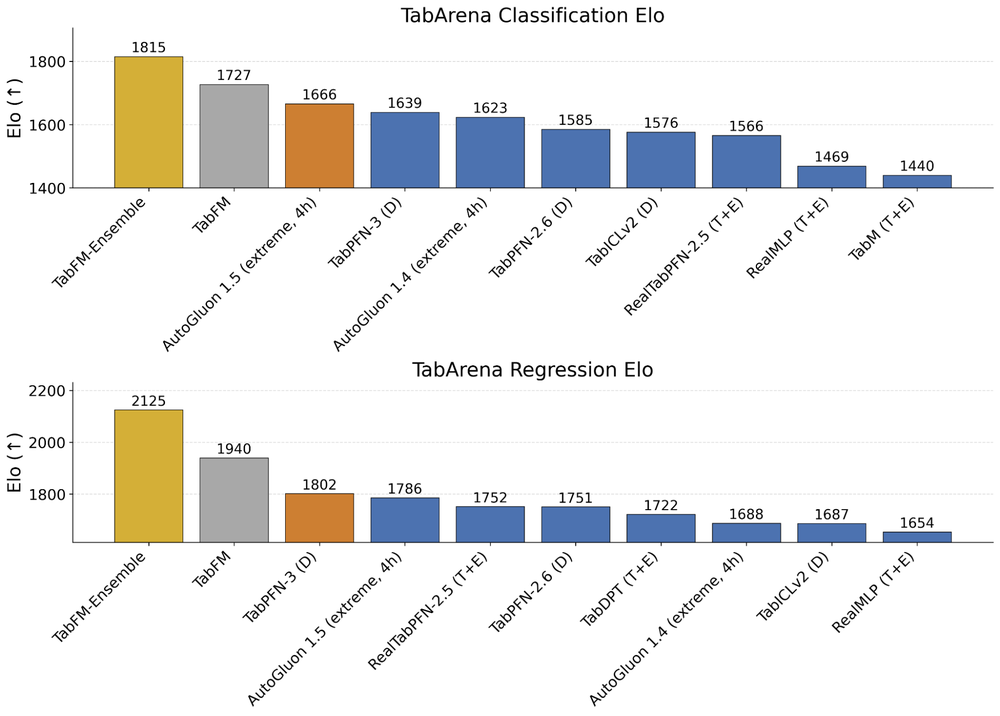
Developed by Google Research, TabFM is described in the announcement as a state-of-the-art, pre-trained foundation model for regression and classification on tabular data.
Predictive analytics tasks
Historically, enterprises have approached these predictive tasks by building custom models with libraries such as XGBoost, Random Forest, or Deep Neural Networks. Although those approaches can be effective, they commonly involve a train-tune-deploy-retrain cycle.
That cycle requires more than initially training a model. The source highlights the continuing complexity of tuning, deployment, and retraining as part of the traditional approach. Together, these stages can make predictive analytics difficult and time-consuming to implement.
Modeling overhead
The announcement identifies several specific sources of overhead: manual feature engineering, hyperparameter tuning, and lengthy, expensive training. It also points to the need for specialized data science skills.
According to the source, these requirements can lead businesses to underutilize predictive models when making decisions. TabFM’s addition to BigQuery is presented as a way to reduce that modeling burden, making it easier to apply predictions without relying on the same level of custom model development and associated work.
In-context learning
TabFM uses in-context learning, or ICL. The source identifies this as a technical element of the model but does not provide further detail about its implementation in the supplied excerpt.
The core change is therefore the availability in BigQuery of a pre-trained foundation model designed for regression and classification on tabular data. Its stated focus is simplifying predictive work that has traditionally required custom models, extensive preparation, repeated tuning and training, and specialized expertise.
ポコとTECHガイドPoko & TECH Guide
ポコと当サイトのTECHガイドが、記事の要約と収集した情報から読みどころを語るAI生成の対話です。Poko and TECH Dashboard's own TECH Guide discuss the article's highlights in an AI-generated conversation based on its summary and collected source details.
- ポコPokoBigQueryにTabFMが入ると、解約や不正リスクまで予測しやすくなるの? TabFMって何?So TabFM in BigQuery can make things like churn and fraud-risk prediction easier? What exactly is TabFM?
- TECHガイドTECH GuideTabFMは、表形式データの回帰や分類向けに事前学習された基盤モデルじゃよ。本文では、Google Researchが開発したものとして紹介されておる。TabFM is a pre-trained foundation model for regression and classification on tabular data. The article introduces it as a model developed by Google Research.
- ポコPokoじゃあ、予測モデルを毎回ゼロから組む代わりに、下準備の手間を減らせる道具、という感じ?So instead of building a prediction model from zero every time, it’s a tool that can reduce the setup work?
- TECHガイドTECH Guideそんなイメージじゃ。この記事では、特徴量設計や調整、長い学習、専門スキルの負担を減らし、企業が予測を意思決定に生かしやすくするとしておる。That’s the idea. The article says it can reduce work like feature engineering, tuning, lengthy training, and specialized-skill demands, helping businesses use forecasts in decisions.
- ポコPokoつまり、表のデータから予測したい企業が、モデル作りの大変さを減らせるかもしれないんだね。So companies that want predictions from tabular data may be able to cut down the hard work of building models.
- TECHガイドTECH Guideうむ。大事なのは、解約・購買意向・不正リスクのような予測で、従来の作成から再学習までの複雑さを軽くする点じゃな。Yes. The key point is easing the complexity of the traditional build, tune, deploy, and retrain cycle for predictions such as churn, purchase intent, and fraud risk.



