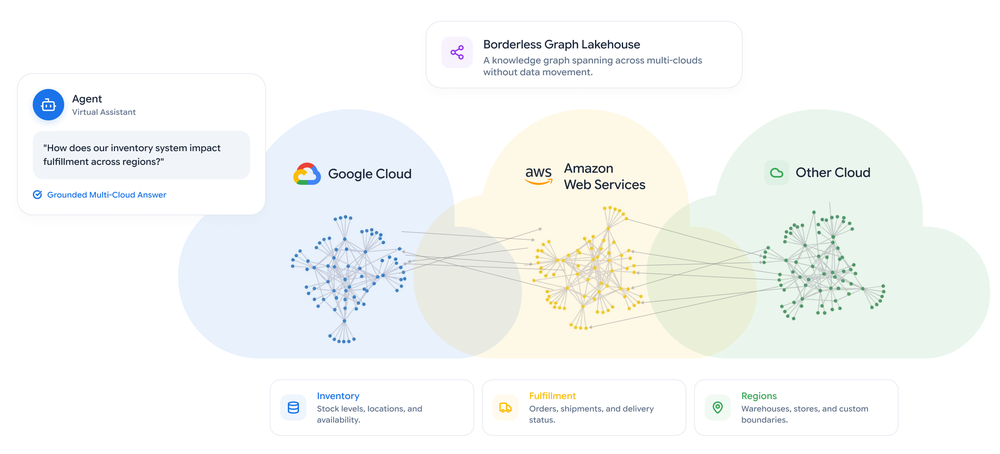
BigQuery Graphが一般提供開始:エージェント時代の知識基盤BigQuery Graph is now GA: the knowledge foundation for the agentic era
匿名の公開いいねです。記事の保存・お気に入りではなく、Featured、Top 3、重要度、掲載順位には影響しません。仕組みとプライバシーAnonymous public likes are reactions, not saved articles or bookmarks. They do not affect Featured, Top 3, importance, or listing order.How it works and privacy
- BigQuery Graphが一般提供され、データウェアハウス内でISO標準のGQLとSQLによるグラフ分析が可能になりました。
- 企業は別基盤へのデータ移行を抑え、関係性の把握やAIエージェントの回答に必要な文脈構築を効率化できます。
BigQuery Graph is now generally available, pairing ISO-standard GQL with SQL for native graph analysis, so enterprises can map relationships and ground AI agents without separate graph silos.
本ページの本文と要約は AI による自動生成です。日本語版と英語版は言語ごとに独立して生成されるため、表現や詳しさが異なる場合があります。正確性は元記事 (cloud.google.com) をご確認ください。The body and summaries are AI-generated independently for each language, so wording and detail may differ. Verify accuracy at the original source (cloud.google.com).
要約と収集メタデータに基づく AI 解説。元記事全文の転載・翻訳ではありません。AI explainer based on the summaries and collected metadata, not a copy or translation of the full source article.
一般提供開始
BigQuery Graphの一般提供が開始された。データウェアハウス内でグラフ分析とリレーショナル分析を統合し、企業データに含まれる関係性や、AIエージェントの回答を根拠づける文脈を扱える点が重要となる。
関係性の把握
企業データで重要な問いは、個々の行だけを見ても答えられない場合がある。たとえば、2つのアカウントがどのようにつながっているか、支払いがどの経路を通ったか、といった問いは、データ同士の接続や経路を捉える必要がある。グラフは、こうした「何が何と、どのようにつながっているか」を分析するための仕組みとして説明されている。
GQLとSQL
BigQuery Graphでは、ISO標準のGraph Query LanguageであるGQLをSQLと並べて利用できる。グラフ上のつながりをたどる処理はネイティブに実行され、グラフ分析とリレーショナル分析を同じデータウェアハウス上で扱える。これにより、行を基にした分析と、接続関係や経路を基にした分析を分離せずに進められるとされる。
ETL不要
従来、こうした洞察を得るには、データを独立したグラフデータベースへ抽出する必要があり、データのサイロ化や運用上の負担につながっていたと説明されている。BigQuery Graphはグラフ機能をデータウェアハウスへ直接組み込み、ETLを不要としている。別のグラフ基盤へのデータ移行を抑えながら、関係性の把握やAIエージェントに必要な文脈の構築を行える。
BigQuery Graph
BigQuery Graph is now generally available, bringing native graph capabilities directly to the data warehouse. The release matters because enterprise questions often depend not only on individual rows, but also on the relationships and paths connecting data.
According to the announcement, BigQuery Graph was introduced in preview to unify graph and relational analytics. Its general availability makes those capabilities available without requiring a standalone graph database.
Enterprise data
The source highlights questions such as how two accounts are linked, what path a payment took, and what context grounds an AI agent’s answer. These are relationship-focused questions that a graph is built to address.
Historically, obtaining such insights meant extracting data into standalone graph databases. The announcement says that approach created data silos and added operational overhead. BigQuery Graph is intended to remove those barriers by placing graph capabilities within the data warehouse rather than requiring data to be moved to a separate graph system.
GQL alongside SQL
BigQuery Graph places the ISO-standard Graph Query Language, or GQL, alongside SQL. This pairing supports graph and relational analytics within BigQuery, allowing relationship-oriented queries and existing relational analysis to operate in the same data-warehouse environment.
Graph traversals run natively, according to the source. The service also requires no ETL for this graph analysis, reducing the need to extract and transform warehouse data for use in a separate graph platform.
AI agent’s answer
The source presents context for AI agents as one use for these graph capabilities. By examining how data points connect, enterprises can build the context needed to ground an AI agent’s answer.
The same capabilities can be used to map links between accounts or follow the path taken by a payment. In each case, the focus is on connections across enterprise data rather than isolated rows, with GQL and SQL supporting the analysis directly in BigQuery.
ポコとTECHガイドPoko & TECH Guide
ポコと当サイトのTECHガイドが、記事の要約と収集した情報から読みどころを語るAI生成の対話です。Poko and TECH Dashboard's own TECH Guide discuss the article's highlights in an AI-generated conversation based on its summary and collected source details.
- ポコPoko仕事で、口座のつながりや支払いの経路を調べるとき、普段の作業はどう変わるの?At work, how does this change the way people trace links between accounts or follow a payment’s path?
- TECHガイドTECH Guideこの記事では、データを別基盤へ移さず、BigQuery内で関係性をたどれるようになるのじゃ。AIエージェントの回答に必要な文脈も作りやすくなるぞ。The article says teams can explore relationships inside BigQuery without moving data elsewhere. That can also make it easier to build the context AI agents need for their answers.
- ポコPoko前はBigQueryの中だけではできなかったの? 別の場所へデータを運ぶ必要があったってこと?Couldn’t BigQuery do that on its own before? Did teams have to move the data somewhere else?
- TECHガイドTECH Guide本文では、従来は独立したグラフデータベースへ抽出し、分断や運用負担が生じていたとある。今はGQLとSQLを並べて使え、ETLも不要じゃよ。The post describes the old approach as extracting data into standalone graph databases, creating silos and operational overhead. Now GQL works alongside SQL, with no ETL required.
- ポコPokoなるほど、一番の収穫は、データを引っ越しさせずに「どうつながっているか」を調べられることなんだね!Got it—the biggest win is being able to investigate how things connect without relocating the data!
- TECHガイドTECH Guide今回示された範囲では、次はGQLとSQLを使い、関係分析やAI回答の文脈づくりへどう生かすかに注目じゃのう。Based on what’s presented here, the next thing to watch is how teams use GQL and SQL for relationship analysis and for grounding AI responses.



