HomeIndustry & Policyスタックドプルリクエストがパブリックプレビューで利用可能に

スタックドプルリクエストがパブリックプレビューで利用可能にStacked pull requests are now in public preview

AI2 点サマリ2 key points
  • GitHubは大規模な変更を小さく分割して段階的にレビューできる「スタックドプルリクエスト」機能をパブリックプレビューとして公開した。
  • 開発者はフォーカスされた変更単位で順序付きのPRシリーズを作成・管理できるようになる。
  • GitHub has launched stacked pull requests in public preview, enabling developers to break large changes into a series of small, focused, and independently reviewable PRs.
  • This makes code review more manageable for complex features.

要約と収集メタデータをもとに生成した AI 解説本文です。元記事全文の転載・翻訳ではありません。This AI explainer is generated from the summaries and collected metadata, not from a reproduction or translation of the full source article.

GitHubは、大規模なコード変更を小さく分割して段階的にレビューできる新機能「スタックドプルリクエスト(Stacked pull requests)」をパブリックプレビューとして公開した。複雑な機能開発においてレビューの負担を軽減し、開発ワークフローを効率化することを狙った機能だ。

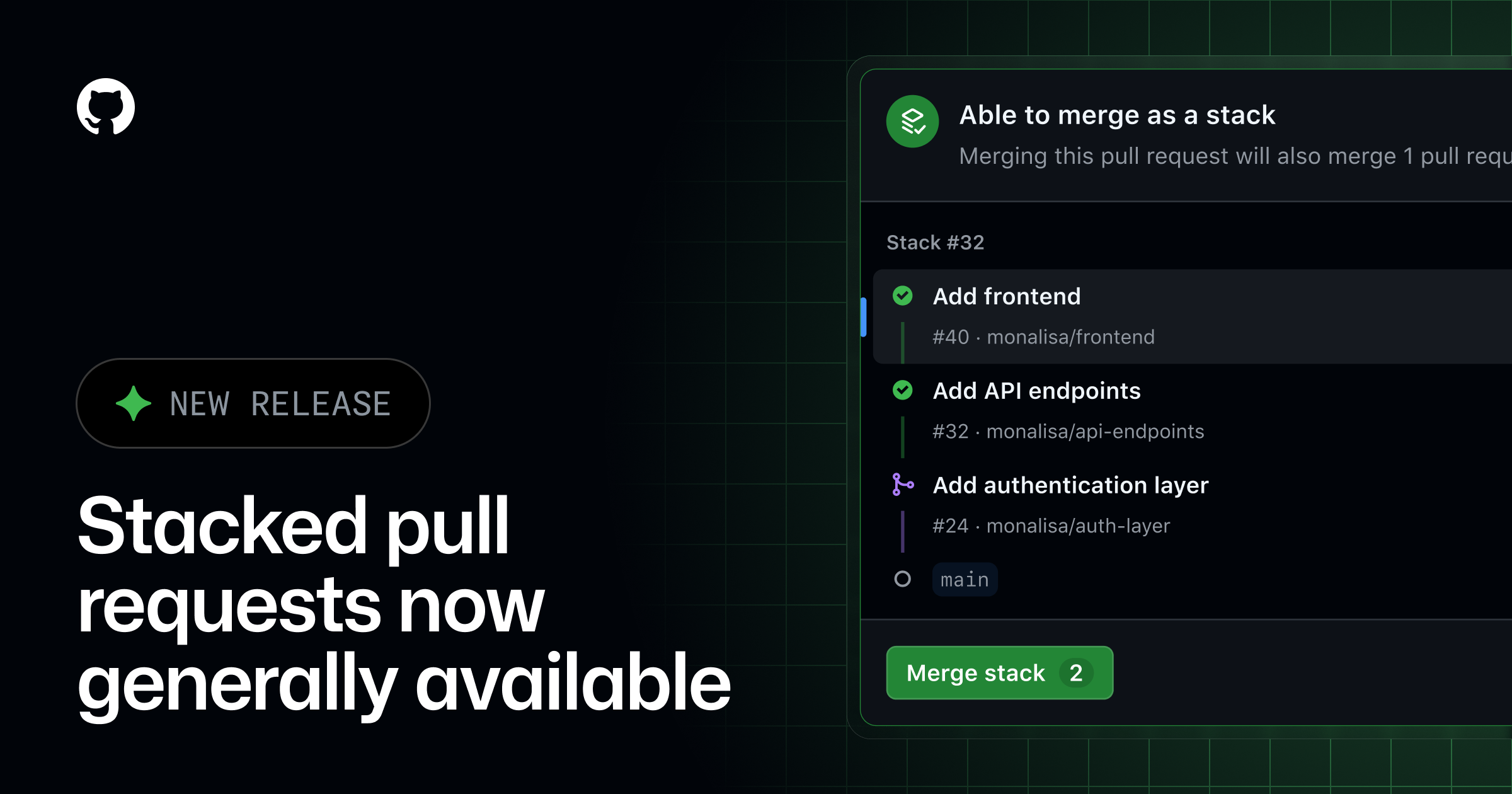
スタックドプルリクエストは、一つの大きな変更を、それぞれが焦点を絞った層(レイヤー)を表す複数の小さなプルリクエスト(PR)として、順序付きのシリーズにまとめる仕組みである。開発者は変更を積み重ねる(スタックする)形で構成でき、各PRは前のPRの上に構築される。これにより、巨大な単一のPRを避けつつ、論理的なまとまりごとにコードレビューを進められる。

従来、数千行に及ぶような大規模な変更を単一のPRで提出すると、レビュアーが全体を把握しにくく、レビューが滞りがちだった。変更を機能単位や論理単位で分割すれば、一つひとつのPRは小さく理解しやすくなり、レビューの質と速度の向上が期待できる。GitHubは、この分割によってコードレビューがより管理しやすくなるとしている。

GitHubは大規模な変更を小さく分割して段階的にレビューできる「スタックドプルリクエスト」機能をパブリックプレビューとして公開した。
📰 Industry & Policy · 本記事のポイント

スタック(積み重ね)を用いた開発手法自体は、以前から開発者コミュニティで注目されてきた概念だ。GraphiteやSapling、ghstackといったサードパーティのツールやコマンドラインユーティリティが、依存関係のあるブランチやPRを扱う仕組みを提供してきた経緯がある。今回の機能は、こうしたワークフローをGitHub本体に統合しようとするものと見られ、外部ツールに頼らずプラットフォーム上で完結できる点が利点になり得る。

パブリックプレビューは、正式提供前に幅広いユーザーが機能を試せる段階であり、フィードバックを通じて仕様が変わる可能性がある。導入を検討する際は、対象範囲や利用条件、制約などを公式のドキュメントで確認することが望ましい。

GitHub has made stacked pull requests available in public preview, giving developers a native way to split large code changes into an ordered series of smaller, individually reviewable pull requests. The feature targets a long-standing pain point in code review: sprawling pull requests that bundle many concerns together are slow to review, hard to reason about, and can delay the delivery of otherwise ready work.

At its core, a stacked pull request is a sequence of dependent pull requests, each building on the one before it. Rather than opening a single pull request that contains an entire feature, a developer can break the work into focused layers—for example, a data model change, then the business logic that uses it, then the user interface that surfaces it—and open a separate pull request for each layer. Each pull request in the stack represents a discrete, self-contained unit of change that reviewers can evaluate on its own, while the ordering preserves the dependencies between the layers.

The approach addresses a familiar tension in team-based development. Small pull requests are easier and faster to review, but real-world features often cannot be expressed as a single small change. Traditionally, developers who wanted to keep their work moving had to either wait for an early pull request to merge before starting the next piece, or manually juggle a chain of Git branches that depend on one another. Managing those dependencies by hand is error-prone, particularly when an earlier branch changes and every branch downstream needs to be updated. Stacked pull requests aim to formalize and automate that workflow inside GitHub itself.

For developers, the practical appeal is continuity. With stacks, a contributor can keep building later parts of a feature while earlier parts are still under review, and updates to a lower pull request in the stack can propagate to the ones above it. This can shorten the feedback loop and reduce the idle time that comes from waiting on reviews. For reviewers, smaller and more focused pull requests can make it easier to understand the intent of each change and to provide targeted feedback, which in turn can improve review quality.

The concept is not new to the wider industry. Stacked, or "stacked diff," workflows have been popularized by tools and platforms outside GitHub. Graphite, a startup focused on code review, built its product around stacking, and Meta's open-source Sapling source control system, along with review systems such as Gerrit, have long supported change-by-change review models. Bringing a comparable capability into GitHub natively is likely to lower the barrier for teams that previously relied on third-party tooling or custom scripts to achieve the same result.

GitHub has launched stacked pull requests in public preview, enabling developers to break large changes into a series of small, focused, and independently reviewable PRs.
📰 Industry & Policy · Key takeaway

Because the feature is in public preview rather than general availability, teams should expect it to evolve. Public preview typically means the functionality is broadly accessible for testing and feedback but may still have rough edges, changing behavior, or incomplete integration with other parts of the platform. GitHub commonly uses this stage to gather input before committing to a stable, generally available release, and details such as the interface, supported clients, and enterprise controls can shift during the period.

The release also fits into a broader pattern of GitHub investing in the code review experience and developer workflow. Pull requests remain central to how millions of projects collaborate, and incremental improvements to how changes are proposed, organized, and merged have a direct effect on developer productivity.

Teams interested in the capability can enable it through the public preview and begin experimenting with stacked workflows on their repositories. As with any change to established habits, adopting stacked pull requests may require adjusting review conventions and continuous integration setups, since each pull request in a stack can trigger its own checks. Organizations that already practice trunk-based development, or that value small and frequent merges, are likely to find the model a natural fit, while others may want to trial it on a limited set of projects before a broader rollout. Feedback gathered during the preview will probably shape how the feature behaves when it reaches general availability.

  • 出典SourceGitHub Changelog公式Official
  • 直近30件の平均重要度Avg importance, last 301=Info · 2=Medium · 3=High
  • 配信形式Format変更履歴Changelog
  • 重要度Importance重要度 MediumMedium priority(Industry & Policy 427件中、同等以上 318件)(318 of 427 Industry & Policy entries are equal or higher)
  • 情報の寿命Half-life⏱️ 短命 (ニュース)Short-lived (news)
  • 原文言語Source languageEN
  • 収集日時Collected2026/08/04 10:56

本ページの本文と要約は AI による自動生成です。日本語版と英語版は言語ごとに独立して生成されるため、表現や詳しさが異なる場合があります。正確性は元記事 (github.blog) をご確認ください。The body and summaries are AI-generated independently for each language, so wording and detail may differ. Verify accuracy at the original source (github.blog).

📰Industry & Policy の他の記事More from Industry & Policyもっと見る →View more →