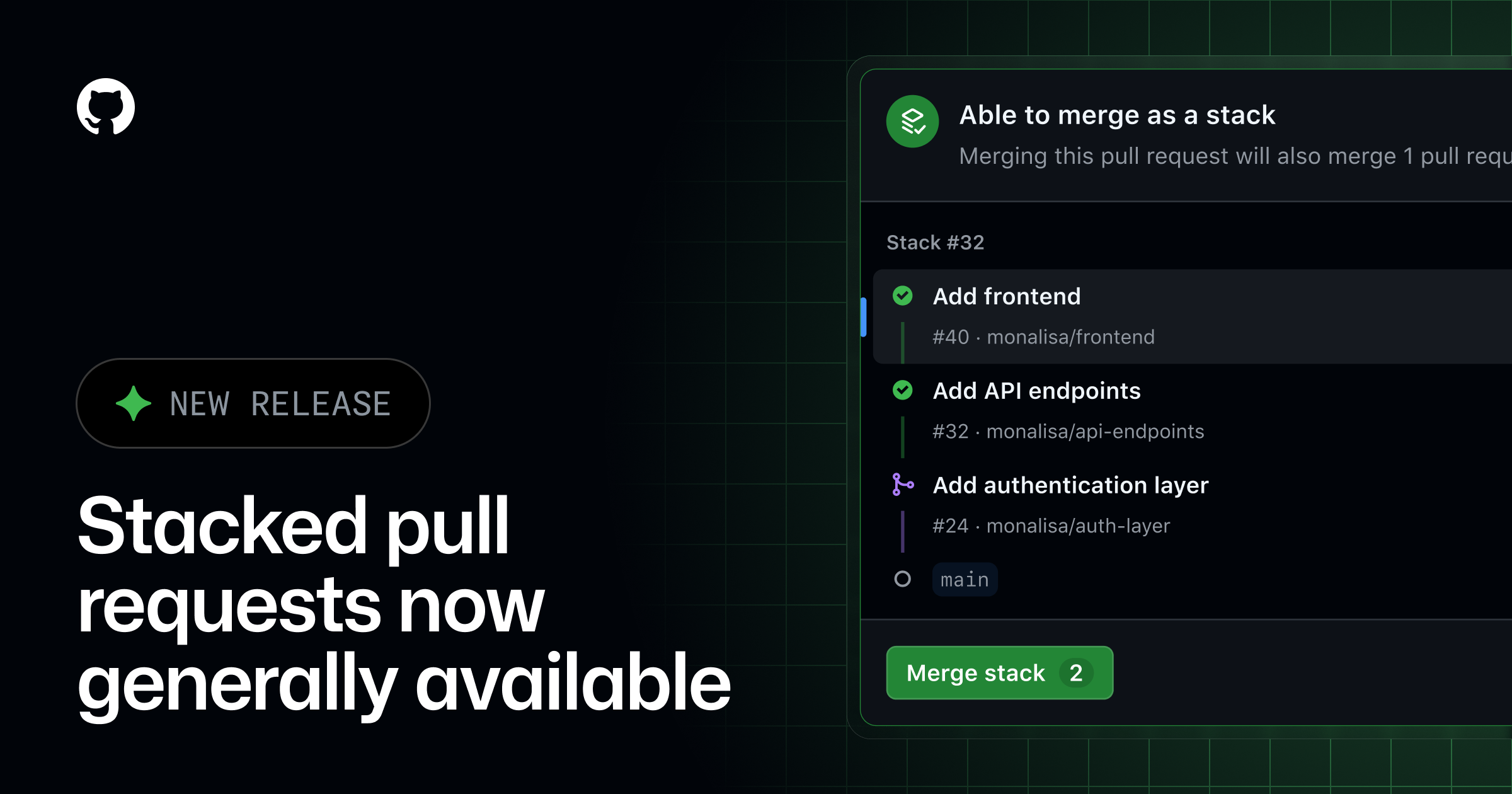
Azure AI Foundry で長時間稼働エージェントの構築が GA にLove this end-to-end example from Jeff Hollan of what is now possible when you build long-running agents with Foundry. All now GA.
匿名の公開いいねです。記事の保存・お気に入りではなく、Featured、Top 3、重要度、掲載順位には影響しません。仕組みとプライバシーAnonymous public likes are reactions, not saved articles or bookmarks. They do not affect Featured, Top 3, importance, or listing order.How it works and privacy
Azure AI Foundry における長時間稼働エージェント機能が正式リリースとなり、複雑なマルチステップ処理を本番環境で運用できるようになった。
Long-running agent capabilities in Azure AI Foundry have reached general availability, enabling production-ready multi-step autonomous workflows for enterprise developers.
本ページの本文と要約は AI による自動生成です。日本語版と英語版は言語ごとに独立して生成されるため、表現や詳しさが異なる場合があります。正確性は元記事 (linkedin.com) をご確認ください。The body and summaries are AI-generated independently for each language, so wording and detail may differ. Verify accuracy at the original source (linkedin.com).
要約と収集メタデータに基づく AI 解説。元記事全文の転載・翻訳ではありません。AI explainer based on the summaries and collected metadata, not a copy or translation of the full source article.
マイクロソフトは、Azure AI Foundry における長時間稼働エージェント(long-running agents)機能の一般提供(GA)を開始した。これにより、企業の開発者は複数のステップにまたがる自律的なワークフローを、試験段階ではなく本番環境で運用できるようになる。生成AIの活用が単発の応答生成から、業務プロセス全体を委ねる「エージェント」へと移りつつある流れを裏づける動きと言える。
従来の大規模言語モデル(LLM)を用いたアプリケーションは、リクエストに対して即座に応答を返す一問一答型が中心で、処理が数秒から数十秒で完結することを前提としていた。一方で、実際の業務では、複数のツールを呼び出しながらデータを収集し、途中で外部システムの応答を待ち、条件に応じて分岐するといった、長時間かつ多段階の処理が求められる場面が少なくない。長時間稼働エージェントは、こうした処理の状態(ステート)を保持し、中断や失敗からの再開、進捗の追跡を可能にする設計とされ、数分から場合によってはより長い時間にわたるタスクを扱えるようになると見られる。
Azure AI Foundry は、旧称 Azure AI Studio を含むマイクロソフトのAI開発基盤で、モデルの選択やデプロイ、評価、監視などを統合的に提供している。同社はエージェント開発向けに、オープンソースのマルチエージェント・フレームワーク「AutoGen」や、アプリケーション統合のための「Semantic Kernel」を展開しており、今回のGAはこれらの取り組みを本番運用レベルへ引き上げる位置づけと考えられる。
エージェント基盤をめぐっては、各社の競争が活発化している。アマゾンは Amazon Bedrock でエージェント機能を、グーグルは Vertex AI で関連機能を提供し、OpenAI もエージェント構築向けのAPIやツールを整備してきた。長時間稼働という観点は、単発の応答性能に加え、信頼性や監視性(オブザーバビリティ)、コスト管理といった運用面の成熟度が問われる領域でもある。
企業にとっては、カスタマーサポートの自動化やデータ処理、社内業務の自動化などへの応用が期待される一方、自律的に動作するエージェントの権限管理やガバナンス、動作の透明性の確保が引き続き課題となる可能性がある。マイクロソフトが提示する運用ツールや監視機能が、実務でどこまで安心して使えるかが、今後の採用を左右する要素になりそうだ。
Microsoft has moved long-running agent capabilities in Azure AI Foundry to general availability, signaling that developers can now build and operate autonomous, multi-step workflows in production rather than confining them to experiments and previews. The shift matters because most early agent deployments have struggled with tasks that span minutes, hours, or days, where a process must survive interruptions, maintain context, and coordinate multiple tools and models without constant human supervision.
At its core, a long-running agent is designed to handle work that cannot be completed in a single request-and-response cycle. Traditional chat-style assistants operate within a short conversational turn, but many enterprise scenarios, such as processing a large document set, reconciling records across systems, or orchestrating a chain of API calls, require persistence over time. According to Microsoft's description, the feature allows an agent to check in on progress, resume after failures, and continue executing tasks that outlast a typical session. This addresses one of the most cited limitations of first-generation agent frameworks, where a dropped connection or a timeout could force an entire task to restart.
Reaching general availability is significant beyond the technical feature set. GA status typically brings production service-level agreements, formal support, and a commitment to stability that preview offerings do not provide. For enterprise developers, that distinction often determines whether a capability can be used for customer-facing or mission-critical systems. It suggests the underlying orchestration, state management, and reliability mechanisms have matured to a point Microsoft considers dependable for regulated and high-volume environments, although real-world performance will vary by workload.
Azure AI Foundry is Microsoft's unified platform for building, evaluating, and deploying AI applications and agents, and it evolved from what was previously branded Azure AI Studio. It sits alongside a broader Microsoft agent ecosystem that includes Copilot Studio for lower-code business scenarios, the Semantic Kernel and AutoGen developer frameworks for orchestration, and the Azure OpenAI and model catalog services that supply the underlying language models. The long-running agent capability appears intended to give professional developers more control over durable, stateful processes than the packaged Copilot experiences typically expose.
Technically, durable agents of this kind generally rely on mechanisms such as checkpointing, persisted state, and event-driven resumption, concepts familiar from durable workflow engines like Azure Durable Functions. The practical value is that an agent can pause while waiting on an external system, recover from transient errors, and pick up where it left off rather than losing accumulated context. Combined with tool calling, retrieval, and evaluation features already present in Foundry, this is likely to make it easier to compose agents that combine reasoning with concrete actions against enterprise data and services. Microsoft has also emphasized observability and tracing in Foundry, which is important because autonomous multi-step processes are difficult to debug and audit without detailed logs of each decision and action.
The release fits a broader industry push toward agentic AI. Competing platforms have introduced comparable directions, including OpenAI's Assistants and agent tooling, Google's offerings around its Gemini models and Vertex AI, and Amazon's Bedrock Agents. Interoperability efforts such as the Model Context Protocol, which standardizes how agents connect to external tools and data sources, have also gained traction across vendors. Microsoft's move to GA can be read as an attempt to differentiate on operational reliability and enterprise readiness rather than only on model quality, an area where many providers now draw from overlapping foundation models.
For organizations evaluating the capability, several practical considerations remain. Autonomous agents that run for extended periods raise questions about cost management, since sustained model usage and tool invocations can accumulate charges, as well as governance concerns around permissions, data access, and human oversight. Microsoft positions Foundry with identity, security, and content-safety controls through its Azure ecosystem, but the effectiveness of those guardrails in complex agent workflows will depend on how carefully teams design and monitor their deployments. As with any newly generalized feature, adopters will want to validate reliability, latency, and total cost against their specific requirements before committing production workloads.
ポコとTECHガイドPoko & TECH Guide
ポコと当サイトのTECHガイドが、記事の要約と収集した情報から読みどころを語るAI生成の対話です。Poko and TECH Dashboard's own TECH Guide discuss the article's highlights in an AI-generated conversation based on its summary and collected source details.
- ポコPoko「長時間稼働エージェント」がGAって、それって何が変わったの?Long-running agents are now GA—what actually changed?
- TECHガイドTECH Guide簡単に言うとじゃな、複雑な作業を何段階も進めるエージェント機能が正式リリースされ、本番運用できるようになったのじゃよ。Simply put, the article says the agent capability is now officially released, allowing complex, multi-step tasks to run in production.
- ポコPokoへえ!何段階もの作業を任せられると、何が嬉しいの?Oh, wow! What’s useful about letting an agent handle multiple steps?
- TECHガイドTECH Guide記事によれば、複雑なマルチステップ処理を自律的な流れとして組み、本番環境で運用できる点が大きいのじゃ。According to the article, developers can build complex, autonomous multi-step workflows and operate them in production.
- ポコPokoつまり、試すだけじゃなく、長く動く複雑なエージェントを実際の環境で使える段階になったんだね。So it’s moved beyond experimentation: long-running, complex agents can now be used in real production environments.
- TECHガイドTECH Guideその理解でよいぞ。今後は、この正式リリース機能で複雑な処理をどう組み立てるかが見どころじゃな。Exactly. The next thing to watch is how developers structure complex workflows with this generally available capability.