Azure Document IntelligenceとAzure Content Understandingの実践ガイドAzure Document Intelligence and Azure Content Understanding: a practical guide
匿名の公開いいねです。記事の保存・お気に入りではなく、Featured、Top 3、重要度、掲載順位には影響しません。仕組みとプライバシーAnonymous public likes are reactions, not saved articles or bookmarks. They do not affect Featured, Top 3, importance, or listing order.How it works and privacy
- Azure Document IntelligenceとAzure Content UnderstandingはOCRとレイアウト解析を共有し、多様な文書や画像、音声、動画を扱う際の精度、コスト、遅延、推論、実装負荷を比較します。
- 用途に合う処理基盤を選びたい開発者に役立ちます。
Azure Document Intelligence and Azure Content Understanding share OCR and layout analysis; the guide weighs quality, cost, latency, reasoning, and custom code so teams can choose the right tool.
本ページの本文と要約は AI による自動生成です。日本語版と英語版は言語ごとに独立して生成されるため、表現や詳しさが異なる場合があります。正確性は元記事 (devblogs.microsoft.com) をご確認ください。The body and summaries are AI-generated independently for each language, so wording and detail may differ. Verify accuracy at the original source (devblogs.microsoft.com).
要約と収集メタデータに基づく AI 解説。元記事全文の転載・翻訳ではありません。AI explainer based on the summaries and collected metadata, not a copy or translation of the full source article.
処理対象の現実
Azure Document IntelligenceとAzure Content Understandingは、用途に合うコンテンツ処理基盤を選ぶための比較対象となる。選択によって抽出品質だけでなく、ラベル付けの作業量、遅延、コスト、展開方法、推論とグラウンディング、保守するカスタムパイプラインコードの量が変わる。
多様な入力形式
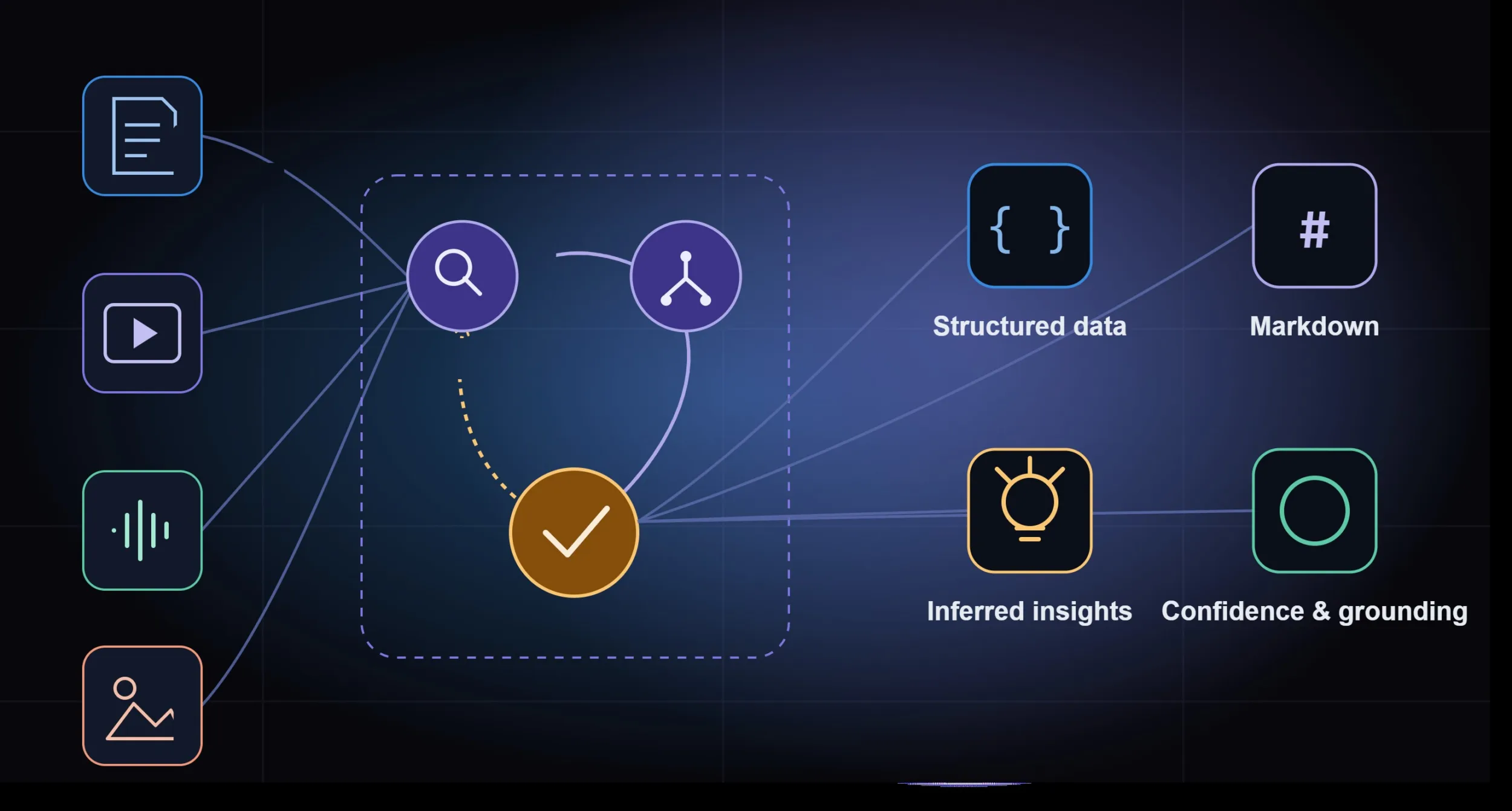
入力形式が一定なら、文書処理は単純に見える。しかし実運用では、請求書のレイアウトが異なったり、契約書の重要事項が文章中に埋もれていたりする。一つの業務プロセスがPDF、Office文書、画像、音声、動画にまたがる場合もあり、予測しやすい形式だけを前提にはできない。
OCRとレイアウト
両サービスは、基礎的なコンテンツ抽出機能としてOCRとレイアウト解析を共有している。OCRによる文字情報の取得と、文書内の配置や構造の解析が共通の土台となり、その上で必要な処理に応じて選択することになる。
ADIの文書モデル
Azure Document Intelligenceは、分類とフィールド抽出に特化した文書モデルを使用する。構造化された文書やフォームを中心とする多くの文書処理ワークロードで実績のある選択肢とされる。比較時には、入力の種類だけでなく、求める品質、コスト、遅延、推論、実装と保守の負荷を合わせて検討することが重要となる。
Production workloads
Azure Document Intelligence and Azure Content Understanding address content extraction across varied business inputs. Choosing the right approach matters because production workloads can involve inconsistent formats and multiple media types, with consequences for extraction quality, labeling effort, latency, cost, deployment options, reasoning, grounding, and maintenance.
Document-processing tools may appear straightforward when inputs follow predictable formats. Real workloads are less tidy: invoices can use different layouts, while contracts may place important facts inside prose. A single process can also span PDFs, Office documents, images, audio, and video.
Foundational content extraction capabilities
Azure Document Intelligence and Azure Content Understanding share foundational capabilities, including optical character recognition and layout analysis. This common base supports the extraction of content and structure from inputs rather than requiring every document to follow one fixed format.
The guide compares the tools in the context of diverse documents and media. Its focus includes extraction accuracy, processing cost, latency, reasoning, and the implementation burden associated with custom pipeline code.
Specialized document models
On top of the shared extraction foundation, Azure Document Intelligence uses specialized document models for classification and field extraction. It is presented as a proven choice for many structured and form-oriented document-processing workloads.
That positioning is especially relevant when a workflow needs to identify document types or extract defined fields from forms and similarly structured material. These capabilities distinguish its document-focused processing approach while retaining OCR and layout analysis as part of the foundation.
The right approach
The selection is not framed around extraction alone. Teams must also weigh how much labeling is required, what latency and cost are acceptable, which deployment options matter, and how reasoning and grounding fit the workload.
Another consideration is the amount of custom pipeline code that must be maintained. Evaluating these factors together helps developers choose between Azure Document Intelligence and Azure Content Understanding according to the needs of the process and the formats involved.
ポコとTECHガイドPoko & TECH Guide
ポコと当サイトのTECHガイドが、記事の要約と収集した情報から読みどころを語るAI生成の対話です。Poko and TECH Dashboard's own TECH Guide discuss the article's highlights in an AI-generated conversation based on its summary and collected source details.
- ポコPoko文書処理なのに、PDFや画像だけでなく音声や動画まで対象なんだね。扱う範囲が広いのって大きいこと?It’s document processing, but it also covers audio and video, not just PDFs and images. Is that broad scope a big deal?
- TECHガイドTECH Guideこの記事では、一つの業務が複数の形式にまたがることもあるとしているよ。選び方が精度やコスト、遅延、実装負荷に関わるんだ。The guide says one workflow can span several formats. The choice can affect quality, cost, latency, and how much custom code you maintain.
- ポコPoko共通の土台だという「OCR」って、何をする仕組み?What does OCR, their shared foundation, actually do?
- TECHガイドTECH GuideOCRは、画像やPDF内の文字を読み取ってテキストにする技術だよ。両方とも、これとレイアウト解析を共有しているんだ。OCR reads text from images or PDFs and turns it into usable text. Both tools share that foundation along with layout analysis.
- ポコPokoぼくなら、形の違う請求書から必要な項目を抜き出して整理したいな。ADIを選べばいいのかな?I’d use it to pull key fields from invoices with different layouts. Would ADI be the right pick?
- TECHガイドTECH GuideADIは、分類や項目抽出を行う専用モデルがあり、構造化文書や帳票向けの実績があるよ。ただ、精度やコスト、遅延も比べて選びたいね。ADI has specialized models for classification and field extraction, with a proven fit for structured and form-based documents. You’d still want to compare quality, cost, and latency.