Database Migration ServiceのGeminiを使ってPostgreSQLへの移行を加速するAccelerate PostgreSQL migrations using Gemini in Database Migration Service
匿名の公開いいねです。記事の保存・お気に入りではなく、Featured、Top 3、重要度、掲載順位には影響しません。仕組みとプライバシーAnonymous public likes are reactions, not saved articles or bookmarks. They do not affect Featured, Top 3, importance, or listing order.How it works and privacy
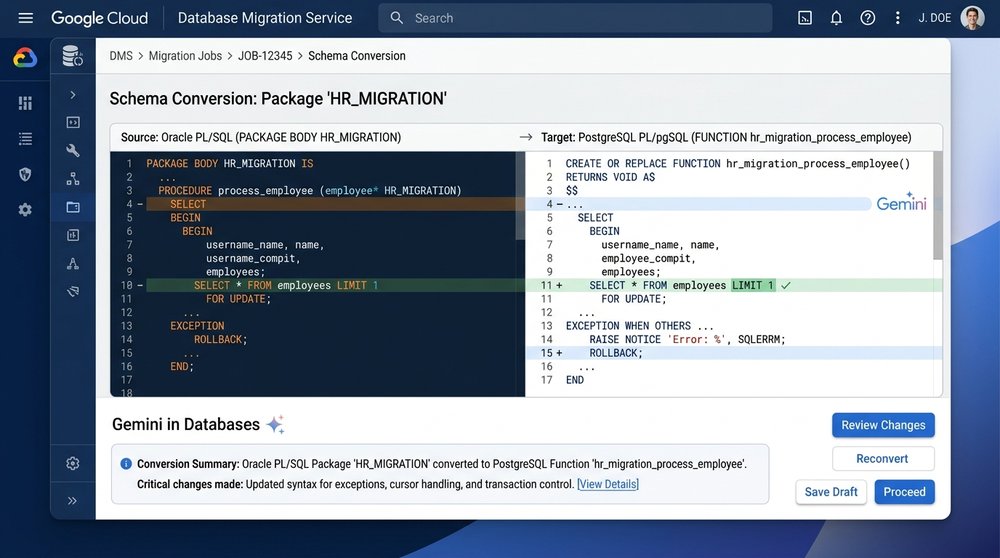
Database Migration ServiceにGeminiが統合され、PL/SQLやT-SQLで書かれたストアドプロシージャや複雑なトリガーをPostgreSQL互換コードへ自動変換できるようになり、移行の最大のボトルネックが解消される。
Google has integrated Gemini into Database Migration Service to automatically convert proprietary stored procedures and triggers written in PL/SQL or T-SQL into PostgreSQL-compatible code, removing the biggest bottleneck in database migrations to PostgreSQL or AlloyDB.
本ページの本文と要約は AI による自動生成です。日本語版と英語版は言語ごとに独立して生成されるため、表現や詳しさが異なる場合があります。正確性は元記事 (cloud.google.com) をご確認ください。The body and summaries are AI-generated independently for each language, so wording and detail may differ. Verify accuracy at the original source (cloud.google.com).
要約と収集メタデータに基づく AI 解説。元記事全文の転載・翻訳ではありません。AI explainer based on the summaries and collected metadata, not a copy or translation of the full source article.
Database Migration ServiceにGeminiが統合され、PL/SQLやT-SQLで記述されたデータベース内の処理を、PostgreSQL互換コードへ自動変換できるようになった。PostgreSQLやAlloyDB for PostgreSQLへの移行で、ストアドプロシージャやトリガーの変換が大きな停滞要因となる状況に対応する。
Gemini統合
想定されているのは、OracleやSQL Serverなどの既存の商用データベースで動く中核アプリケーションを、オープンソースのPostgreSQL、またはフルマネージドサービスのAlloyDB for PostgreSQLへ移行する場面だ。Database Migration Serviceに組み込まれたGeminiが、独自のSQL方言で書かれたコードの変換を支援する。
移行の停滞点
移行の初期段階では、スキーマの変換やテーブルへのデータ投入が進み、データ移行パイプラインによってテラバイト規模のデータを数時間で転送できる場合がある。一方、既存データベースには数百のストアドプロシージャ、複雑なトリガー、独自関数が埋め込まれており、その変換がボトルネックになると説明されている。
自動変換
Geminiは、PL/SQLやT-SQLで記述されたストアドプロシージャや複雑なトリガーを、PostgreSQL互換コードへ自動変換する。手作業で扱う必要があった数千行規模の独自SQLコードを変換対象とすることで、PostgreSQLまたはAlloyDBへの移行を加速し、最大のボトルネックを解消するとされる。
業務ロジック
変換対象のルーチンには、長年蓄積された重要な業務ロジックが含まれる。具体的には、トランザクションの検証、注文処理、独自レポートなどを担う処理であり、単なるデータ転送だけでは移行できない部分だ。今回の統合は、こうした既存データベース内部のコードをPostgreSQL互換へ移す工程に焦点を当てている。
Database Migration Service and Gemini
Gemini is integrated into Database Migration Service to accelerate migrations from commercial databases to PostgreSQL or AlloyDB for PostgreSQL. The integration matters because it addresses the stored procedures, triggers, and custom functions that can become the biggest bottleneck after schemas and data have already been transferred.
The service can automatically convert proprietary database code written in SQL dialects such as PL/SQL and T-SQL into PostgreSQL-compatible code. This targets a stage of migration that may involve thousands of lines of database routines accumulated over years.
The migration bottleneck
The source describes a scenario in which a team moves a core application from an existing commercial database such as Oracle or SQL Server to open source PostgreSQL or the fully managed AlloyDB for PostgreSQL service. Early migration work can proceed smoothly: schemas convert, tables populate, and data migration pipelines transfer terabytes of data in hours.
The difficulty emerges in the routines embedded within the existing databases. These may include hundreds of stored procedures, complex triggers, and custom functions. Because they are written in proprietary dialects, they must be translated into code compatible with the PostgreSQL target.
These routines are also significant because they contain critical business logic. The examples given include transaction validation, order processing, and custom reporting. As a result, the code-conversion stage can halt an otherwise ahead-of-schedule modernization project.
PostgreSQL-compatible code
By using Gemini within Database Migration Service, the conversion of PL/SQL and T-SQL routines can be automated. The integration covers proprietary stored procedures and complex triggers, producing PostgreSQL-compatible code for migrations to PostgreSQL or AlloyDB.
The announcement presents this capability as a way to remove the largest migration bottleneck encountered after schema conversion, table population, and data transfer. Its focus is specifically on translating the database-resident logic that remains when the initial migration phases have been completed.
ポコとTECHガイドPoko & TECH Guide
ポコと当サイトのTECHガイドが、記事の要約と収集した情報から読みどころを語るAI生成の対話です。Poko and TECH Dashboard's own TECH Guide discuss the article's highlights in an AI-generated conversation based on its summary and collected source details.
- ポコPoko仕事で中核アプリをPostgreSQLへ移すとき、普段の作業は何が変わるの?If my team moves a core app to PostgreSQL, what changes in our day-to-day work?
- TECHガイドTECH Guideこの記事では、GeminiがPL/SQLやT-SQLのストアドプロシージャや複雑なトリガーをPostgreSQL互換コードへ自動変換するんじゃ。The article says Gemini can automatically turn stored procedures and complex triggers written in PL/SQL or T-SQL into PostgreSQL-compatible code.
- ポコPokoそれって前はできなかったの?スキーマやデータの移行だけでは足りないってこと?Wasn’t that possible before? So moving the schema and data alone isn’t enough?
- TECHガイドTECH Guide以前の自動変換可否までは断定されておらん。記事だと、スキーマやデータは移せても、重要な業務ロジックの書き換えが大きなボトルネックだったんじゃ。It doesn’t state exactly what automation existed before. It does say schemas and data could move smoothly, while rewriting critical business logic became the biggest bottleneck.
- ポコPokoつまり一番の収穫は、長年の業務ロジックを直す負担が減って、移行が止まりにくくなることなんだね。へえ、すごい!So the big win is reducing the burden of rewriting years of business logic, making migrations less likely to stall. Wow, that’s huge!
- TECHガイドTECH Guideそうじゃ。本文が挙げる取引検証や注文処理、独自レポートなどの重要ロジックを含むコードまで変換できる点に注目じゃよ。Exactly. A key point is that the converted code can contain vital logic for transaction validation, order processing, and custom reporting, as the piece describes.