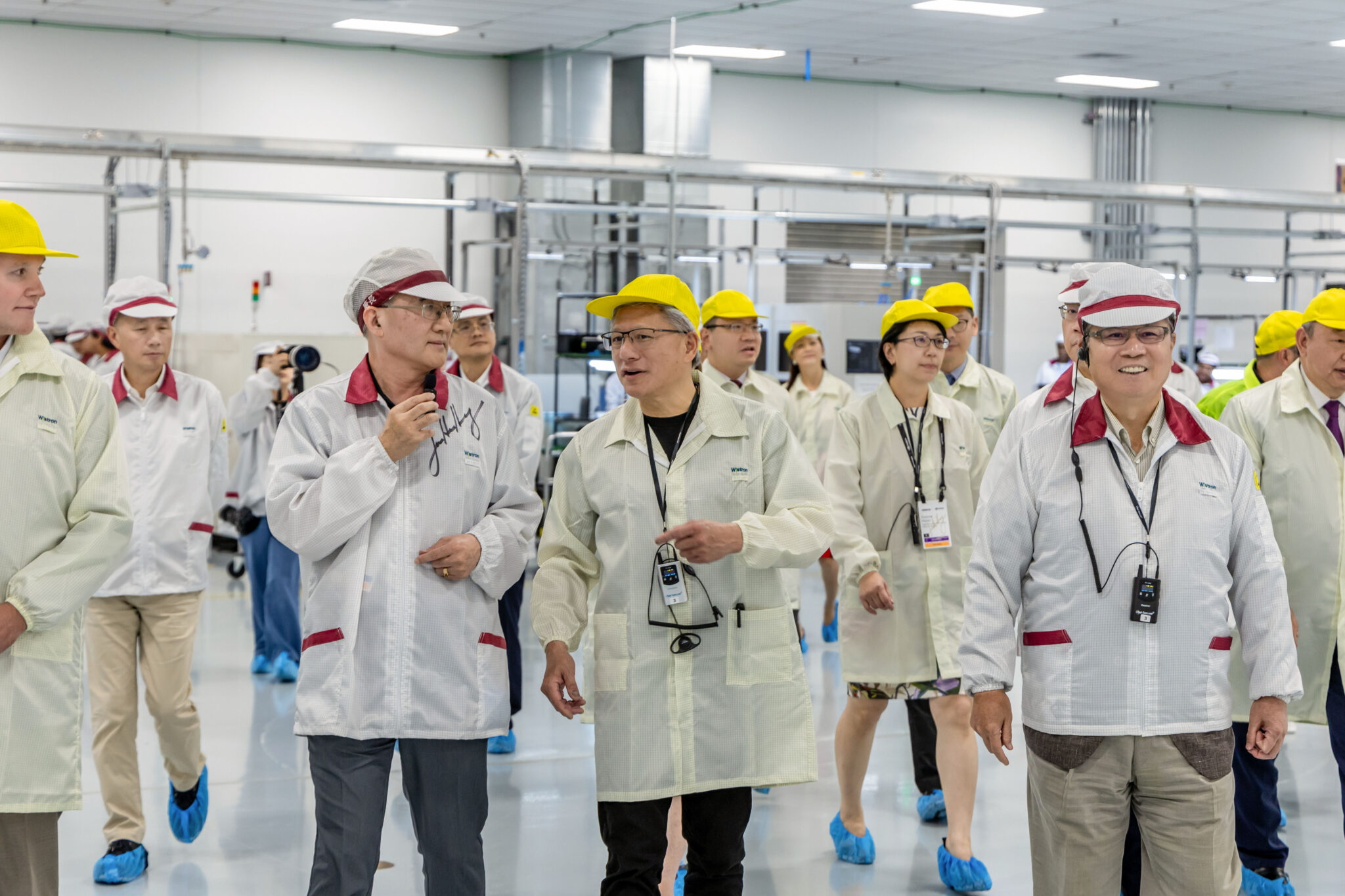
フォートワースで誕生:WistronがNVIDIA AIシステム製造の先進工場を開設Built in Fort Worth: Wistron Opens Advanced Manufacturing Plant to Produce NVIDIA AI Systems
匿名の公開いいねです。記事の保存・お気に入りではなく、Featured、Top 3、重要度、掲載順位には影響しません。仕組みとプライバシーAnonymous public likes are reactions, not saved articles or bookmarks. They do not affect Featured, Top 3, importance, or listing order.How it works and privacy
- WistronがテキサスのフォートワースにNVIDIA向けAIシステムを製造する最新鋭工場を開設した。
- 米国内での先端AI製品の生産体制が強化され、サプライチェーンの国内化が加速する。
Wistron has opened an advanced manufacturing plant in Fort Worth, Texas, dedicated to producing NVIDIA AI systems, marking a significant expansion of domestic US AI hardware production.
本ページの本文と要約は AI による自動生成です。日本語版と英語版は言語ごとに独立して生成されるため、表現や詳しさが異なる場合があります。正確性は元記事 (blogs.nvidia.com) をご確認ください。The body and summaries are AI-generated independently for each language, so wording and detail may differ. Verify accuracy at the original source (blogs.nvidia.com).
要約と収集メタデータに基づく AI 解説。元記事全文の転載・翻訳ではありません。AI explainer based on the summaries and collected metadata, not a copy or translation of the full source article.
台湾の大手電子機器受託製造企業Wistron(緯創資通)が、米テキサス州フォートワースにNVIDIA向けAIシステムを製造する最新鋭工場を開設した。生成AIの需要拡大を支える中核ハードウェアを米国内で生産する体制が整うことになり、AIサプライチェーンの国内回帰を象徴する動きとして注目される。
新工場では、NVIDIAのGPUを搭載したAIサーバーやシステム基板の組み立て・検査などが行われると見られる。こうしたAIシステムは、データセンター向けに多数のGPUを高速で連携させる構成が一般的で、電力供給・冷却・ネットワーク設計が全体性能を大きく左右する。これまで関連機器の生産はアジアを中心に集中してきたが、需要の急増と地政学的リスクを背景に、生産拠点を分散させる動きが強まっている。
背景には、NVIDIAが進める米国内製造の強化がある。同社は次世代AI基盤「Blackwell」世代の製品を含め、米国での生産や組み立てを拡大する方針を示してきた。台湾のTSMCがアリゾナ州で先端半導体工場を稼働させ、Foxconn(鴻海)などもテキサス州でAI関連設備の整備を進めるなど、関連企業による米国投資が相次いでいる。
フォートワースを含むテキサス州は、比較的低い事業コストや広い用地、物流網の利便性から、電子機器製造の集積地として存在感を高めている。今回のWistronの投資も、こうした地域特性を生かしたものと考えられる。
もっとも、米国内での製造には熟練労働力の確保や部材調達コストといった課題も指摘される。半導体の前工程は依然としてアジアや特定地域に依存する部分が大きく、完全な国内完結には時間を要する可能性がある。それでも、AIハードウェアの最終組み立てを米国内で担う体制の広がりは、供給の安定性や納期短縮、経済安全保障の観点から一定の意義を持つと見られる。今後、同様の投資が他社にも波及するかが焦点となりそうだ。
Wistron has opened an advanced manufacturing facility in Fort Worth, Texas, dedicated to building NVIDIA artificial intelligence systems, a move that expands the footprint of domestic US AI hardware production. The plant matters because it addresses one of the most pressing questions in the current computing boom: where the physical machines that power generative AI and large-scale data centers are actually assembled, and how resilient that supply chain is to geopolitical and logistical disruption.
The Fort Worth facility is designed to produce complete AI systems rather than individual components, meaning it likely handles the integration of NVIDIA's accelerated computing platforms into server-scale and rack-scale products. These systems typically combine graphics processing units, high-bandwidth memory, networking fabric and dense cooling into finished units destined for data centers and cloud providers. Concentrating this assembly work in Texas is intended to shorten the distance between production and many of NVIDIA's North American customers, potentially reducing lead times and transportation complexity.
Wistron is a Taiwan-based original design manufacturer, part of an ecosystem of contract builders that produce hardware on behalf of brand-name technology companies. It sits alongside firms such as Foxconn, Quanta and Wiwynn as a key supplier for server and AI infrastructure. For NVIDIA, these partners are essential: the company designs the chips and reference architectures, but relies on manufacturing specialists to build them at volume. The Fort Worth plant reflects how those relationships are increasingly being localized inside the United States rather than concentrated in Asia.
The opening fits within a broader industry push to bring advanced electronics manufacturing onshore. NVIDIA has publicly outlined plans to produce AI supercomputers in the US through a network of partners, and Texas has emerged as a focal point for that effort, with Foxconn also reported to be developing production capacity in the state. These initiatives run parallel to Taiwan Semiconductor Manufacturing Company's substantial investment in chip fabrication plants in Arizona, along with packaging and testing operations from companies such as Amkor. Together, these projects represent an attempt to build out more of the AI hardware stack, from silicon fabrication through final system assembly, on American soil.
Several forces appear to be driving this trend. Government policy, including incentives associated with the CHIPS and Science Act, has encouraged semiconductor and electronics investment in the US. At the same time, trade tensions and tariff uncertainty have made companies wary of concentrating production in any single region. Demand is another factor: the appetite for AI computing capacity has strained supply chains, and manufacturers are racing to add capacity wherever they can. Locating assembly closer to end customers may also help firms respond more quickly to shifting orders and reduce exposure to shipping bottlenecks.
It is worth noting the limits of what onshoring achieves. Final assembly in Texas does not by itself make the supply chain fully domestic. The most advanced GPUs and memory components are still largely fabricated overseas, and the broader network of materials, tooling and specialized equipment remains globally distributed. A facility like the one in Fort Worth strengthens the later stages of production, but the upstream dependencies on Asian fabrication and packaging are likely to persist for some time. The economics of building complex electronics in the US, including higher labor costs and the need for skilled technicians, also remain a consideration.
For the local economy, the plant is expected to bring jobs in advanced manufacturing, engineering and logistics, and it adds to Texas's growing reputation as a hub for data center and semiconductor-related activity. The state's relatively affordable land, energy availability and business environment have attracted a range of technology investments in recent years.
The Fort Worth opening should be read as one piece of a larger, ongoing realignment rather than a definitive endpoint. As AI workloads continue to scale and as companies weigh resilience against cost, additional manufacturing announcements from NVIDIA and its partners appear likely. Whether these efforts materially reduce reliance on overseas production, or simply diversify it, will become clearer as the facilities ramp up and their output reaches the market over the coming quarters.
ポコとTECHガイドPoko & TECH Guide
ポコと当サイトのTECHガイドが、記事の要約と収集した情報から読みどころを語るAI生成の対話です。Poko and TECH Dashboard's own TECH Guide discuss the article's highlights in an AI-generated conversation based on its summary and collected source details.
- ポコPokoWistronの新工場って、そこで何を作るの?「AIシステム」って何だか大きな言葉だね。What will Wistron actually make at this new plant? “AI systems” sounds like a pretty broad term.
- TECHガイドTECH Guide簡単に言うと、AIを動かすための機器じゃな。記事によれば、フォートワースでNVIDIA向けAIシステムを製造する工場じゃよ。Simply put, it means hardware that runs AI. According to the article, the Fort Worth plant will manufacture NVIDIA AI systems.
- ポコPokoそれって何が嬉しいの?工場が米国内にできると、どんな意味があるのかな。So what’s the benefit? What does having the plant in the US actually change?
- TECHガイドTECH Guide記事では、米国内の先端AI製品の生産体制が強まり、サプライチェーンの国内化が進むとしておる。作る拠点が国内に増えるということじゃな。The article says it strengthens US production of advanced AI products and speeds up supply-chain localization. In plain terms, more of the manufacturing happens domestically.
- ポコPokoなるほど、NVIDIA向けのAI機器を米国内で作る体制が広がったんだね。AIはソフトだけじゃなく、作る場所も大事なんだ。Got it—the US now has more capacity to make AI hardware for NVIDIA. So AI isn’t just about software; where the equipment gets built matters too.
- TECHガイドTECH Guideその理解でよいぞ。今後は、この工場を軸に米国内のAIハードウェア生産とサプライチェーン国内化がどう進むかが見どころじゃな。Exactly. The key thing to watch is how this plant contributes to US AI hardware production and further localization of the supply chain.