Gemini Enterprise と Google Cloud Marketplace にエージェントを公開する開発者ガイド A developer's guide to publishing agents in Gemini Enterprise and Google Cloud Marketplace
開発者が作成したAIエージェントをGemini EnterpriseおよびGoogle Cloud Marketplaceへ公開するための具体的な手順を解説し、エンタープライズ顧客へのリーチを広げる方法を示している。
English summary
- This guide explains how developers can publish custom AI agents to Gemini Enterprise and Google Cloud Marketplace, expanding their reach to enterprise customers through official Google distribution channels.
企業向けAIエージェントの開発が活発化するなか、Google Cloudは開発者が自作のエージェントをGemini EnterpriseおよびGoogle Cloud Marketplaceへ公開するための手順をまとめたガイドを公開した。自社が構築したエージェントをGoogleの公式な流通経路に載せることで、エンタープライズ顧客へのリーチを広げられる点が主眼となっている。
Gemini Enterpriseは、Googleが企業向けに提供するAI基盤で、社内の業務システムやデータと連携しながら生成AIを活用するための環境を指す。ここに外部開発者のエージェントを載せられるようにすることで、利用企業は自社のニーズに合ったツールを選び、既存のワークフローへ組み込みやすくなる。一方のGoogle Cloud Marketplaceは、ソフトウェアやAPIを調達・課金するための公式マーケットプレイスであり、購買や契約、請求といった調達プロセスを既存のGoogle Cloud契約の枠内で処理できる利点がある。
ガイドでは、エージェントの登録から審査、公開に至る具体的な流れが解説されているとみられる。エンタープライズ導入では、セキュリティやデータの取り扱い、権限管理といった要件が重視されるため、公式チャネルを通すことで一定の信頼性を担保しやすい。開発者にとっては、個別の営業活動に頼らずに多数の企業へ到達でき、課金や契約の仕組みをプラットフォーム側に委ねられる点がメリットになり得る。
背景には、単一の応答にとどまらず、複数の手順を自律的に実行する「AIエージェント」への関心の高まりがある。Googleはエージェント開発を支援するADK(Agent Development Kit)や、エージェント同士を連携させるA2A(Agent2Agent)といった仕組みも整備してきた。同種の取り組みは競合他社でも進んでおり、MicrosoftのCopilot関連の拡張、SalesforceのAgentforce、AWSの各種サービスなど、エージェントの構築から配布までを一貫して支えるエコシステム競争が続いている。
もっとも、マーケットプレイス経由の公開には審査基準や技術要件を満たす必要があり、対応にはある程度の準備が求められる可能性がある。今回のガイドは、そうした公開プロセスの見通しを立てやすくする実務的な手引きとして位置づけられ、エージェント開発者が販路を検討するうえで参考になりそうだ。
Google has published a developer guide detailing how to publish custom AI agents to Gemini Enterprise and Google Cloud Marketplace, giving builders a formal path to distribute their work to large organizations. The move matters because it connects independent and third-party agent development with Google's established enterprise sales and procurement channels, potentially shortening the distance between a working prototype and a paying enterprise customer.
At its core, the guide walks through the workflow of taking an agent from development to a listed, discoverable product. Gemini Enterprise serves as the surface where business users interact with agents inside their existing Google Cloud and Workspace environments, while Google Cloud Marketplace acts as the storefront and transactional layer where those agents can be found, evaluated, and procured. Publishing through these official channels is positioned as a way to reach buyers who prefer vetted, centrally billed software over standalone tools, since Marketplace purchases can typically be applied against a customer's existing Google Cloud commitment.
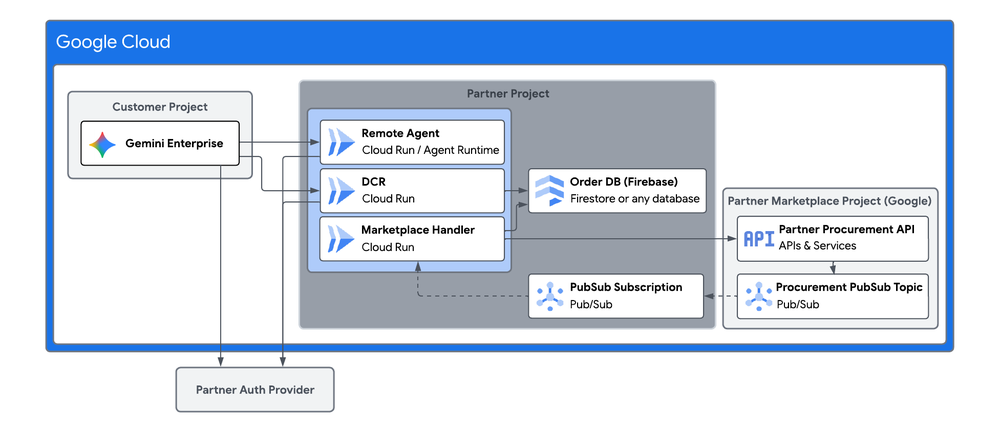
The publishing process described appears to follow a familiar pattern for anyone who has listed software on a cloud marketplace. Developers generally need to enroll as a partner or vendor, prepare their agent for packaging, supply metadata such as descriptions and supported use cases, and pass a review before the listing goes live. For agents specifically, this likely includes defining how the agent authenticates, what data and tools it can access, and how it behaves within an enterprise tenant. Clear documentation of these boundaries is important because enterprise buyers scrutinize security posture, data handling, and compliance before deployment.
Context around Google's broader agent strategy helps explain why this guide arrives now. Over the past two years Google has assembled a stack of tools aimed at agent builders, including the Agent Development Kit for constructing agents, Vertex AI Agent Builder for grounding and orchestration, and support for open interoperability standards. Among those standards, the Agent2Agent protocol is intended to let agents from different vendors communicate, while the Model Context Protocol, originally introduced by Anthropic and since adopted widely, standardizes how agents connect to external data and tools. A distribution channel is a logical next step: once developers can build interoperable agents, they need somewhere to sell and deploy them.
Technically, agents published this way are expected to operate as multi-step systems rather than simple chat wrappers. Modern enterprise agents commonly combine a large language model with tool-calling, retrieval from company data sources, and the ability to take actions across connected systems. The guide's emphasis on enterprise readiness suggests that publishers should account for identity and access management, audit logging, and predictable behavior under real workloads. Agents that touch sensitive systems will generally face stricter review and clearer requirements around permissions and monitoring.
The commercial dimension is a notable part of the appeal. Marketplace listings typically support several pricing models, and vendors that transact through Google Cloud Marketplace can benefit from simplified billing and, in many cases, favorable revenue-sharing terms compared with independent sales. For customers, sourcing an agent through Marketplace means procurement, security review, and payment can flow through channels they already trust, which can materially speed up adoption inside risk-averse organizations.
This effort sits within a competitive landscape where other major platform providers are building comparable agent ecosystems and marketplaces, including Microsoft with its Copilot and Azure agent offerings, Amazon through Bedrock and AWS Marketplace, and Salesforce with Agentforce. The common thread across these initiatives is a bet that agents will become a distinct category of enterprise software, and that whoever owns the distribution and trust layer stands to capture significant value. Google's guidance appears designed to encourage a supply of quality third-party agents that make Gemini Enterprise more useful out of the box.
For developers weighing whether to invest, the practical takeaway is that publishing to these channels is likely to require more than functional code. Meeting enterprise expectations around documentation, security attestations, support, and pricing will be part of the effort. Those willing to meet that bar gain access to Google's enterprise install base and its billing infrastructure, which for many independent builders would be difficult to reach on their own. As the agent market matures, the specifics of review criteria and revenue terms are likely to evolve, so builders should consult the current official documentation before committing to a listing.
本ページの本文・要約は AI による自動生成です。正確性は元記事 (cloud.google.com) をご確認ください。