Foundry Agent Serviceのネットワーク送信制御でホスト型エージェントの接続先を管理Control where your hosted agent connects with network egress in Foundry Agent Service
匿名の公開いいねです。記事の保存・お気に入りではなく、Featured、Top 3、重要度、掲載順位には影響しません。仕組みとプライバシーAnonymous public likes are reactions, not saved articles or bookmarks. They do not affect Featured, Top 3, importance, or listing order.How it works and privacy
- Foundry Agent Serviceのネットワーク送信制御プレビューは、ホスト型エージェントの接続先をコード外の明示的なポリシーで制限し、実際の通信を観察して検証できる。
- SLAがなく本番向けではないが、開発・評価時に意図しない外部送信を把握したい開発者に役立つ。
- Foundry Agent Service previews network egress controls that define destinations outside agent code.
- Without an SLA or production support, they help teams test outbound access.
本ページの本文と要約は AI による自動生成です。日本語版と英語版は言語ごとに独立して生成されるため、表現や詳しさが異なる場合があります。正確性は元記事 (devblogs.microsoft.com) をご確認ください。The body and summaries are AI-generated independently for each language, so wording and detail may differ. Verify accuracy at the original source (devblogs.microsoft.com).
要約と収集メタデータに基づく AI 解説。元記事全文の転載・翻訳ではありません。AI explainer based on the summaries and collected metadata, not a copy or translation of the full source article.
接続先の管理
Foundry Agent Serviceでは、ホスト型エージェントのネットワーク送信制御がプレビューとして提供されている。接続先のルールをエージェントのコードから分離し、外部への通信範囲を明示的なポリシーとして管理、検証できる点が重要だ。
この制御が扱うのは、エージェントにどのツールを与えたかだけではない。エージェントを動かすプロセスが、実際にどこへリクエストを送信できるのかという境界を設定する。
請求書エージェント
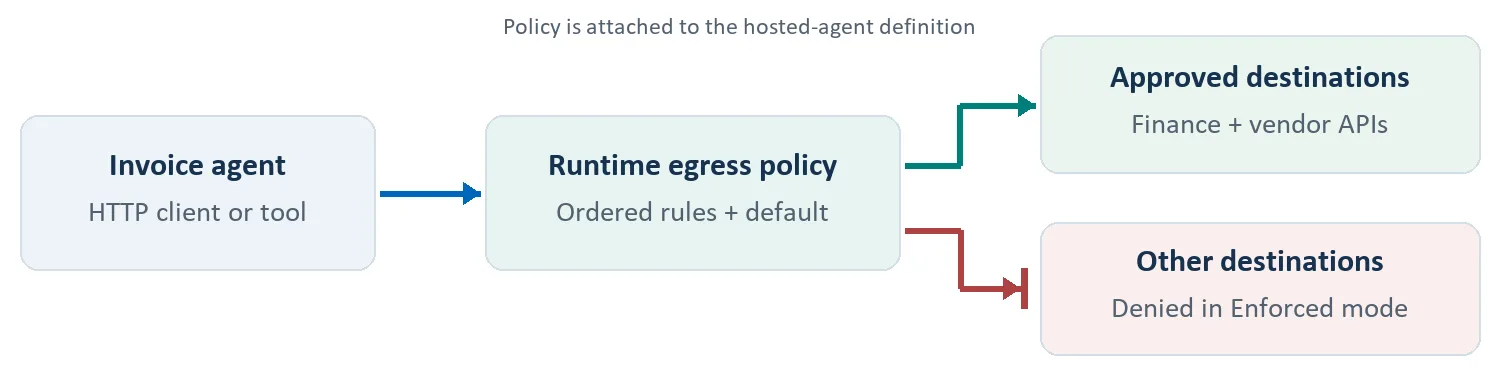
例として示されるのは、取引先を検索し、支払い記録を確認する請求書エージェントだ。この処理には2つのAPIが必要になる。一方で、文書に見慣れないアップロード先へのリンクが含まれていたり、新たに追加したヘルパーライブラリが想定外のURLをたどったりする可能性も想定されている。
そこで、必要な接続先を明示的な送信先ポリシーとして定義する。業務ロジックと認証は引き続きアプリケーション側が担い、ネットワークの送信先ルールはエージェントコードの外側で管理する構成となる。
実通信の観察
検証では、まずテスト環境でエージェントが実際に行う通信を観察する。そのうえで明示的な外向き通信の境界を試し、制御を有効にした際、承認されていない接続先へ到達できないことを確認する。
コード上で想定した接続先だけを見るのではなく、実際の呼び出しを確認してからポリシーを検証する流れであり、意図しない外部送信の把握に利用できる。
プレビューの位置付け
ネットワーク送信制御は一般提供ではなく、プレビュー段階にある。プレビュー向けのSLAはなく、本番環境での利用を意図したものでもない。この手順は開発と評価を対象としており、ホスト型エージェントの送信先をテスト環境で確認するためのものと位置付けられている。
Network egress controls
Foundry Agent Service is previewing network egress controls for managing where hosted agents can send requests. The controls matter because they place destination rules outside agent code and let teams observe real calls before testing an explicit outbound boundary.
The central question is not only which tools an agent has been given, but where the process can send a request. An explicit destination policy limits outbound access independently of the agent’s business logic.
Invoice agent
The walkthrough uses an invoice agent that looks up a vendor and checks a payment record. Those tasks require access to two APIs.
However, other possible requests may emerge while the agent operates. A document could include an unfamiliar upload link, or a new helper library could follow an unexpected URL. These cases create outbound destinations that were not part of the agent’s intended work.
The walkthrough gives the invoice agent an explicit destination policy so that permitted destinations are defined separately from its code. The application continues to own both its business logic and authentication.
Observe real calls
The process includes observing the agent’s calls in a test environment. This allows teams to see the destinations contacted during development and evaluation rather than relying only on the tools intentionally assigned to the agent.
After observing those calls, the walkthrough tests the outbound boundary with enforcement enabled. The check is whether an unapproved destination remains unreachable under the explicit policy.
Development and evaluation
The network egress controls are in preview and are intended for development and evaluation. They are not generally available, do not have a preview service-level agreement, and are not intended for production use.
Within those limits, the preview provides a way to define destinations outside agent code, inspect actual outbound activity, and verify that enforcement prevents access to an unapproved destination.
ポコとTECHガイドPoko & TECH Guide
ポコと当サイトのTECHガイドが、記事の要約と収集した情報から読みどころを語るAI生成の対話です。Poko and TECH Dashboard's own TECH Guide discuss the article's highlights in an AI-generated conversation based on its summary and collected source details.
- ポコPoko必要なAPIは2つなのに、接続先をコードの外で制限するんだね。これって大きいこと?The agent only needs two APIs, yet its destinations are controlled outside the code. Is that a big shift?
- TECHガイドTECH Guideこの記事では、与えた道具だけでなく「どこへ送信できるか」まで明示できる点が重要なんじゃ。実際の通信も観察できるぞ。Yes. The article’s key point is controlling not just the agent’s tools, but where it can send requests. You can also observe its actual calls.
- ポコPoko「ネットワーク送信制御」って、つまりどういうこと?知らないURLへの通信を止める仕組み?What exactly are “network egress controls”? Are they a way to stop calls to unfamiliar URLs?
- TECHガイドTECH Guideネットワーク送信は、外部へ出ていく通信のことじゃ。本文では許可する接続先をポリシーで定め、未承認の宛先を到達不能にできるか試しておる。Network egress means outbound traffic. Here, a policy defines approved destinations, then enforcement is tested to confirm an unapproved destination stays unreachable.
- ポコPoko自分なら、取引先照会と支払い確認のAPIだけ許可して、怪しいアップロード先へ送れないかテストしたいな。I’d allow only the vendor lookup and payment-check APIs, then test whether the agent can reach a suspicious upload destination.
- TECHガイドTECH Guideそれが想定された使い方じゃよ。ただしプレビューでSLAはなく、本番向けではない。開発・評価で試し、業務ロジックと認証はアプリ側が担うんじゃ。That matches the walkthrough. But it’s a preview with no SLA and isn’t for production; use it for development and evaluation, while the app still handles business logic and authentication.