AWSが「What's Next with AWS, 2026」の主要発表をまとめて公開 Top announcements of the What’s Next with AWS, 2026
 AWS News Blog · aws.amazon.com · 2026/04/29 03:11 · 1mo ago · 📖 1 min
 - AWSは新イベント「What's Next with AWS, 2026」における主要な発表内容をブログ記事にまとめて公開した。
- 新サービスや機能アップデートを一覧で確認できる構成となっており、開発者や企業ユーザー向けの最新動向を俯瞰できる内容となっている。
English summary
- At the "What's Next with AWS" 2026 event, AWS launched Amazon Quick—an AI assistant for work with a desktop app and expanded integrations—and expanded Amazon Connect into four agentic AI solutions for
AWSは公式ブログにおいて、新たなイベント「What's Next with AWS, 2026」で発表された主要なアップデートを一覧化した記事を公開した。年次のre:Inventとは別軸で、今後のロードマップや新機能を提示する場として位置付けられているとみられる。
記事は、イベントで披露された各種サービスのアップデート、新機能、AI関連の取り組みなどを横断的に紹介する形式を採っている。AWSはこうしたまとめ記事を主要イベントごとに公開しており、開発者や運用担当者が短時間で全体像を把握できるようにする狙いがある。近年は生成AI関連の発表が中核となる傾向が強く、Amazon BedrockやAmazon Q、Amazon SageMakerといったAI/ML系サービスを軸に、データ基盤・セキュリティ・サーバーレスなどの周辺領域へ波及するアップデートが続いている。
背景として、クラウド業界ではMicrosoft AzureがIgnite、Google CloudがNextといった旗艦イベントを通じて生成AI戦略を競って打ち出しており、AWSも年間を通じた発表機会を増やすことで競争力の維持を図っている可能性がある。「What's Next」というブランディングは、製品のGA(一般提供)だけでなくプレビュー段階の技術や将来構想も含めて顧客に共有する場としての役割を担っていると見られる。
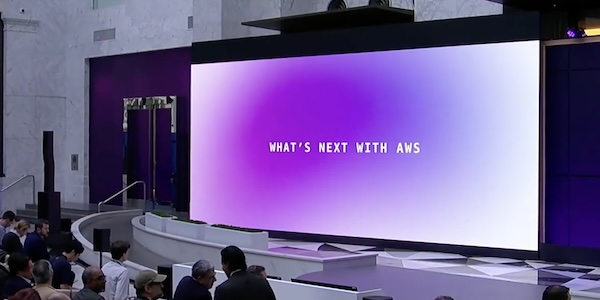
AWSは新イベント「What's Next with AWS, 2026」における主要な発表内容をブログ記事にまとめて公開した。
このまとめ記事は具体的なサービス名や詳細仕様には踏み込まない俯瞰的な性格を持つため、個別の技術評価には各発表の元記事を参照する必要がある。AWSユーザーにとっては、次年度の技術選定やアーキテクチャ設計を検討する上での出発点として有用な情報源となるだろう。
AWS has published a roundup post on its official blog summarizing the major announcements made at What's Next with AWS, 2026, a newly branded event that appears to serve as a complementary showcase to the company's flagship re:Invent conference. The post consolidates updates spanning product launches, feature enhancements, and AI-focused initiatives unveiled during the event.
The article follows a format AWS has used for years around its major events, offering a cross-sectional view of announcements so that developers, architects, and operations teams can quickly grasp the overall direction without combing through individual release notes. Recent iterations of these summaries have leaned heavily on generative AI themes, with services such as Amazon Bedrock, Amazon Q, and Amazon SageMaker typically forming the core narrative. Adjacent updates in data platforms, security, and serverless computing tend to radiate outward from those AI-centric announcements, reflecting how tightly AWS now couples its broader portfolio to model development and deployment workflows.
The What's Next branding itself is notable. Unlike re:Invent, which traditionally emphasizes general availability launches and customer-ready capabilities, an event positioned around what is coming next appears designed to give AWS a venue for sharing preview-stage technologies, roadmap signals, and forward-looking architectural guidance. This may help the company maintain a steadier cadence of public announcements throughout the year rather than concentrating mindshare into a single late-year window.
The move can be read against the backdrop of intensifying competition among hyperscalers. Microsoft uses Ignite and Build to drive its Azure and Copilot messaging, while Google Cloud Next has become the focal point for its Gemini-aligned cloud strategy. Both rivals have been aggressive in tying generative AI announcements to enterprise-ready tooling, and AWS appears to be responding by spreading its own announcement surface across more touchpoints during the year. Adding a dedicated What's Next event gives AWS another beat in that drumline, and may also serve to address perceptions in some quarters that the company has been less vocal about its AI roadmap than its competitors.
For practitioners, the value of the roundup post lies primarily in orientation rather than technical depth. Because it aggregates headline-level descriptions across many services, it does not substitute for the individual launch posts, documentation updates, or pricing pages that accompany each announcement. Readers evaluating specific capabilities — whether a new Bedrock model integration, a SageMaker training feature, or a database engine update — will still need to follow through to the detailed source material to assess fit, limits, and regional availability.
Even so, this kind of summary tends to be useful as a planning artifact. Teams formulating next year's technology choices, migration plans, or AI adoption strategies can use it as a checklist of areas worth investigating in more depth. Architecture decisions around foundation model selection, agent frameworks, vector and analytical data stores, and identity and governance controls are particularly sensitive to the cadence of cloud provider releases, and a consolidated view helps reduce the risk of overlooking a relevant capability.
It is also worth noting what these roundups typically do not reveal. They rarely include detailed performance benchmarks, comparative pricing analysis, or candid discussion of constraints, and previews highlighted at such events do not always translate into general availability on predictable timelines. Customers with regulated workloads in particular may want to wait for region-by-region rollout details and compliance certifications before committing to preview-stage services.
Overall, the What's Next with AWS, 2026 roundup appears to function as both a marketing milestone and a practical reference point. It signals that AWS intends to use more than one annual stage to communicate its direction, especially as AI-driven differentiation becomes a central axis of cloud competition. For AWS customers, it offers a convenient entry point into a broader set of announcements that will likely shape platform conversations through the coming year, with the original launch posts remaining the authoritative source for technical evaluation.
aws.amazon.com 本ページの本文・要約は AI による自動生成です。正確性は元記事 (aws.amazon.com) をご確認ください。