米中露が静止軌道で接近監視合戦、ロシアも参戦」 Three's a party: US, China, and now Russia are on the prowl in GEO
- 静止軌道(GEO)上で米国・中国に続き、ロシアも他国衛星への接近・偵察活動を活発化させている。
- 長く均衡が保たれてきたGEOが、各国の軍事的な「猫とねずみ」の舞台と化しつつある状況を示す動きだ。
English summary
- Russia has joined the US and China in conducting close-approach surveillance maneuvers in geostationary orbit, turning what was once a quiet domain into an active arena of military cat-and-mouse operations among the three space powers.
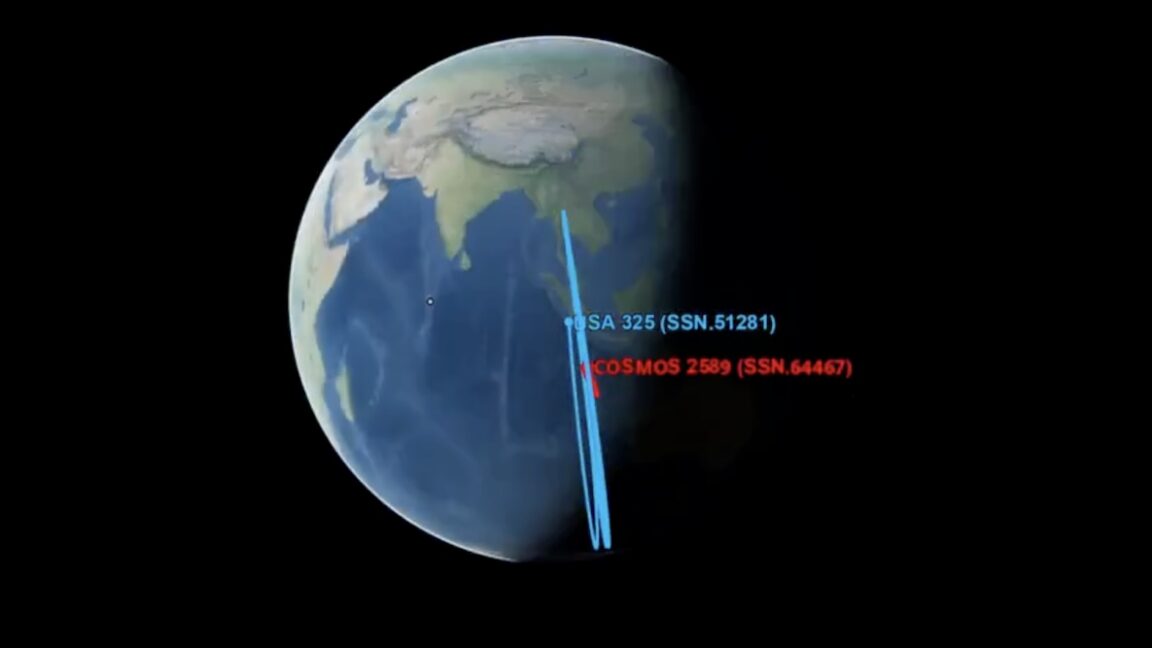
高度約3万6000kmの静止軌道(GEO)上で、ロシアの衛星が他国衛星に接近する動きを見せ始めた。これまで米国と中国の二強が主役だった軌道上の「偵察ゲーム」に、ロシアが本格的に加わった構図となる。
GEOは通信・放送・早期警戒・偵察衛星など各国の戦略資産が集中する軌道帯で、衛星は地球の自転と同期して静止して見える特性を持つ。そのためここに配備された資産は固定インフラとして極めて価値が高く、相手国の衛星に接近して撮像・電波傍受・能力推定を行う「ランデブー近接運用(RPO)」の標的にもなりやすい。
米国はノースロップ・グラマンが運用するGSSAPシリーズで他国衛星の周囲を周回する観測を続けており、中国もSJ(実践)シリーズで同様の能力を実証してきた。SJ-21は2022年に機能停止した自国の北斗衛星を「墓場軌道」へ曳航するなど、近接操作能力の高さを示している。今回ロシアの衛星が同様の挙動を見せたことは、GEOにおける三極構造の到来を意味する可能性がある。
長く均衡が保たれてきたGEOが、各国の軍事的な「猫とねずみ」の舞台と化しつつある状況を示す動きだ。
背景には、低軌道(LEO)で進む大規模コンステレーション競争とは別軸で、GEOが依然として軍事的に決定的な領域であり続けるという認識がある。米宇宙軍は数年前からGEOを「競合領域」と位置付け直し、機動性の高い小型監視衛星の配備を進めてきた。商業面でもLeoLabsやCOMSPOC、ExoAnalyticなど民間SSA(宇宙状況監視)企業が地上望遠鏡網で不審な機動を追跡しており、軍事衛星の動きが以前より可視化されやすくなっている点も今回の報道につながっている。
衛星同士の物理的接触や妨害には至っていないとみられるが、近接運用が常態化すれば誤認や偶発的衝突のリスクは高まる。軌道上行動規範の整備が国際的に議論されているものの、合意形成は容易ではなく、当面は各国の自制と監視能力に依存する状態が続く可能性がある。
Geostationary orbit, the ring of space some 36,000 kilometers above the equator, has long been treated as a relatively orderly neighborhood. That perception is shifting. Russia has reportedly begun maneuvering satellites close to foreign spacecraft in GEO, joining the United States and China in what has become an active game of orbital surveillance among three major powers.
GEO is home to many of the world's most strategically valuable spacecraft: communications relays, missile early-warning sensors, signals intelligence platforms, and broadcast satellites. Because objects there appear stationary relative to the ground, they function almost like fixed infrastructure, which makes them both highly useful and highly attractive as intelligence targets. Close-approach operations, often called rendezvous and proximity operations or RPO, allow one satellite to image another, characterize its antennas, or infer its mission.
The US has openly operated the Northrop Grumman-built GSSAP satellites for more than a decade, drifting them around GEO to inspect objects of interest. China has demonstrated similar capabilities through its Shijian series; SJ-21 famously towed a defunct Beidou navigation satellite into a graveyard orbit in 2022, a maneuver that doubles as a demonstration of how such a vehicle could grapple an adversary's spacecraft. Russia's apparent entry into this same pattern of behavior suggests GEO is becoming a genuinely tripolar arena rather than a two-player contest.
The development arrives against a broader strategic backdrop. While public attention has focused on the explosion of low-Earth-orbit megaconstellations like Starlink, military planners continue to view GEO as decisive terrain. The US Space Force has explicitly reclassified the belt as a contested domain and has been funding more agile, smaller inspector satellites to complement the aging GSSAP fleet. Commercial space situational awareness firms such as LeoLabs, COMSPOC, and ExoAnalytic Solutions have also expanded ground-based optical tracking networks, making unusual maneuvers far more visible to outside analysts than they were even a few years ago. Much of what is publicly known about Russian and Chinese RPO activity stems from this commercial tracking layer.
Nothing reported so far suggests physical contact or active interference between satellites, and operators typically maintain safe separation distances even during inspection passes. Still, the normalization of close approaches raises the risk of misinterpretation. A satellite drifting within a few kilometers of another could be characterized as routine observation by one government and as a hostile act by another. There is no widely accepted code of conduct governing such behavior, and diplomatic efforts at the United Nations to define responsible behaviors in space have moved slowly.
For now, the three-way pattern is likely to persist and possibly intensify. Each power has incentives to understand its rivals' on-orbit capabilities, and each has demonstrated the technical means to do so. Whether that competition remains stable or drifts toward more provocative actions, such as jamming, dazzling, or even physical interaction, may depend less on technology than on the political guardrails the spacefaring nations choose to build around their increasingly crowded high ground.
本ページの本文・要約は AI による自動生成です。正確性は元記事 (arstechnica.com) をご確認ください。