同期APIからGPT-5モデルシリーズ対応・エージェントワークフローまで:Azure Content Understanding 2026年8月の最新情報From Sync APIs to support for the GPT-5 model series and agentic workflows: What’s new in Azure Content Understanding – August 2026
匿名の公開いいねです。記事の保存・お気に入りではなく、Featured、Top 3、重要度、掲載順位には影響しません。仕組みとプライバシーAnonymous public likes are reactions, not saved articles or bookmarks. They do not affect Featured, Top 3, importance, or listing order.How it works and privacy
Azure Content UnderstandingがGPT-5モデルシリーズのサポートや同期API、エージェントワークフロー連携を追加し、文書・画像・音声・動画などの企業コンテンツを構造化データとして活用しやすくなった。
Azure Content Understanding gains synchronous APIs, GPT-5 model series support, and tighter agentic workflow integration, making it easier to extract structured data from documents, images, audio, and video for AI apps and agents.
本ページの本文と要約は AI による自動生成です。日本語版と英語版は言語ごとに独立して生成されるため、表現や詳しさが異なる場合があります。正確性は元記事 (devblogs.microsoft.com) をご確認ください。The body and summaries are AI-generated independently for each language, so wording and detail may differ. Verify accuracy at the original source (devblogs.microsoft.com).
要約と収集メタデータに基づく AI 解説。元記事全文の転載・翻訳ではありません。AI explainer based on the summaries and collected metadata, not a copy or translation of the full source article.
マイクロソフトは2026年8月12日、企業向けコンテンツ解析サービス「Azure Content Understanding」の最新アップデートをMicrosoft Foundry Blogで公開した。同期API(Sync API)の追加、GPT-5モデルシリーズのサポート、エージェントワークフローとの連携強化が柱で、文書や画像、音声、動画といった非構造化データを、AIアプリやエージェントが扱いやすい構造化データへ変換しやすくする狙いがある。
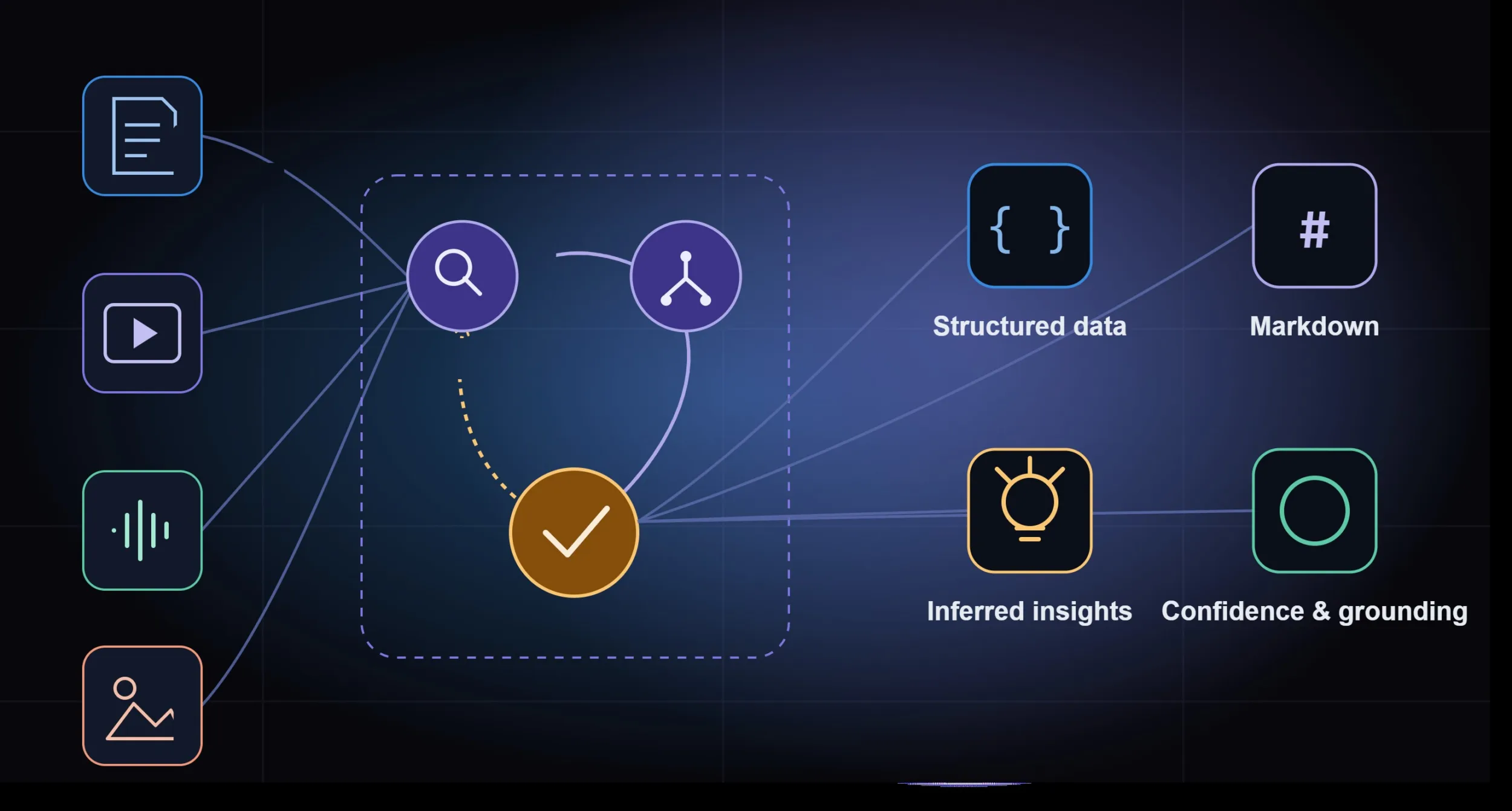
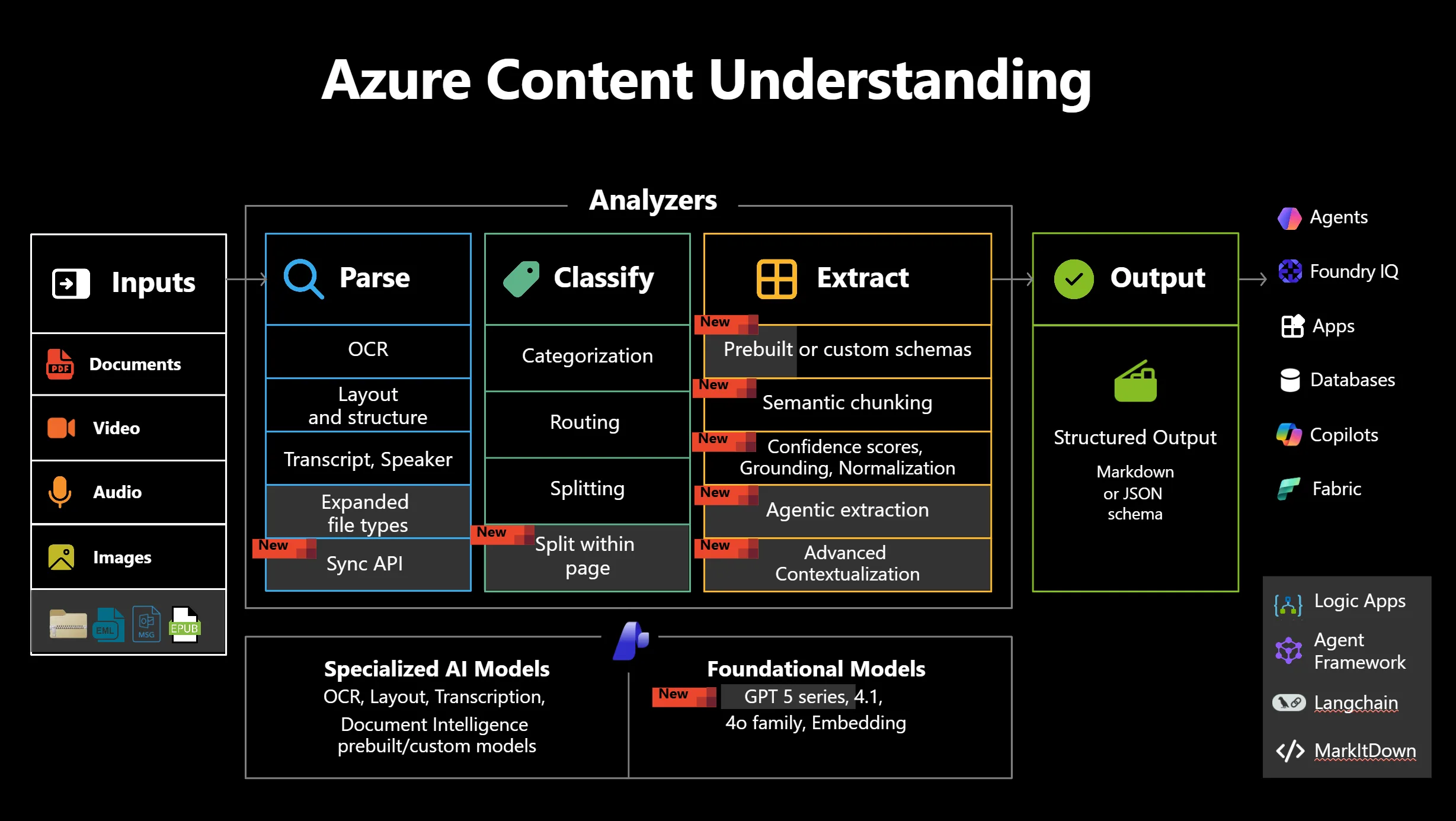
同社は、企業コンテンツがもはや「人が読むだけのもの」ではなくなっていると指摘する。AIアプリやエージェントの有用性は、扱える情報の質と量に左右されるが、実際の業務知識の多くは文書やフォーム、表、画像、音声、動画といった形式に閉じ込められている。Content Understandingは、こうした多様なコンテンツから構造化され、根拠付け(grounding)されたデータを抽出することを目的としたサービスと位置づけられている。
今回の同期APIは、結果を繰り返し問い合わせるポーリング方式ではなく、単一の呼び出しで応答を返す設計と見られ、比較的短時間で処理が完結するワークフローでの実装を簡素化する可能性がある。加えてGPT-5モデルシリーズへの対応により、抽出や要約、分類といった処理でより高度な言語理解を活用できるようになると考えられる。
エージェントワークフローとの連携は、近年マイクロソフトが注力するAIエージェント基盤の流れに沿ったものだ。Content Understandingが出力する構造化データを、エージェントが判断や後続処理の入力として直接利用できれば、書類処理やナレッジ検索といった業務の自動化を進めやすくなるとみられる。
文書や非構造化データからの情報抽出は、いわゆる「ドキュメントAI」として関心が高まっている分野で、他社でも同種のクラウドサービスが展開されている。Content UnderstandingはAzure AI Foundry内で提供されるサービスであり、既存のAzureサービス群と組み合わせて利用できる点が特徴だ。今回の更新は、生成AIを実業務へ組み込む際に必要となる前処理やデータ整備の負担を軽減する取り組みの一環と位置づけられる。
Microsoft has published a set of updates to Azure Content Understanding, the multimodal data-processing service in Azure AI Foundry, adding synchronous APIs, support for the GPT-5 model series, and closer integration with agentic workflows. Detailed in an August 2026 post on the Microsoft Foundry Blog, the changes are aimed at developers who need to convert unstructured enterprise content into structured, grounded data that AI applications and agents can reliably act on.
The framing behind the release is that enterprise content is no longer only something people read. As Microsoft puts it, AI apps and agents are only as useful as the information they can understand, yet much of the world's enterprise knowledge remains locked inside documents, forms, tables, images, audio, and video. Content Understanding is positioned as the layer that extracts fields, relationships, and other structured outputs from those varied formats, with an emphasis on grounding so that results can be traced back to their source material rather than being freely generated.
The addition of synchronous APIs is the most immediately practical change for many developers. Content processing services of this kind have often relied on asynchronous patterns, where a client submits a job, receives an operation identifier, and then polls for completion. That model suits large batches and long documents but adds complexity and latency for smaller, interactive requests. A synchronous API appears intended to simplify those lighter-weight scenarios, letting an application send content and receive structured results in a single request-and-response cycle, which is generally easier to wire into real-time user experiences and agent tool calls.
Support for the GPT-5 model series brings Microsoft's newer generation of models into the extraction and reasoning pipeline. In practice this is likely to affect how the service interprets ambiguous layouts, reasons over long or complex documents, and handles instructions expressed in natural language. Microsoft has consistently tied Content Understanding to the broader model catalog available through Azure AI Foundry, so aligning it with the GPT-5 series keeps the service current with the reasoning capabilities available elsewhere on the platform.
The third pillar, tighter agentic workflow integration, reflects a wider industry direction in which large language models are combined with tools, memory, and multi-step planning rather than being called once for a single answer. By making Content Understanding easier to invoke as a step within an agent's workflow, Microsoft is positioning it as a source of trustworthy, structured input that agents can query when they need to read a contract, parse an invoice, or interpret a chart. Grounded outputs matter here because agents that take autonomous actions are more dependable when the data feeding them is verifiable.
For context, Azure Content Understanding sits within a family of Microsoft document and content services. It builds on the lineage of Azure AI Document Intelligence, formerly known as Form Recognizer, which focused on extracting text, key-value pairs, and tables from documents. Content Understanding broadens that scope to a multimodal approach that spans audio and video alongside text and images, and folds in model-driven interpretation. It is also frequently discussed alongside retrieval-augmented generation, or RAG, patterns, where structured, grounded data improves the accuracy of model responses and reduces the risk of fabricated details.
The competitive backdrop includes comparable offerings from other cloud providers, such as Google's Document AI and Amazon's Textract, as well as a growing set of specialized document-parsing tools. Microsoft's differentiation appears to rest on integrating content extraction directly with its Foundry platform, model catalog, and agent tooling, so that developers can move from raw files to structured data to agent actions within a single environment.
The updates do not appear to change the fundamental purpose of the service so much as reduce friction and extend its reach. Synchronous access lowers the barrier for interactive use, GPT-5 support keeps the reasoning layer up to date, and agentic integration reflects how enterprises increasingly expect AI systems to be assembled. Organizations evaluating these capabilities will still need to consider factors such as accuracy on their specific document types, cost at scale, and data governance. As with any vendor announcement, the practical value will depend on how the features perform against real enterprise workloads, but the direction is consistent with Microsoft's broader push to make unstructured content usable by both applications and autonomous agents.
ポコとTECHガイドPoko & TECH Guide
ポコと当サイトのTECHガイドが、記事の要約と収集した情報から読みどころを語るAI生成の対話です。Poko and TECH Dashboard's own TECH Guide discuss the article's highlights in an AI-generated conversation based on its summary and collected source details.
- ポコPoko同期APIって何? Azure Content Understandingは、ここで何をしてくれるの?What’s a synchronous API? And what does Azure Content Understanding actually do here?
- TECHガイドTECH Guide記事によれば、文書・画像・音声・動画を構造化データにするものじゃ。同期APIは、同じリクエストの流れで結果を返す仕組みじゃよ。According to the article, it turns documents, images, audio, and video into structured data. Put simply, a synchronous API returns a result within the same request flow.
- ポコPokoじゃあ、GPT-5モデルシリーズ対応やエージェントワークフロー連携は、何がうれしいの?Okay, but what’s the benefit of GPT-5 model series support and agentic workflow integration?
- TECHガイドTECH Guide記事では、AIアプリやエージェントが構造化された根拠付きデータを使いやすくなるとしておる。元のコンテンツに基づく情報、ということじゃな。According to the article, AI apps and agents can more easily use structured, grounded data—information tied to the original content.
- ポコPokoつまり、文書や動画に埋もれた企業の知識を、AIが使いやすい形に整理できるんだね。へえ、便利そう!So company knowledge buried in documents and videos can be organized into a form AI can use more easily. That sounds handy!
- TECHガイドTECH Guideその理解でよいぞ。記事の見どころはコンテンツとAIをつなぎやすくなる点で、具体的な成果までは示しておらん。Exactly. The article highlights easier connections between content and AI, but it does not specify concrete outcomes.