Azure Content Understanding が GPT-5 シリーズに対応:モデル選択・グラウンディング・信頼度の強化Azure Content Understanding GPT-5 Series Guide: Model Selection, Grounding Improvements, and Confidence Enhancements
匿名の公開いいねです。記事の保存・お気に入りではなく、Featured、Top 3、重要度、掲載順位には影響しません。仕組みとプライバシーAnonymous public likes are reactions, not saved articles or bookmarks. They do not affect Featured, Top 3, importance, or listing order.How it works and privacy
- Azure Content Understanding が GPT-5 シリーズのサポートを拡充し、ドキュメントや画像・音声・動画からの情報抽出においてグラウンディング精度と信頼度スコアが向上した。
- これにより企業はより柔軟かつ高品質なコンテンツ解析をAIで実現できる。
Azure Content Understanding now supports the GPT-5 model series, bringing improved grounding accuracy and confidence scoring for extracting insights from documents, images, audio, and video, giving enterprises greater flexibility and quality in AI-driven content workflows.
本ページの本文と要約は AI による自動生成です。日本語版と英語版は言語ごとに独立して生成されるため、表現や詳しさが異なる場合があります。正確性は元記事 (devblogs.microsoft.com) をご確認ください。The body and summaries are AI-generated independently for each language, so wording and detail may differ. Verify accuracy at the original source (devblogs.microsoft.com).
要約と収集メタデータに基づく AI 解説。元記事全文の転載・翻訳ではありません。AI explainer based on the summaries and collected metadata, not a copy or translation of the full source article.
Microsoft は、企業向けのコンテンツ解析サービス「Azure Content Understanding」が OpenAI の GPT-5 シリーズに対応したと、Microsoft Foundry Blog で明らかにした。ドキュメントや画像、音声、動画から情報を抽出する処理において、グラウンディング(根拠づけ)と信頼度スコアリングが強化され、企業がより柔軟かつ高品質な AI ワークフローを構築できるようになるという。
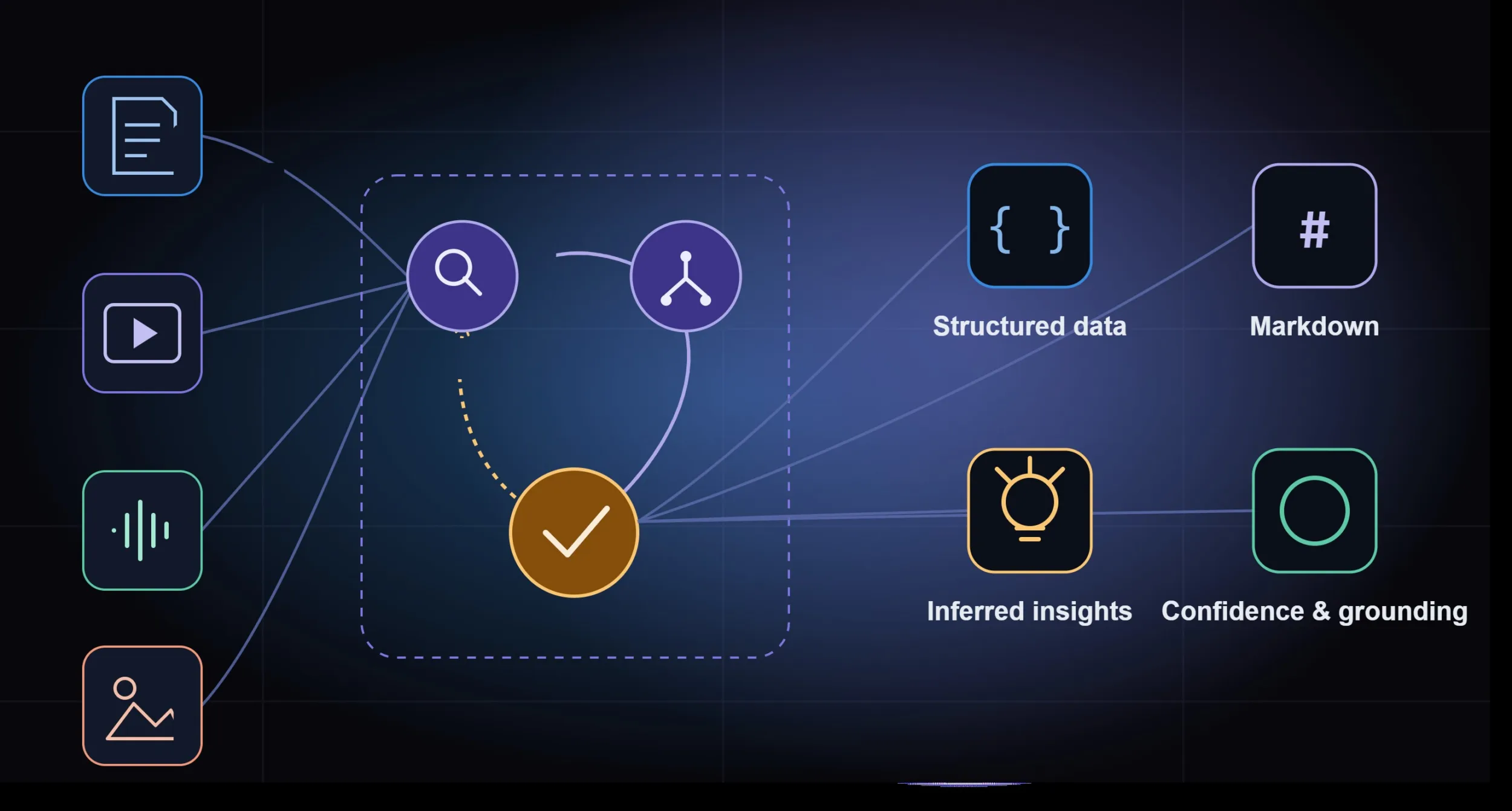
Azure Content Understanding は、非構造化のコンテンツから必要な情報を取り出し、構造化データとして活用できるようにするサービスだ。近年、企業内のコンテンツは人が読むためだけのものではなく、AI が内容を解釈して業務に反映する対象へと位置づけが変わりつつある。今回の GPT-5 シリーズ対応は、こうした流れに沿って、利用できるモデルの選択肢(モデルカタログ)を広げるものとされる。
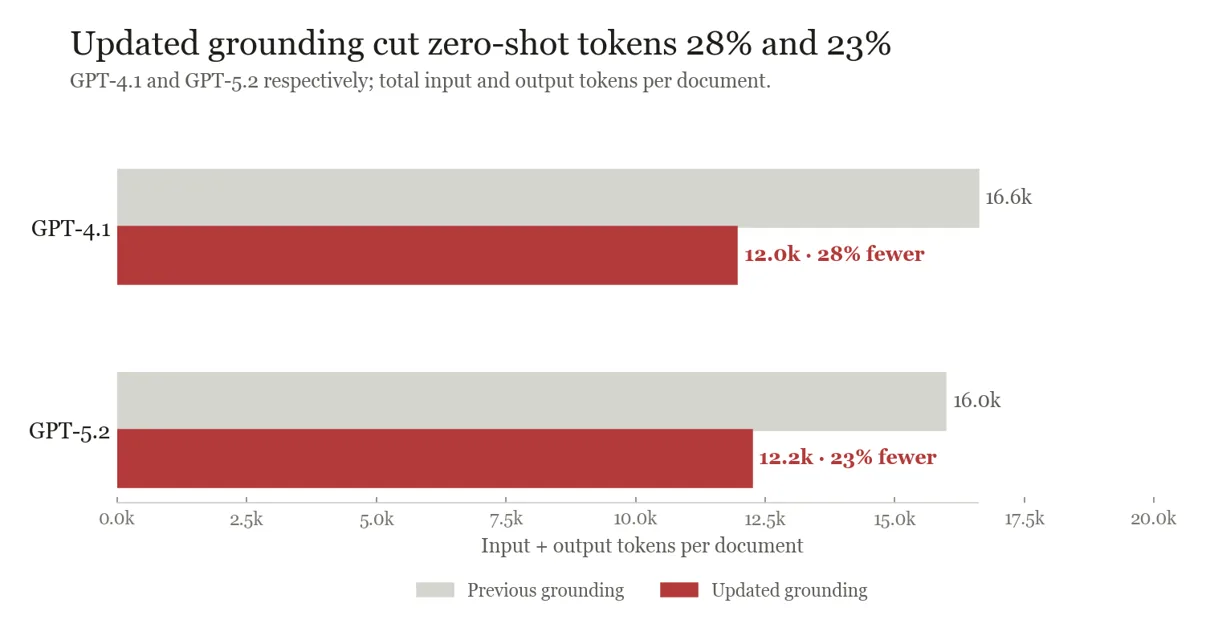
強化点の一つがグラウンディングだ。これは AI が生成した抽出結果を元のコンテンツ上の該当箇所と結びつける仕組みを指す。精度が向上することで、抽出された値がどこを根拠にしているかを追跡しやすくなり、誤りの検証や監査に役立つと見られる。あわせて信頼度スコアの改善により、抽出結果ごとの確からしさを数値で把握し、確認が必要な項目を優先的に人手でチェックするといった運用がしやすくなる可能性がある。
複数のモデルから用途に応じて選べる点も特徴だ。処理の速度やコスト、精度の要件は業務によって異なるため、モデルを使い分けられることは効率と品質の両立につながると期待される。ただし、料金体系や対象地域、対応する環境などの詳細は公式情報を確認したい。
背景として、ドキュメント AI の分野では各社が機能拡充を競っている。Microsoft は Azure および開発基盤の Foundry を軸に、生成 AI を組み込んだコンテンツ理解の強化を進めており、GPT-5 シリーズのような新しいモデルを取り込むことで、テキストだけでなく画像・音声・動画を含む多様なモダリティへの対応力を高める狙いがあると見られる。
企業が実際に導入する際は、抽出精度や信頼度スコアの妥当性を自社データで検証したうえで、既存の業務プロセスにどう組み込むかを見極めることが重要になりそうだ。
Microsoft has expanded Azure Content Understanding to support OpenAI's GPT-5 series, adding new options for model selection alongside improvements to grounding and confidence scoring. The update matters because enterprises increasingly depend on AI not just to read documents, images, audio, and video, but to extract structured information and act on it, and the reliability of those extractions has a direct bearing on downstream workflows.
Azure Content Understanding is a multimodal service within Microsoft Foundry, the company's platform for building and running AI applications, designed to turn unstructured enterprise content into structured, usable data. Rather than treating a scanned invoice, a call recording, or a video clip as something a person must review manually, the service applies models to pull out fields, entities, and insights that can feed applications, analytics, or automated processes. The expansion of the model catalog to include GPT-5 gives organizations more choice in balancing cost, latency, and output quality for a given task.
Model selection is a central theme of the update. Different content-processing jobs have different requirements: a high-volume, routine extraction task may favor a smaller, faster, cheaper model, while a complex reasoning task over a dense contract may benefit from a more capable one. By broadening the available models, Azure Content Understanding lets teams match the model to the workload instead of applying a single option to every scenario. This aligns with a broader industry pattern in which AI platforms offer tiered model catalogs so customers can tune the trade-off between performance and spend.
Grounding is the second focus area. In this context, grounding refers to keeping a model's output tied to the actual source content, so that extracted values can be traced back to specific locations in a document or media file. Stronger grounding is intended to reduce the risk of fabricated or unsupported answers, a well-known failure mode of large language models often described as hallucination. For regulated industries and other settings where an extracted figure must be verifiable, the ability to point to where a value came from is often as important as the value itself.
Closely related is the emphasis on confidence. Confidence scores estimate how reliable a given extraction is, which helps organizations decide when a result can be trusted automatically and when it should be routed to a human reviewer. This kind of human-in-the-loop design is common in document-processing pipelines, where the goal is to automate the straightforward majority of cases while flagging ambiguous ones. Improvements to confidence scoring appear aimed at making that triage more accurate, which can lower review costs without sacrificing quality.
Taken together, Microsoft frames these changes as delivering greater flexibility, efficiency, and quality. Flexibility comes from the wider model catalog, efficiency from being able to choose lighter models where appropriate, and quality from better grounding and confidence. The company positions the update within the context of enterprise content that "is no longer just something people consume," reflecting a shift toward content as an input to automated decision-making rather than only material for human reading.
The move fits into the wider document-AI and multimodal-AI landscape, where several vendors offer competing services. Cloud providers such as Google and Amazon have long-standing document-processing offerings, and the field has increasingly converged on general-purpose foundation models capable of handling text, images, and other modalities within a single service. By layering the GPT-5 series into Content Understanding, Microsoft is extending the reach of its OpenAI partnership across its enterprise AI stack, which already exposes these models through Azure OpenAI and Foundry.
For organizations already using Azure Content Understanding, the practical takeaway is likely a wider set of configuration choices rather than a change to how the service is fundamentally used. Teams will need to evaluate which of the newly available models best suits each workload, and to test how the grounding and confidence improvements affect their specific documents and media. As with any model upgrade, results are likely to vary by content type, language, and formatting, so validation against representative samples remains advisable before rolling changes into production.
ポコとTECHガイドPoko & TECH Guide
ポコと当サイトのTECHガイドが、記事の要約と収集した情報から読みどころを語るAI生成の対話です。Poko and TECH Dashboard's own TECH Guide discuss the article's highlights in an AI-generated conversation based on its summary and collected source details.
- ポコPokoGPT-5シリーズ対応で「グラウンディング精度」が向上したって、それって何?GPT-5 support improves “grounding accuracy”—what does that actually mean?
- TECHガイドTECH Guide簡単に言うと、抽出した情報を元のコンテンツにきちんと結び付けることじゃな。記事によれば、その精度が向上したそうじゃよ。Simply put, grounding connects extracted information back to its source content. According to the article, that accuracy has improved.
- ポコPokoへえ、それって企業には何が嬉しいの? 信頼度スコアも関係ある?Oh, nice! What does that give enterprises? Does confidence scoring matter too?
- TECHガイドTECH Guide記事によれば、文書・画像・音声・動画の解析で柔軟性や効率、品質が高まるという。信頼度スコアは、抽出結果の確からしさを示す目安じゃな。The article says it can improve flexibility, efficiency, and quality across documents, images, audio, and video. A confidence score is an indicator of how certain an extracted result is.
- ポコPokoつまり、いろんな形式から情報を取り出しやすくなって、結果の確からしさも見やすくなったんだね!So it’s easier to extract information from different formats and see how certain the results are!
- TECHガイドTECH Guideその理解でよいぞ。今後の見どころは、拡充されたGPT-5シリーズから用途に合うモデルをどう選ぶかじゃな。Exactly. The next thing to watch is how organizations choose the right model for each use case from the expanded GPT-5 series support.