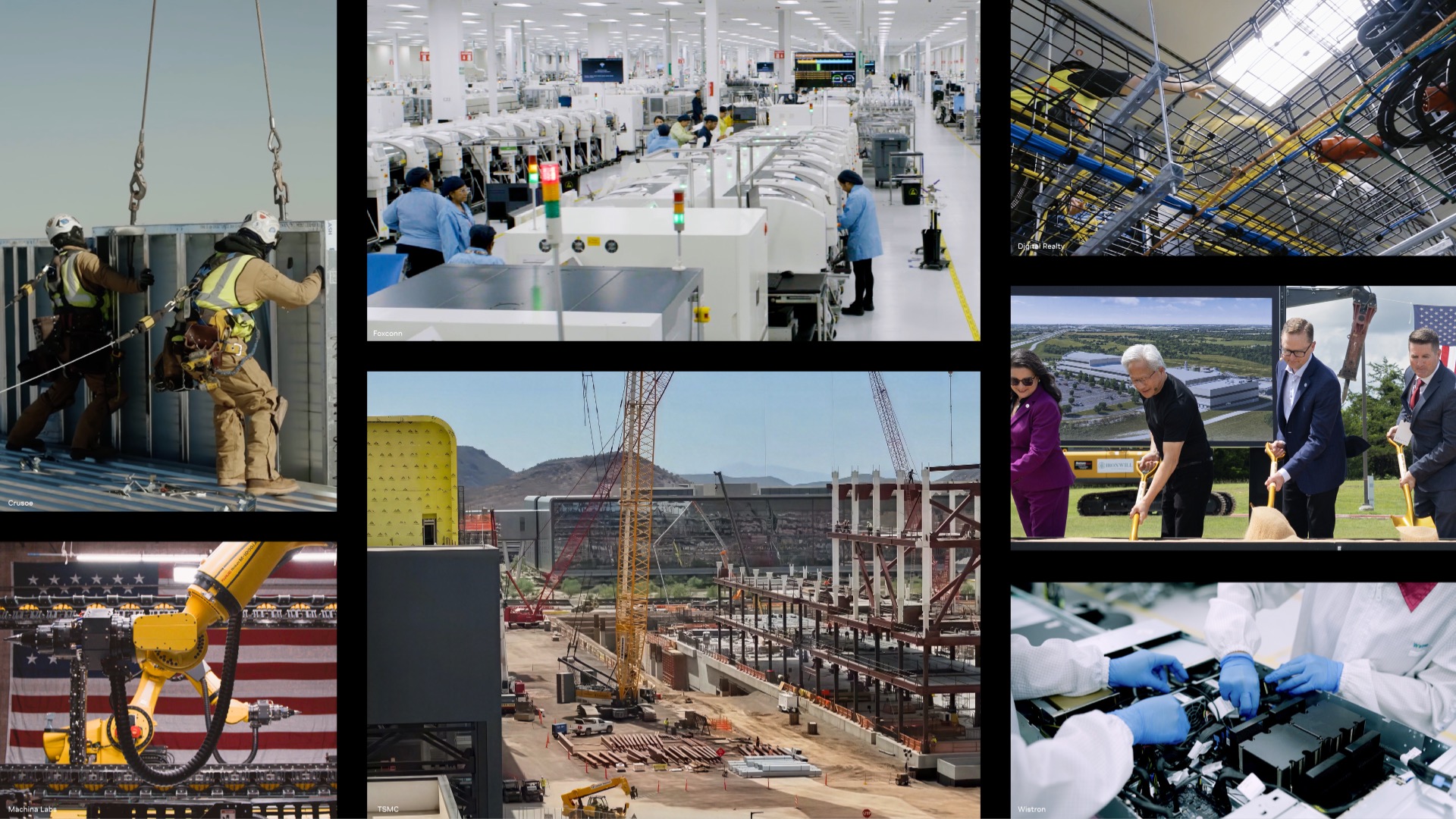
NVIDIAとパートナー、米国内でのAIインフラ製造を加速NVIDIA and Partners Build in America, for America
匿名の公開いいねです。記事の保存・お気に入りではなく、Featured、Top 3、重要度、掲載順位には影響しません。仕組みとプライバシーAnonymous public likes are reactions, not saved articles or bookmarks. They do not affect Featured, Top 3, importance, or listing order.How it works and privacy
- NVIDIAはパートナー企業と連携し、AIチップやシステムの米国内生産を拡大する取り組みを発表した。
- 国内製造強化により、サプライチェーンの安定とAI産業の雇用創出が期待される。
NVIDIA and its partners announced an expansion of AI chip and infrastructure manufacturing within the United States, aiming to strengthen domestic supply chains and create local tech jobs.
本ページの本文と要約は AI による自動生成です。日本語版と英語版は言語ごとに独立して生成されるため、表現や詳しさが異なる場合があります。正確性は元記事 (blogs.nvidia.com) をご確認ください。The body and summaries are AI-generated independently for each language, so wording and detail may differ. Verify accuracy at the original source (blogs.nvidia.com).
要約と収集メタデータに基づく AI 解説。元記事全文の転載・翻訳ではありません。AI explainer based on the summaries and collected metadata, not a copy or translation of the full source article.
NVIDIAは、複数のパートナー企業と連携し、AIチップやシステムの米国内生産を拡大する取り組みを発表した。生成AIの急速な普及でデータセンター向け半導体の需要が高まるなか、供給網の安定化と国内での技術雇用創出を狙う動きとして注目される。
今回の取り組みでは、GPUなどの先端半導体そのものの製造に加え、それらを組み込んだサーバーやシステム全体を米国内で組み立てる工程の強化が含まれるとみられる。AIインフラは単体のチップだけでなく、高速なネットワーク機器、冷却装置、電源システムなど多数の部材で構成されており、これらを国内で一貫して供給できる体制を整えることは、完成品の安定供給につながる可能性がある。
背景には、近年顕在化した半導体サプライチェーンの脆弱性がある。パンデミック時の供給混乱や地政学的リスクの高まりを受け、特定地域に生産が集中する構造を見直す機運が世界的に強まってきた。米国では半導体産業の国内回帰を促す「CHIPS法」による補助金政策が進められており、台湾のTSMCがアリゾナ州で先端工場を稼働させたほか、IntelやSamsungなども国内投資を拡大している。今回のNVIDIAの発表は、こうした産業全体の潮流と軌を一にするものと位置づけられる。
NVIDIAはAI向けGPUで高いシェアを持ち、同社のHopperやBlackwellといったアーキテクチャを採用したシステムはデータセンターの中核を担っている。ただし、同社は自社で工場を持たないファブレス企業であり、実際の製造は外部の受託生産企業に依存している。そのため国内製造の拡大は、TSMCをはじめとする製造パートナーや、システムを組み立てるサーバーメーカーとの協業が前提となる。
国内生産の強化は、供給網の透明性や安全保障上の懸念に応える一方で、コストや量産体制の立ち上げには一定の時間を要する可能性がある。先端半導体の製造には高度な技術と熟練人材が不可欠であり、必要な人材育成や関連設備の整備が今後の課題になると考えられる。AI需要が拡大を続けるなかで、こうした国内製造の取り組みが実際の供給力にどこまで結びつくか、今後の進展が注目される。
NVIDIA and several of its manufacturing partners have announced an expanded effort to build artificial intelligence chips and complete systems within the United States, a move that reflects a broader industry shift toward regionalized production of critical computing hardware. The initiative matters because AI infrastructure has become one of the most strategically important segments of the global technology economy, and where these components are made increasingly shapes questions of supply resilience, national policy, and long-term competitiveness.
According to the announcement, the effort spans multiple stages of the hardware pipeline, from semiconductor fabrication to the assembly of servers and rack-scale systems used in large data centers. The company frames the expansion as a way to strengthen domestic supply chains, shorten lead times, and support the creation of skilled manufacturing and engineering jobs. While NVIDIA designs its processors, it does not operate its own foundries, so any push toward domestic production depends heavily on a network of partners that handle fabrication, packaging, testing, and integration.
That partner ecosystem is central to understanding the scope of the plan. NVIDIA's most advanced accelerators, including its Blackwell generation, are manufactured using leading-edge processes from contract chipmakers, with Taiwan Semiconductor Manufacturing Company being the dominant supplier. TSMC has been expanding its facilities in Arizona, and that capacity is frequently cited as a foundation for building high-end chips on American soil. Beyond the silicon itself, advanced packaging techniques such as CoWoS, which bind processors to high-bandwidth memory, represent a significant bottleneck, so domestic capability in this area appears to be an important consideration. System-level partners, including large contract manufacturers that assemble servers and cooling infrastructure, also play a role in producing finished AI systems rather than just individual chips.
The announcement fits within a wider policy and market context that has been developing for several years. The 2022 CHIPS and Science Act allocated substantial federal funding and tax incentives to encourage semiconductor manufacturing in the United States, and numerous companies have since committed to new or expanded facilities. Trade tensions, export controls, and the disruptions exposed during the global chip shortage of the early 2020s all contributed to renewed attention on where advanced electronics are produced. Against that backdrop, moves to localize AI hardware production can be read as both a commercial decision and a response to policy signals encouraging domestic investment.
It is worth noting some practical limitations that temper expectations. Building a fully self-contained domestic supply chain for advanced chips is difficult, because the process relies on a globally distributed set of inputs, including specialized materials, lithography equipment, and chemicals sourced from suppliers around the world. Even when final fabrication or assembly occurs domestically, earlier or later steps may still take place elsewhere, so descriptions of hardware as made in the United States often refer to specific stages rather than the entire journey from raw wafer to finished product. The economics are also demanding, as leading-edge fabs cost tens of billions of dollars and take years to reach full output.
For customers and the broader market, the potential benefits are likely to center on supply stability and reduced geopolitical exposure rather than immediate cost savings, since domestic production can carry higher expenses than established overseas operations. Cloud providers, enterprises, and government agencies that depend on large volumes of AI accelerators have a strong interest in predictable delivery, particularly as demand for training and inference capacity continues to grow. A more geographically diversified manufacturing base could help mitigate risks associated with natural disasters, regional conflict, or concentrated dependence on a single location.
The initiative also aligns with competitive dynamics across the semiconductor industry, where rivals and adjacent firms are pursuing their own regionalization strategies. Other chip designers, memory makers, and equipment vendors have announced expanded US operations, and similar efforts are underway in Europe, Japan, and elsewhere as governments seek to secure access to critical technology. Whether NVIDIA's expanded domestic footprint will meaningfully shift the balance of global production remains to be seen, and much will depend on execution, the pace of facility construction, and the availability of a trained workforce. For now, the announcement signals continued momentum toward distributing AI hardware manufacturing more broadly, a trend that appears set to influence the sector for years to come.
ポコとTECHガイドPoko & TECH Guide
ポコと当サイトのTECHガイドが、記事の要約と収集した情報から読みどころを語るAI生成の対話です。Poko and TECH Dashboard's own TECH Guide discuss the article's highlights in an AI-generated conversation based on its summary and collected source details.
- ポコPokoAIチップやシステムを米国内で多く作るってこと?「AIインフラ」って何?So they want to make more AI chips and systems in the U.S.? What exactly is “AI infrastructure”?
- TECHガイドTECH Guide簡単に言うと、AIを動かす土台となるチップやシステムじゃな。記事によれば、NVIDIAはパートナーと米国内生産を拡大するそうじゃよ。Simply put, it’s the chips and systems that AI runs on. According to the article, NVIDIA and its partners plan to expand U.S. production.
- ポコPokoへえ、それって何が嬉しいの?作る場所が変わるだけじゃないの?Oh, interesting! What’s the benefit, though? Is it more than just changing where things are made?
- TECHガイドTECH Guide記事では、米国内の製造を強めて供給網を安定させ、AI産業の雇用を生み出すことが期待されているんじゃ。The article says stronger U.S. manufacturing is expected to stabilize supply chains and create jobs in the AI industry.
- ポコPokoつまり、AIに必要なものを米国内で作りやすくして、供給と雇用の両方を支えたいんだね!So the goal is to make more of what AI needs in the U.S., supporting both reliable supply and local jobs!
- TECHガイドTECH Guideその理解でよいぞ。期待どおり供給網の安定や雇用創出につながるかが、これからの見どころじゃな。That’s right. The key thing to watch is whether the effort actually delivers the expected supply-chain stability and job creation.