NVIDIAとローカルAIコミュニティがオープンソースモデルとインテリジェントエージェントを推進NVIDIA and Local AI Community Fuel Open Source Models and Intelligent Agents
匿名の公開いいねです。記事の保存・お気に入りではなく、Featured、Top 3、重要度、掲載順位には影響しません。仕組みとプライバシーAnonymous public likes are reactions, not saved articles or bookmarks. They do not affect Featured, Top 3, importance, or listing order.How it works and privacy
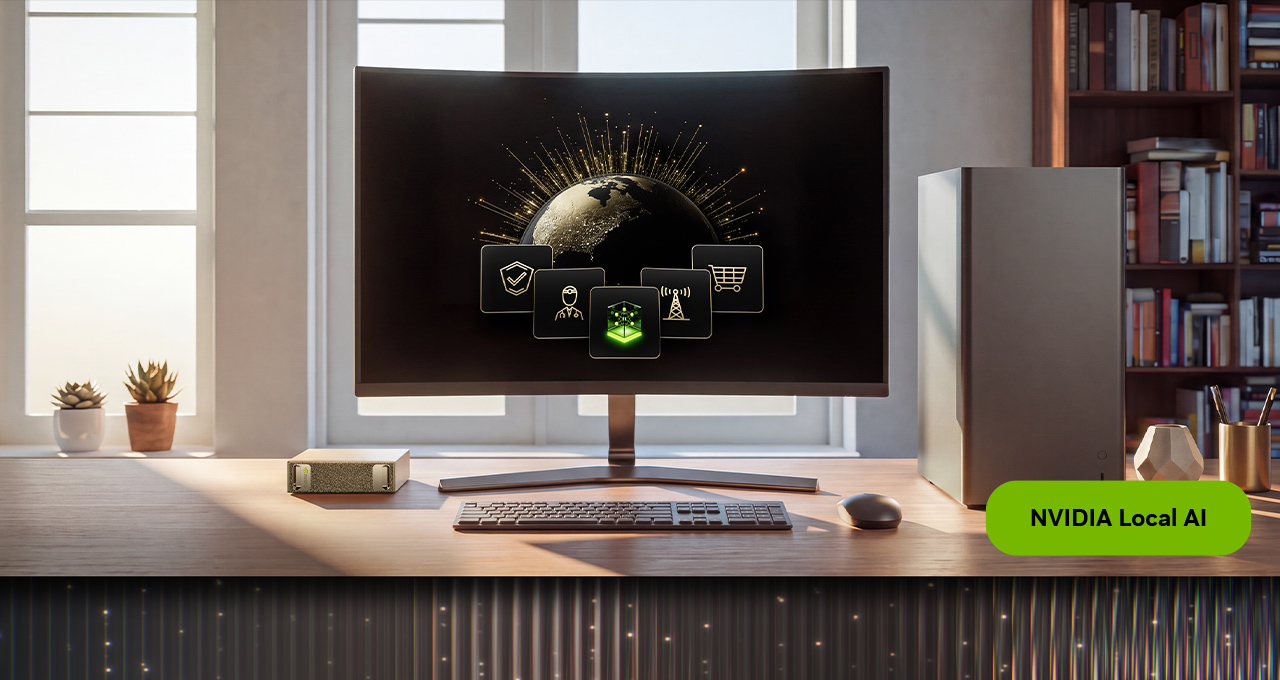
NVIDIAは8月を通じてローカルAIの発展を支えるパートナーやオープンソースコミュニティを特集し、開発者が高性能なエージェントをローカル環境で構築・カスタマイズしやすくなっている現状を紹介している。
NVIDIA is spotlighting open source communities and partners advancing local AI throughout August, highlighting how developers can now more easily build and run capable intelligent agents on local hardware.
本ページの本文と要約は AI による自動生成です。日本語版と英語版は言語ごとに独立して生成されるため、表現や詳しさが異なる場合があります。正確性は元記事 (blogs.nvidia.com) をご確認ください。The body and summaries are AI-generated independently for each language, so wording and detail may differ. Verify accuracy at the original source (blogs.nvidia.com).
要約と収集メタデータに基づく AI 解説。元記事全文の転載・翻訳ではありません。AI explainer based on the summaries and collected metadata, not a copy or translation of the full source article.
NVIDIAは8月を通じて、ローカル環境で動作するAIの発展を後押しするパートナー企業やオープンソースコミュニティを特集する取り組みを進めている。同社のブログによれば、オープンソースのエコシステムが充実することで、AI愛好家や開発者が高性能なエージェントを手元のハードウェア上で構築・カスタマイズし、実行することが従来より容易になっているという。
ここで言う「ローカルAI」とは、クラウドのデータセンターに処理を委ねるのではなく、手元のPCやワークステーションなどのデバイス上でモデルを直接動かす方式を指す。クラウド経由のサービスと比べ、データを外部に送らずに済むためプライバシー面で利点があるほか、通信遅延や利用料金を抑えやすいといった特徴があるとされる。近年はモデルの軽量化や量子化といった技術の進展により、個人が扱えるGPU上でも実用的な推論が可能になってきた。
今回の特集で鍵となるのが「エージェント」だ。単に質問へ回答するだけでなく、複数の手順を計画し、外部ツールを呼び出しながらタスクを自律的に進める仕組みを指す。オープンソースのモデルや開発フレームワークが整うことで、こうしたエージェントを開発者が自由に改変し、用途に合わせて組み立てやすくなりつつある。
NVIDIAは自社でも「Nemotron」と呼ばれるオープンなモデル群を展開しており、ローカルでの推論やカスタマイズを想定した取り組みを重ねてきた。オープンウェイトのモデルを公開する動きは、Metaの「Llama」やMistral、Alibabaの「Qwen」など各社にも広がっており、ローカルで動かせる選択肢は着実に増えている。こうした潮流の中で、GPUを手掛けるNVIDIAがコミュニティやパートナーを前面に押し出す姿勢には、自社ハードウェアを基盤とするローカルAI活用の裾野を広げる狙いがあると見られる。
一方で、ローカル実行には端末側の計算資源やメモリの制約が伴い、大規模なモデルをそのまま動かすのは依然として難しい場面もある。今回の特集がどの程度まで実運用の課題解決につながるかは、公開されるモデルやアプリケーション、そして周辺ツールの具体的な内容に左右される可能性がある。
NVIDIA is using the month of August to spotlight the open source communities and partners it credits with pushing local AI forward, focusing on the models, applications, and intelligent agents that developers can now build, customize, and run on their own hardware. The emphasis matters because agentic AI, software that can reason through multi-step tasks and take actions rather than simply respond to a single prompt, has largely been associated with cloud services. Running such systems locally changes the calculus around cost, latency, privacy, and control, and NVIDIA's campaign appears designed to show how far the tooling has come.
According to the company, the open source ecosystem is making it easier for AI enthusiasts and developers to build, customize, and run increasingly capable agents locally. In practice, that means a maturing stack of freely available model weights, inference runtimes, and frameworks that lower the barrier to entry for people who want to experiment without renting remote compute or sending data to a third-party API. The throughline of the August effort is that these pieces are converging, so a developer can assemble a working local agent from components that are open, inspectable, and modifiable.
The Nemotron family of models sits at the center of NVIDIA's own contribution to this space. Nemotron is a set of models and associated datasets that the company has released to support reasoning, tool use, and agent-style workflows, and it is positioned as a foundation that developers can fine-tune for specific tasks. Because agents typically need to chain together reasoning steps, call external tools, and evaluate their own outputs, model quality and the surrounding orchestration both matter. Publishing open weights and training data is intended to let the community adapt these capabilities rather than rely solely on closed, hosted alternatives.
To understand why local execution is newly practical, it helps to look at the adjacent tools that have emerged over the past couple of years. Runtimes such as llama.cpp and Ollama have made it straightforward to download and serve models on consumer machines, while frameworks like LangChain and LlamaIndex handle the retrieval, memory, and tool-calling logic that turns a raw model into an agent. Quantization techniques, which shrink models by reducing numerical precision, have been especially important, allowing sizable models to fit within the memory of a single desktop GPU with modest quality trade-offs. NVIDIA's RTX GPUs are a common target for this kind of work, and the company has previously promoted software such as its TensorRT-LLM and RTX-focused toolkits to accelerate inference on that hardware.
The broader industry context is a visible shift toward smaller, more efficient open models that are practical to run outside the data center. Releases from groups including Meta, Mistral, Alibaba, and others have given developers a menu of open-weight options, and a competitive open source scene has pushed performance upward while pushing hardware requirements downward. NVIDIA benefits from this trend because more local AI activity tends to drive demand for its GPUs, so the August spotlight aligns commercial interest with community goodwill. That alignment is worth noting when reading any vendor-led celebration of an ecosystem.
For developers, the appeal of local agents is concrete. Keeping data on-device suits privacy-sensitive use cases, avoids per-token API charges for high-volume experimentation, and removes dependence on network connectivity. The trade-offs are equally real: local hardware caps the size of models one can run, and building reliable agents still requires careful engineering around prompts, tools, and error handling. NVIDIA's framing suggests these obstacles are shrinking, though the campaign is a promotional showcase rather than an independent benchmark, and readers should treat claims about ease and capability accordingly.
What NVIDIA describes throughout August is less a single product launch than a coordinated effort to highlight momentum across models, applications, and communities. The takeaway is that the pieces needed to build and run capable intelligent agents on local hardware are increasingly accessible, and that a growing open source ecosystem, supported by contributions like Nemotron and a range of third-party tools, is making that possible. Whether local agents displace cloud-hosted ones for most users remains to be seen, but the direction of travel toward more open, more local options appears clear.
ポコとTECHガイドPoko & TECH Guide
ポコと当サイトのTECHガイドが、記事の要約と収集した情報から読みどころを語るAI生成の対話です。Poko and TECH Dashboard's own TECH Guide discuss the article's highlights in an AI-generated conversation based on its summary and collected source details.
- ポコPokoローカルAIで動く「インテリジェントエージェント」って何? 普通のAIとどう違うの?What’s an “intelligent agent” running as local AI? How is that different from regular AI?
- TECHガイドTECH Guide簡単に言うと、手元の機器で目的に沿って処理を進めるAIじゃな。記事では、開発者が構築・調整・実行しやすくなっているそうじゃよ。Simply put, it’s AI that works toward a goal on local hardware. According to the article, these agents are becoming easier for developers to build, customize, and run.
- ポコPokoへえ、それって何が嬉しいの? 開発者にはどんな変化があるのかな。Oh, neat! So what’s the benefit? What changes for developers?
- TECHガイドTECH Guide記事によれば、オープンソースのコミュニティやパートナーの支えで、高性能なエージェントをローカル環境で扱いやすくなっている点じゃな。The article says open source communities and partners are making it easier to work with capable agents in local environments.
- ポコPokoつまり、みんなの取り組みで、手元で動くAIエージェントを作ったり自分向けに調整したりしやすくなっているんだね!So community efforts are making it easier to build AI agents that run locally and tailor them to your needs!
- TECHガイドTECH Guideその理解でよいぞ。記事ではNVIDIAが8月を通じて支援するパートナーやコミュニティを特集するので、紹介内容が見どころじゃな。That’s right. The article says NVIDIA is spotlighting supporting partners and communities throughout August, so the featured projects will be worth watching.