異なる岩石からセメント製造、CO2排出ゼロの可能性 Making cement from a different type of rock could clean up emissions
- 石灰石の代わりにカルシウムシリケート岩を用いる新手法で、セメント製造時のCO2排出をほぼゼロにできる可能性が示された。
- 電気分解と組み合わせ、副産物として有用な化学物質も得られる。
- コスト面では既存手法と競合可能との試算もある。
English summary
- Researchers propose making cement from calcium silicate rocks instead of limestone, eliminating the CO2 released during traditional cement production.
- Combined with electrolysis, the process yields useful byproducts and may be cost-competitive with conventional methods.
セメント産業は世界のCO2排出量の約8%を占める巨大な排出源であり、その脱炭素化は気候変動対策の重要課題となっている。新たな研究では、原料を石灰石からカルシウムシリケート岩に切り替えることで、製造プロセスからのCO2排出をほぼゼロにできる可能性が示された。
従来のセメント製造では、石灰石(炭酸カルシウム)を高温で焼成して酸化カルシウムを得る過程で、化学反応によって大量のCO2が放出される。さらに加熱に化石燃料を用いることで追加の排出も発生する。これらを合わせ、セメント1トンあたり約0.6〜0.9トンのCO2が排出されているとされる。
今回提案された手法では、ケイ酸カルシウムを含む岩石を電気分解的なプロセスで処理し、セメントの主成分となる材料を得る。原料には炭酸塩が含まれないため、化学反応によるCO2排出が発生しない。電力を再生可能エネルギーで賄えば、プロセス全体をほぼゼロエミッションにできるとされる。
石灰石の代わりにカルシウムシリケート岩を用いる新手法で、セメント製造時のCO2排出をほぼゼロにできる可能性が示された。
さらに副産物として水素や、産業用途のある化学物質を回収できる可能性があり、これらが経済性を支える要素になると見られる。研究者らの試算では、副産物の価値を考慮すれば従来手法と価格競争力を持ちうるという。
ただし課題も残る。カルシウムシリケート岩は石灰石ほど産地が偏在していないものの、大規模な採掘・処理インフラの新規構築が必要となる。また、電気分解プロセスを工業規模にスケールアップする技術的ハードルもある。同様にセメント脱炭素化を目指す試みとしては、SublimeSystemsやBrimstoneなどのスタートアップが電気化学プロセスを開発しており、産業界全体で多様なアプローチが模索されている段階と言える。
Cement production accounts for roughly 8% of global CO2 emissions, making its decarbonization one of the more stubborn challenges in climate policy. A new analysis suggests that switching the raw material from limestone to calcium silicate rock could nearly eliminate the process emissions inherent to making cement, while potentially remaining cost-competitive with conventional methods.
The core problem with traditional cement is chemistry, not just energy. When limestone (calcium carbonate) is heated in a kiln to produce calcium oxide, the reaction itself releases CO2 that was chemically bound in the rock. This accounts for roughly 60% of the emissions from cement manufacturing, with the remainder coming from fossil fuels used to reach the necessary high temperatures. Even a fully electrified kiln running on renewable power cannot address the process emissions if limestone remains the feedstock.
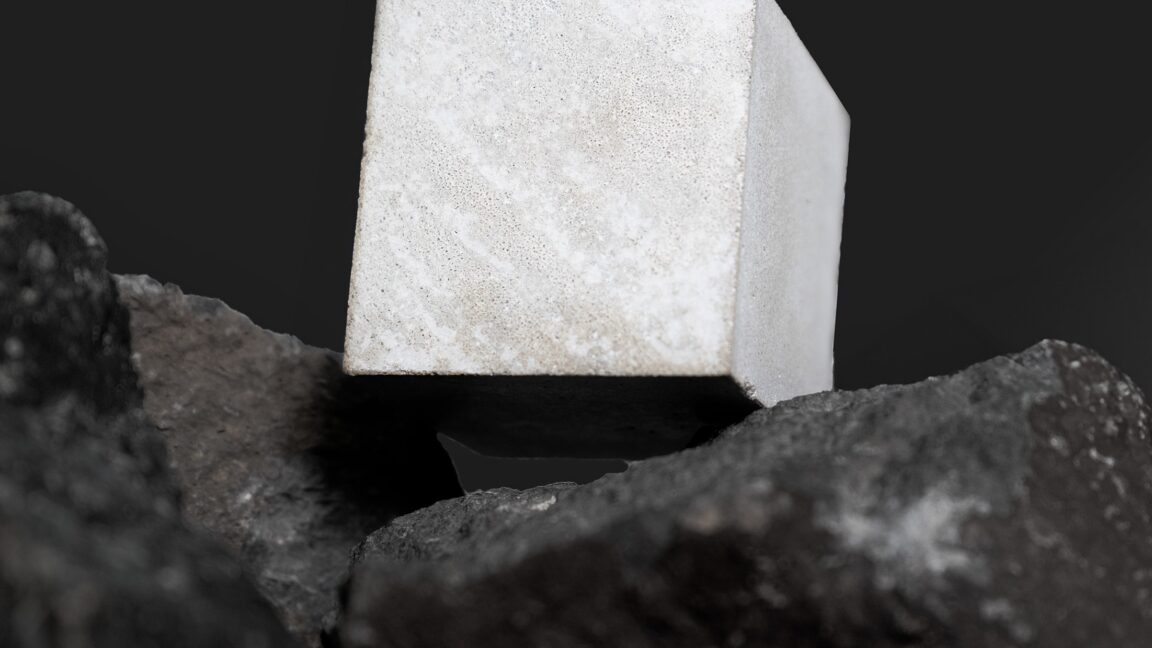
The proposed alternative uses calcium silicate rocks, which contain no carbonates and therefore release no CO2 when broken down. Researchers describe an electrochemical process that extracts calcium and produces precursors suitable for cement, alongside useful byproducts such as hydrogen and silica-based materials that may have industrial value. If the electricity comes from low-carbon sources, the entire pathway can approach zero emissions.
Economics, of course, drives industrial adoption. The researchers' modeling suggests that revenue from valuable byproducts could offset higher processing costs, putting the technology in a competitive range with Portland cement. That said, such projections depend heavily on assumed prices for hydrogen and other co-products, markets that remain immature and volatile.
Significant practical hurdles remain. Calcium silicate rocks, while geologically abundant, would require new mining and processing supply chains separate from the deeply established limestone infrastructure. Scaling electrochemical reactors from laboratory demonstrations to the megaton-per-year throughput required for industrial cement is itself a major engineering challenge, and one that few electrochemical processes have cleared at comparable scale.
Researchers propose making cement from calcium silicate rocks instead of limestone, eliminating the CO2 released during traditional cement production.
The approach is part of a broader wave of efforts to clean up cement. Startups such as Sublime Systems and Brimstone Energy are pursuing their own electrochemical or alternative-feedstock routes, while others focus on carbon capture from conventional kilns or on supplementary cementitious materials that reduce the clinker content of finished concrete. Each approach has tradeoffs in cost, scalability, and how much of the emissions problem it actually solves.
Whether calcium silicate cement becomes a meaningful part of the decarbonization mix will likely depend on pilot-scale demonstrations, policy support such as carbon pricing or green procurement, and the willingness of the notoriously conservative construction industry to qualify new materials. Building codes and structural standards typically require years of testing before novel cements can be used in major projects, which may slow adoption even if the technology proves out technically and economically.
Still, the underlying insight is compelling: by reconsidering the raw material rather than just the energy source, it may be possible to address cement's process emissions at their root rather than capturing them after the fact.
本ページの本文・要約は AI による自動生成です。正確性は元記事 (arstechnica.com) をご確認ください。