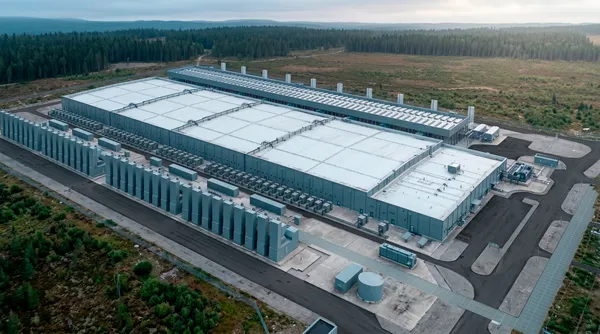
Googleがスウェーデン初のデータセンターを着工——再生可能エネルギーで運用へ Blue, yellow and green: Google invests in its new data center in Sweden.
- Googleはスウェーデン・ホルンダールに同国初となるデータセンターを着工した。
- 増大するGoogle サービスの需要に対応するとともに、再生可能エネルギーによるクリーンな運用を目指す方針だ。
English summary
- Today, we broke ground on a new data center in Horndal, Sweden, to help meet the growing demand for the Google services people and businesses use every day, including Se…
Googleは2026年6月、スウェーデン中部の小都市ホルンダールにおいて、同国初となるデータセンターの起工式を行った。急増するGoogle検索やGoogle Cloud、AIサービスへの需要に応えるためのインフラ拡張の一環であり、欧州における同社のデータセンター網をさらに強化する狙いがある。
スウェーデンが選ばれた背景には、同国の際立ったエネルギー事情がある。スウェーデンの電力は水力・風力・原子力を主力とし、欧州でも特に炭素排出量が少ない国のひとつとして知られる。Googleは2030年までに24時間365日カーボンフリーエネルギーでの運用を目指しており、スウェーデンの電力グリッドはその目標達成に適した環境といえる。タイトルにある「青・黄・緑」はスウェーデン国旗の色と再生可能エネルギーへのコミットメントを掛け合わせた表現と見られる。
ホルンダールはかつて製鉄業で栄えた工業都市で、産業転換の象徴的な場所でもある。Googleの進出は地域経済への雇用創出や税収増加をもたらす可能性があり、スウェーデン政府や地方自治体との連携も期待される。
増大するGoogle サービスの需要に対応するとともに、再生可能エネルギーによるクリーンな運用を目指す方針だ。
欧州全体を見渡すと、Googleはフィンランドやベルギー、オランダ、デンマークにもデータセンターを保有しており、スウェーデンはその北欧ネットワークを補完する重要拠点となる。北欧は冷涼な気候を活かした自然冷却によりPUE(電力使用効率)を改善しやすく、データセンター立地として世界的に注目を集めている。MicrosoftやAmazon(AWS)も北欧各国でのインフラ投資を積極化しており、クラウド大手の北欧争奪戦は今後も続くと見られる。
AIの普及に伴いデータセンターの電力消費は世界規模で急増しており、立地選定における再生可能エネルギーの確保は業界全体の最重要課題のひとつになっている。今回の投資はGoogleが技術インフラの拡充と環境負荷の低減を両立させようとする姿勢を示す事例として注目される。
Google officially broke ground on its first data center in Sweden in early June 2026, choosing the town of Horndal as the site for a new facility designed to handle rising demand for services ranging from Google Search to Cloud and AI-powered products. The move extends the company's European data center footprint further into the Nordic region, an area that has become increasingly attractive to hyperscalers in recent years.
The choice of Sweden is far from arbitrary. The country boasts one of the cleanest electricity grids in Europe, drawing the bulk of its power from hydroelectric, wind, and nuclear sources. This aligns neatly with Google's stated ambition to operate on 24/7 carbon-free energy by 2030 — a target that goes beyond simply purchasing renewable energy certificates and instead requires matching actual consumption to clean generation hour by hour. Sweden's grid characteristics make that goal considerably more achievable than in many other markets.
The title's reference to blue, yellow, and green appears to be a deliberate nod to the colors of the Swedish flag alongside Google's environmental commitments — a piece of branding that signals the company is trying to position this investment as a local partnership, not just a corporate infrastructure play. Horndal itself carries symbolic weight: once a steel town, it has become a byword for industrial decline and reinvention in Swedish cultural memory. Google's arrival could represent a new chapter for the community, potentially bringing construction jobs, permanent operational roles, and a broader tax base, though the exact economic terms have not been disclosed.
Within Google's broader European network, Sweden joins existing data center locations in Finland, Belgium, the Netherlands, and Denmark. The Nordic cluster is particularly valuable because the region's cool ambient temperatures reduce the energy needed for mechanical cooling, helping lower Power Usage Effectiveness (PUE) ratios and operating costs simultaneously. It is a dynamic that Microsoft and Amazon Web Services have also recognized — both companies have made significant Nordic infrastructure investments in the past several years, and competition for suitable land, power capacity, and skilled labor in the region is intensifying.
The timing reflects a wider industry reckoning with data center energy demand. The rapid rollout of generative AI services has dramatically increased the compute requirements of cloud providers, pushing electricity consumption projections sharply upward. Grid operators across Europe and North America have flagged data center growth as a material challenge for capacity planning, and some regions have introduced moratoriums or strict permitting requirements in response. By anchoring new capacity in a jurisdiction with abundant clean power, Google is arguably trying to get ahead of both regulatory scrutiny and the carbon accounting pressure that institutional investors and corporate customers increasingly apply.
Whether Horndal becomes a single-campus installation or the seed of a larger multi-facility cluster in Sweden remains to be seen. Given the pattern Google has followed elsewhere — initial investments that expand significantly once local permitting and grid interconnection relationships are established — further expansion seems plausible over the coming decade.
本ページの本文・要約は AI による自動生成です。正確性は元記事 (blog.google) をご確認ください。