AIサミットで韓国がNVIDIAとパートナーとともにAIの将来像を発表At AI Summit, South Korea Outlines Its AI Future With NVIDIA and Partners
匿名の公開いいねです。記事の保存・お気に入りではなく、Featured、Top 3、重要度、掲載順位には影響しません。仕組みとプライバシーAnonymous public likes are reactions, not saved articles or bookmarks. They do not affect Featured, Top 3, importance, or listing order.How it works and privacy
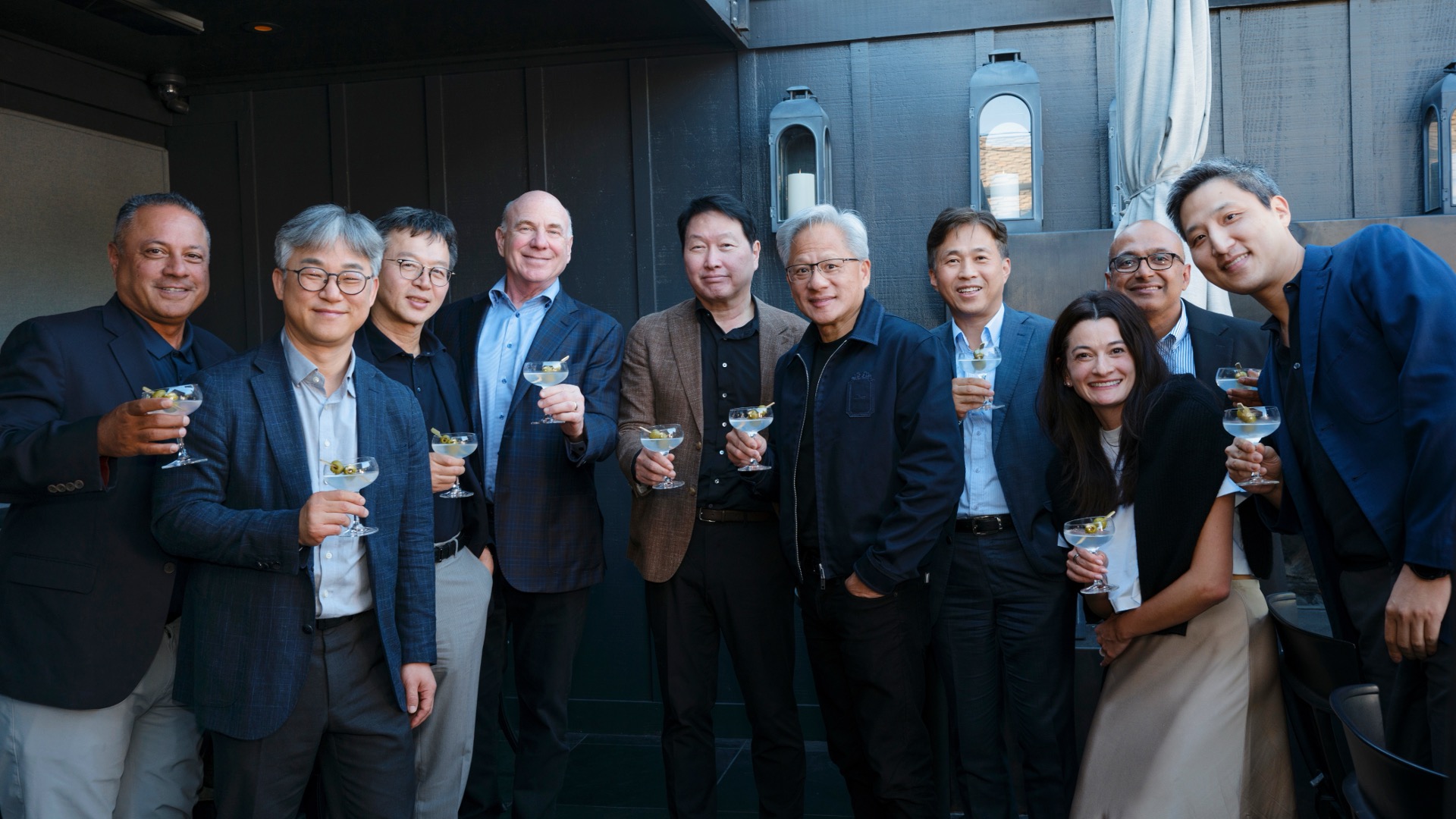
- 韓国はAIサミットにてNVIDIAや各パートナー企業との協力関係を強化し、国家レベルのAI戦略と投資計画を明らかにした。
- これにより韓国のAIインフラ整備と産業競争力の向上が期待される。
South Korea announced expanded AI partnerships with NVIDIA at a national AI summit, outlining strategic investments in AI infrastructure and industry development that position the country as a major AI hub.
本ページの本文と要約は AI による自動生成です。日本語版と英語版は言語ごとに独立して生成されるため、表現や詳しさが異なる場合があります。正確性は元記事 (blogs.nvidia.com) をご確認ください。The body and summaries are AI-generated independently for each language, so wording and detail may differ. Verify accuracy at the original source (blogs.nvidia.com).
要約と収集メタデータに基づく AI 解説。元記事全文の転載・翻訳ではありません。AI explainer based on the summaries and collected metadata, not a copy or translation of the full source article.
韓国が国家レベルのAIサミットを開催し、NVIDIAをはじめとする複数のパートナー企業との協力関係を拡大すると発表した。国家戦略としてのAIインフラ整備と投資計画を打ち出したもので、韓国を主要なAI拠点として位置づける狙いがあると見られる。
近年、各国は自国のデータや言語、産業特性に根ざしたAIを自前の基盤で開発・運用する「ソブリンAI(主権AI)」の考え方を重視するようになっている。生成AIの学習や推論には大規模な計算資源が不可欠であり、その中核を担うのがNVIDIAのGPUだ。今回の発表は、こうした計算基盤を国内に確保し、海外のクラウドサービスへの依存を抑えつつ、自国産業の競争力を高めようとする流れの一環と位置づけられる。
韓国はもともと半導体産業に強みを持つ。サムスン電子やSKハイニックスは、AI向けGPUに搭載される広帯域メモリー(HBM)の主要供給企業であり、NVIDIA製品の性能を支える重要な役割を担っている。今回のパートナーシップは、こうしたハードウェアの供給網に加え、AIデータセンターの構築やソフトウェア、人材育成といった領域にまで協力を広げるものと見られ、半導体とAIを結びつけた産業基盤の強化につながる可能性がある。
同様の動きは世界各地で進んでいる。日本やインド、欧州、中東の各国・企業もNVIDIAと連携し、国内向けのAIコンピューティング基盤の整備を進めてきた。NVIDIAにとっては、こうした国家規模の案件がGPU需要のすそ野を広げる機会となる一方、各国にとっては特定の企業や技術への依存度が高まるという指摘もあり、供給の安定性や技術の自立性をどう確保するかが今後の課題となりそうだ。
具体的な投資規模や導入時期、参加企業の全容など、詳細については今後段階的に明らかになるとみられる。国家戦略として掲げた計画が実際のインフラ整備や産業育成にどこまで結実するかは、今後の実行段階を見極める必要がある。ただ、韓国が官民を挙げてAIを重点分野に据える姿勢を明確にした点は、同国のAIエコシステムの方向性を占ううえで注目される。
South Korea used a national AI summit to lay out a wide-ranging vision for its artificial intelligence future, unveiling deepened cooperation with NVIDIA and a group of domestic and international partners. The move matters because it signals how one of the world's leading manufacturing and semiconductor economies intends to convert its industrial strengths into a more durable position in the fast-moving global AI race.
According to NVIDIA's account of the event, the announcements centered on expanding AI infrastructure across the country, including additional accelerated computing capacity, and on aligning national policy with private investment. The stated aim is to establish South Korea as a major regional hub for AI development and deployment, spanning research, industry, and public services. Government officials and company executives framed the effort as a coordinated push rather than a set of isolated projects.
A central theme appears to be "sovereign AI," a concept NVIDIA has promoted in markets around the world. The idea is that nations build and operate their own AI infrastructure, models, and data pipelines rather than relying entirely on systems developed and hosted elsewhere. For a country like South Korea, that framing fits naturally with efforts to train large language models on the Korean language and on domestic datasets, and to keep sensitive computation within national borders. Sovereign AI has become a recurring pitch from NVIDIA leadership at similar events elsewhere, and the Korean announcement seems to follow that pattern.
The partnership structure is likely to draw on South Korea's existing corporate ecosystem. The country is home to Samsung Electronics and SK Hynix, two of the largest suppliers of high-bandwidth memory, the specialized DRAM that sits alongside GPUs in modern AI accelerators. It also hosts internet and platform companies such as Naver, Kakao, and LG, several of which have invested in their own foundation models and data-center capacity. Closer coordination with NVIDIA would connect that domestic hardware and software base to the GPU platforms that currently underpin most large-scale AI training and inference.
Building this kind of infrastructure involves more than buying chips. Large AI data centers require substantial and stable electricity, advanced cooling, high-speed networking, and long lead times for construction and equipment delivery. Power availability in particular has emerged as a constraint for AI expansion in many regions, and any national plan of this scale would need to address energy sourcing and grid capacity alongside the compute itself. The summit messaging suggests these considerations are part of the broader strategy, though detailed figures and timelines from official sources would help clarify the actual scope.
The Korean initiative also sits within a wider pattern of countries negotiating national AI arrangements with NVIDIA and other suppliers. Japan, India, several European states, and countries in the Middle East have announced comparable programs pairing government backing with GPU procurement and local data-center buildouts. Viewed in that context, South Korea's summit appears designed both to secure access to scarce advanced computing resources and to signal to investors and international partners that the country intends to remain competitive as AI reshapes manufacturing, robotics, and software.
For NVIDIA, agreements of this type extend its role from a component vendor to a strategic infrastructure partner for entire nations, reinforcing demand for its accelerators, networking products, and software stack. That position has helped the company become one of the most valuable in the technology sector, though it also draws scrutiny over supply concentration and the cost of building AI capacity. South Korea's own chipmakers, meanwhile, stand to benefit as memory demand grows, giving the country a stake on both the supply and the deployment sides of the AI hardware market.
Several important details remain to be confirmed from primary government and corporate sources, including the precise scale of investment, the mix of public and private funding, and the timeline for new facilities. As with many summit-stage announcements, the gap between stated ambition and delivered capacity can be significant, and execution will depend on financing, energy planning, and continued access to advanced semiconductors amid ongoing export controls and supply constraints. Even so, the summit marks a clear statement of intent: South Korea is positioning itself, with NVIDIA and its partners, to be a central player in the next phase of AI infrastructure rather than a downstream consumer of technology built elsewhere.
ポコとTECHガイドPoko & TECH Guide
ポコと当サイトのTECHガイドが、記事の要約と収集した情報から読みどころを語るAI生成の対話です。Poko and TECH Dashboard's own TECH Guide discuss the article's highlights in an AI-generated conversation based on its summary and collected source details.
- ポコPoko韓国が強化する「AIインフラ」って何? NVIDIAとの協力で何を進めるの?What exactly is “AI infrastructure”? And what is South Korea trying to advance through its partnership with NVIDIA?
- TECHガイドTECH Guide簡単に言うと、AIを開発・活用するための土台じゃな。記事によれば、韓国はNVIDIAやパートナーと連携し、その整備に向けた戦略と投資計画を示したんじゃ。Put simply, it’s the foundation needed to build and use AI. According to the article, South Korea outlined strategies and investments to develop it with NVIDIA and other partners.
- ポコPokoへえ、それって韓国にとって何が嬉しいの? 国全体のAI活用が進むってこと?Oh, I see! So what’s the benefit for South Korea? Could this help AI adoption across the country?
- TECHガイドTECH Guide記事では、AIインフラの整備と産業競争力の向上が期待されておる。国家レベルで協力を強め、AI産業の発展を目指すということじゃな。The article says stronger AI infrastructure and greater industrial competitiveness are expected. In short, the country aims to develop its AI industry through broader national-level cooperation.
- ポコPokoつまり、韓国はNVIDIAたちとの協力を広げて、AIを育てる土台と産業の力を強くしようとしているんだね。So South Korea is expanding cooperation with NVIDIA and its partners to strengthen both the foundation for AI and the country’s industrial capabilities.
- TECHガイドTECH Guideその理解でよいぞ。今後は、発表された戦略や投資計画が実際のインフラ整備と産業発展にどう結びつくかが見どころじゃな。Exactly. The key thing to watch is how the announced strategies and investments translate into actual infrastructure development and industry growth.