スマートなドキュメントワークフローを構築: Build 2026 における Azure Content Understanding の新機能Build smarter document workflows: What’s new in Azure Content Understanding at Build 2026
匿名の公開いいねです。記事の保存・お気に入りではなく、Featured、Top 3、重要度、掲載順位には影響しません。仕組みとプライバシーAnonymous public likes are reactions, not saved articles or bookmarks. They do not affect Featured, Top 3, importance, or listing order.How it works and privacy
- Build 2026 で発表された Azure Content Understanding の新機能を紹介。
- ドキュメント・音声・画像・動画を横断的に解析し重要情報を抽出するマルチモーダル AI サービスが強化され、よりスマートなドキュメント処理ワークフローの構築が可能になる。
Microsoft details new Azure Content Understanding capabilities at Build 2026, enhancing its multimodal AI service that ingests documents, audio, images, and video to extract critical information for building smarter document workflows.
本ページの本文と要約は AI による自動生成です。日本語版と英語版は言語ごとに独立して生成されるため、表現や詳しさが異なる場合があります。正確性は元記事 (devblogs.microsoft.com) をご確認ください。The body and summaries are AI-generated independently for each language, so wording and detail may differ. Verify accuracy at the original source (devblogs.microsoft.com).
要約と収集メタデータに基づく AI 解説。元記事全文の転載・翻訳ではありません。AI explainer based on the summaries and collected metadata, not a copy or translation of the full source article.
マイクロソフトは開発者向けイベント「Build 2026」で、Azure AI Foundry に統合されたコンテンツ解析サービス「Azure Content Understanding(CU)」の新機能を発表した。ドキュメント、音声、画像、動画といった多様な形式のデータを横断的に処理し、業務に必要な重要情報を抽出する基盤として位置づけられており、企業のドキュメントワークフロー自動化を後押しする内容となっている。
Content Understanding は、これまで個別のサービスに分かれていた文書解析や音声認識、画像・動画分析といった機能を、単一のマルチモーダルなパイプラインに集約する点が特徴とされる。利用者はスキーマ(抽出したい項目の定義)を指定するだけで、請求書や契約書、フォームなどの非構造化データから、必要なフィールドを構造化された形で取り出せる。生成 AI を活用することで、定型のテンプレート設計に依存せず、多様な書式に柔軟に対応できる点が従来の文書処理との違いと見られる。
今回のアップデートでは、抽出精度の向上や対応コンテンツ種別の拡張、Foundry Tools との連携強化などが中心になっているとみられる。Azure AI Foundry はマイクロソフトが推進する AI 開発プラットフォームであり、モデルの選択からエージェント構築、運用監視までを一貫して扱える環境を志向している。Content Understanding をこのエコシステムに組み込むことで、抽出した情報をそのまま検索拡張生成(RAG)やエージェントの入力として活用しやすくなる可能性がある。
背景には、企業が保有する情報の大半が非構造化データであるという現実がある。紙の書類やスキャン画像、会議の録音、動画マニュアルなどに埋もれた知識を活用可能な形に変換するニーズは高く、こうした領域では Google の Document AI や Amazon の Textract といった競合サービスも提供されている。マルチモーダル対応を前面に打ち出す点は、各社の差別化競争が進む中でのマイクロソフトの方向性を示すものといえる。
文書処理の自動化は、経理や法務、カスタマーサポートなど幅広い業務での効率化につながると期待される。ただし、抽出結果の正確性や機密データの取り扱いには引き続き注意が必要であり、実際の導入にあたっては自社の要件に沿った検証が求められる。詳細な仕様や提供時期については、今後の公式ドキュメントで順次明らかになるとみられる。
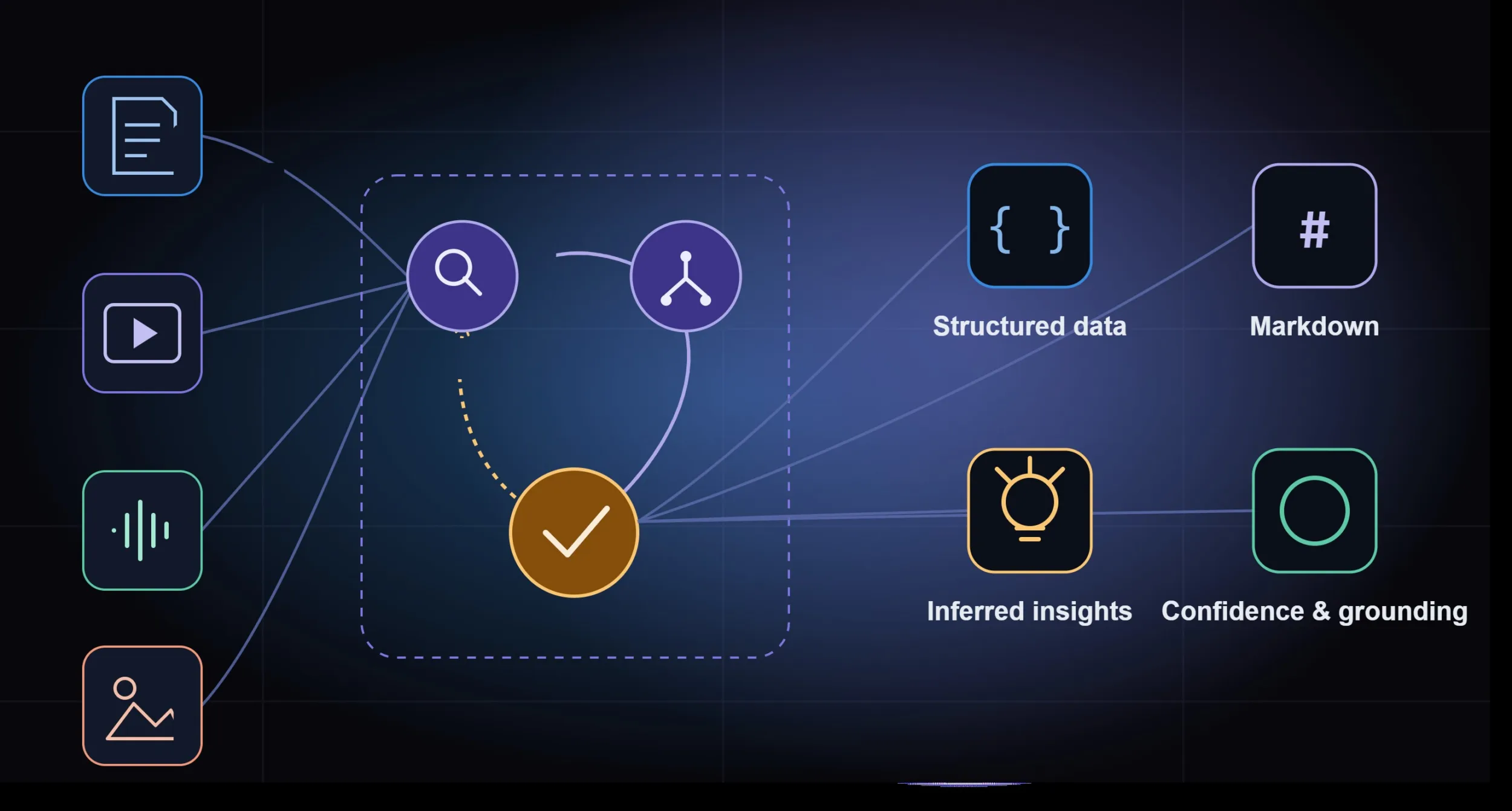
Microsoft used its Build 2026 developer conference to detail a set of enhancements to Azure Content Understanding, the multimodal content AI service that sits inside its Foundry Tools portfolio. The updates matter because document-centric workflows remain one of the most common and costly bottlenecks in enterprise automation, and Content Understanding is positioned as a single service that can read, interpret, and structure information across documents, audio, images, and video rather than forcing teams to stitch together separate models for each modality.
At its core, Azure Content Understanding ingests diverse data types and extracts the most critical information from them, returning structured output that downstream applications can act on. Where traditional optical character recognition simply lifts text off a page, Content Understanding is designed to interpret layout, identify fields, summarize content, and produce schema-aligned results. That distinction is important for organizations dealing with invoices, contracts, claims forms, and other semi-structured documents, where the value lies not in raw text but in reliably mapping that text to the fields a business process expects.
The Build 2026 announcements appear to center on making document workflows smarter and easier to operationalize. Microsoft has emphasized customizable extraction schemas that let developers define the exact fields and structures they want returned, which reduces the post-processing work needed to fit model output into existing systems. The company also highlights improvements aimed at accuracy and confidence reporting, so that applications can route low-confidence results to human review while allowing high-confidence extractions to flow through automatically. This kind of confidence-driven branching is a prerequisite for the "human in the loop" patterns that regulated industries typically require.
A recurring theme is the move from isolated extraction toward end-to-end workflows. Rather than treating content analysis as a single API call, the updated service is being framed as a building block that connects to orchestration layers, retrieval systems, and agentic applications. Content Understanding output is well suited to feed retrieval-augmented generation pipelines, where extracted and summarized content becomes grounding data for large language models. Microsoft positions this alongside its broader Foundry ecosystem, which includes model catalogs, agent tooling, and evaluation features, suggesting that Content Understanding is intended to be one component in a larger pipeline rather than a standalone product.
The multimodal scope is what differentiates the service from narrower document-processing tools. By handling audio and video in addition to text and images, Content Understanding can, for example, transcribe and summarize meeting recordings, extract key frames or descriptions from video, and analyze scanned images within the same framework used for documents. This unified approach is likely to appeal to organizations that want consistent governance, billing, and security controls across modalities rather than managing several specialized services.
It is worth placing these updates in context. Azure Content Understanding evolved from and overlaps conceptually with earlier Microsoft offerings such as Azure AI Document Intelligence, formerly known as Form Recognizer, which focused specifically on extracting data from forms and documents. The current direction reflects a broader industry shift toward general-purpose multimodal models and away from task-specific pipelines. Competing cloud providers offer comparable capabilities, including document and intelligent-document services from other major platforms, so Microsoft's emphasis on integration with its agent and model tooling appears to be a deliberate strategy to differentiate on workflow rather than on extraction alone.
For developers evaluating the service, several practical considerations remain. Accuracy on highly variable or low-quality documents still depends heavily on schema design and validation, and the value of automation is closely tied to how confidence thresholds and review steps are configured. Pricing, regional availability, and data-residency details typically vary across Azure services and should be confirmed against official documentation, particularly for workloads handling sensitive information. As with any AI extraction system, organizations are generally advised to validate output against representative samples before fully automating downstream actions.
Overall, the Build 2026 updates to Azure Content Understanding reinforce Microsoft's framing of the service as a foundation for intelligent document and content workflows within Foundry. The combination of customizable schemas, confidence-aware processing, and multimodal coverage suggests a focus on production readiness, though the real-world impact will depend on how the features perform across the messy, inconsistent content that enterprises actually need to process.
ポコとTECHガイドPoko & TECH Guide
ポコと当サイトのTECHガイドが、記事の要約と収集した情報から読みどころを語るAI生成の対話です。Poko and TECH Dashboard's own TECH Guide discuss the article's highlights in an AI-generated conversation based on its summary and collected source details.
- ポコPokoドキュメントだけじゃなく、音声や画像、動画も解析するの?「マルチモーダル」って何?It analyzes audio, images, and video too, not just documents? What does “multimodal” mean?
- TECHガイドTECH Guide簡単に言うと、複数の種類のデータを扱えるAIじゃな。記事によれば、Azure Content Understandingはそこから重要情報を抽出するそうじゃよ。Simply put, it’s AI that handles multiple types of data. According to the article, Azure Content Understanding extracts the most critical information from them.
- ポコPokoへえ、すごい!いろいろな形式から重要情報を取り出せると、何がうれしいの?Wow, that’s neat! What’s the benefit of pulling key information from all those formats?
- TECHガイドTECH Guide記事では、よりスマートなドキュメント処理の流れを作れ、根拠に沿った生成AIやエージェント型の仕組みに役立つとしておるよ。The article says it can enable smarter document workflows and support well-grounded generative AI and agent-based solutions.
- ポコPokoつまり、形式の違う情報をAIがまとめて読み取り、必要な部分を次の処理につなげやすくなるんだね。So AI can read information across different formats and make it easier to pass the useful parts into the next step.
- TECHガイドTECH Guideその理解でよいぞ。今後の見どころは、Build 2026で示された強化が実際のドキュメント処理にどう生かされるかじゃな。That’s right. The key thing to watch is how the enhancements presented at Build 2026 are applied to real document-processing workflows.