オムニバースへ:オープンワールドモデルがPhysical AIの最前線を切り開くInto the Omniverse: How Open World Models Push the Frontier of Physical AI
匿名の公開いいねです。記事の保存・お気に入りではなく、Featured、Top 3、重要度、掲載順位には影響しません。仕組みとプライバシーAnonymous public likes are reactions, not saved articles or bookmarks. They do not affect Featured, Top 3, importance, or listing order.How it works and privacy
NVIDIAは200社超と共にオープンウェイトAIを支持する公開書簡に署名し、物理AIの発展にはオープンエコシステムが不可欠だと主張している。
NVIDIA joined over 200 companies signing an open letter backing open-weight AI, arguing that open-world models are key to advancing Physical AI across every industry sector.
本ページの本文と要約は AI による自動生成です。日本語版と英語版は言語ごとに独立して生成されるため、表現や詳しさが異なる場合があります。正確性は元記事 (blogs.nvidia.com) をご確認ください。The body and summaries are AI-generated independently for each language, so wording and detail may differ. Verify accuracy at the original source (blogs.nvidia.com).
要約と収集メタデータに基づく AI 解説。元記事全文の転載・翻訳ではありません。AI explainer based on the summaries and collected metadata, not a copy or translation of the full source article.
NVIDIAは7月、200社を超える企業・団体とともに「Open Weights and American AI Leadership(オープンウェイトとアメリカのAIリーダーシップ)」と題する公開書簡に署名した。同書簡は、AIの主導権が単一の最先端モデルによってではなく、オープンなエコシステムがあらゆる産業分野に行き渡るかどうかによって測られる、と訴えるものだ。
背景にあるのが、同社が「Physical AI」と呼ぶ領域の広がりである。Physical AIは、ロボットや自律機械のように現実世界を認識し、判断し、動作するAIを指す。こうしたシステムは、言語モデルのようにテキストだけを扱うのではなく、物理法則に沿った環境理解やシミュレーションを必要とする。現実世界を丸ごと捉える「オープンワールドモデル」の充実が、その前進の鍵になるという見方だ。NVIDIAは、モデルの学習や検証を支える基盤として、産業向けのシミュレーション・プラットフォーム「Omniverse」を位置づけているとみられる。
同社が重視するのが、モデルの重み(ウェイト)を公開する「オープンウェイト」の考え方である。重みが公開されていれば、研究者や開発者は自らの用途に合わせてモデルを検証・改良でき、特定分野への応用が進みやすくなる。書簡は、こうした開放性こそがロボティクスや製造、物流といった多様な現場へAIを浸透させる原動力になると位置づけている。
オープンウェイトをめぐっては、近年、複数のAI企業が公開モデルを相次いで提供しており、クローズドな最先端モデルとの間で開発思想の違いが議論されてきた。今回の書簡は200社超という幅広い賛同を集めた点で、オープンな開発を後押しする動きの一つと受け止められる可能性がある。ただし、書簡はあくまで方向性を示す主張であり、具体的な政策や製品として何がどこまで実現するかは、今後の展開を見て判断する必要がある。
Physical AI, the branch of artificial intelligence that enables machines to perceive, reason about and act within the physical world, is emerging as one of the industry's most closely watched frontiers, and NVIDIA is arguing that openness is the way to advance it. In July, the company joined more than 200 companies and organizations in signing "Open Weights and American AI Leadership," an open letter contending that AI leadership will ultimately be measured not by any single frontier model but by whether an open ecosystem reaches every sector.
The letter reframes how progress in AI should be judged. Rather than concentrating capability inside a handful of proprietary, closed systems, the signatories argue that broad and distributed access to open-weight models will determine which industries and economies actually benefit. "Open weights" refers to models whose trained parameters are published, allowing developers to inspect, fine-tune and deploy them on their own infrastructure rather than depending solely on an interface controlled by a single vendor. That distinction matters for regulated or safety-critical fields, where organizations often need to run models locally, audit their behavior and adapt them to specialized tasks.
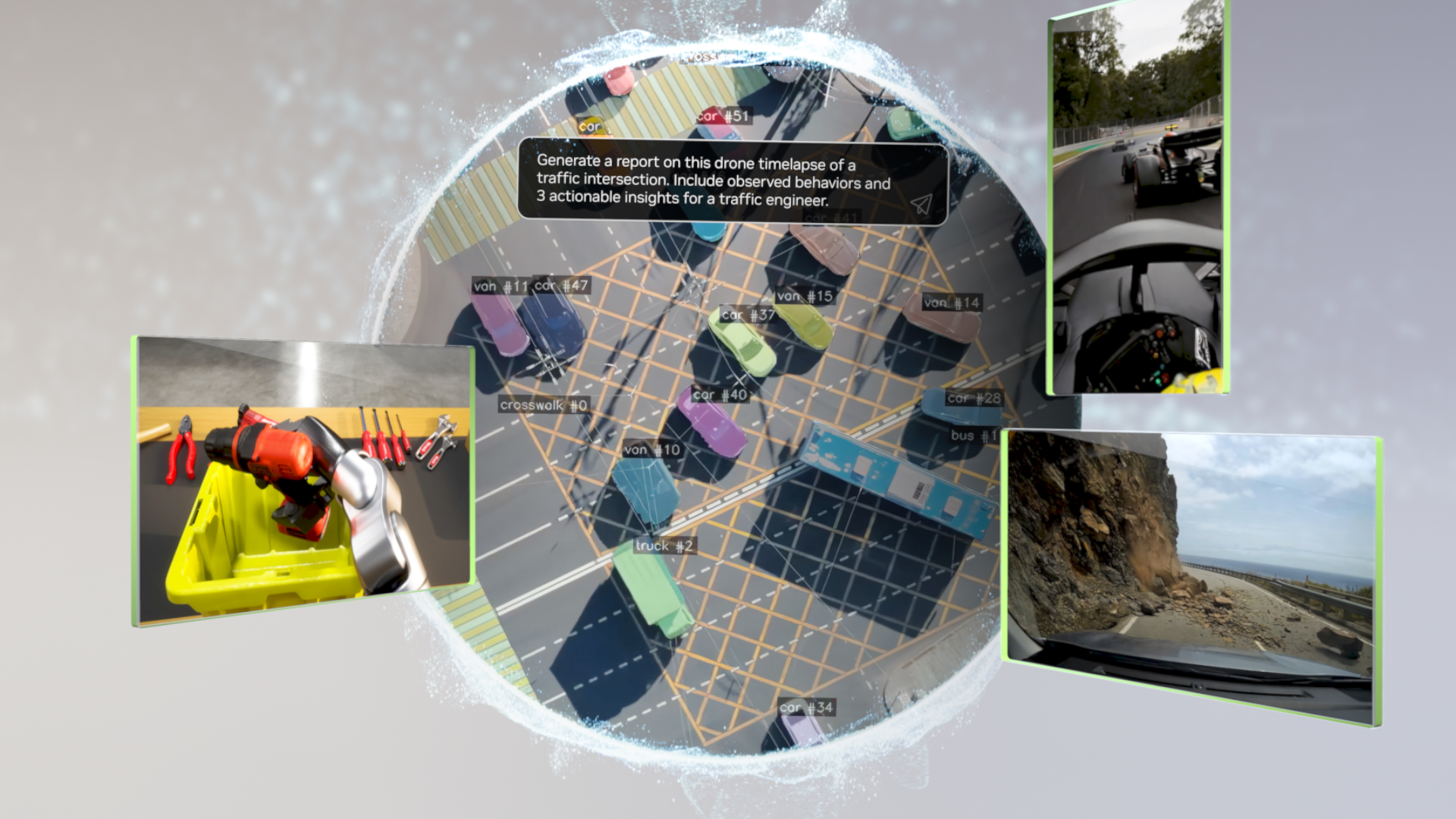
For NVIDIA, this position connects directly to its work on Physical AI and its Omniverse platform, a system for building and operating physically accurate 3D simulations. The company's broader thesis is that so-called open-world models, which learn the dynamics of environments and can generate realistic scenarios, are a prerequisite for teaching robots, autonomous vehicles and other embodied systems how the physical world behaves. Because gathering real-world training data at scale is slow, expensive and sometimes dangerous, simulation and synthetic data have become central to the field. A model that can predict how objects move, collide and respond to forces can be used to train and test machines long before they are deployed on a factory floor or a public road.
World models, sometimes described as open-world models in this context, aim to capture that understanding. NVIDIA has previously introduced world foundation models under its Cosmos initiative, designed to generate simulated video and environments for training Physical AI systems, and it maintains related tooling through its Isaac robotics stack and Omniverse. The company's argument appears to be that releasing such models with open weights would let a wider range of developers build on shared foundations rather than rebuilding capabilities from scratch, which is likely to accelerate adoption across manufacturing, logistics, healthcare and transportation.
The open letter also carries a policy dimension, framing open models as tied to national competitiveness under the banner of "American AI Leadership." That framing reflects an ongoing debate over whether open or closed approaches better serve both innovation and security. Proponents of open weights point to transparency, reproducibility and the ability for smaller organizations to participate, while critics raise concerns about misuse and the difficulty of controlling models once their weights are public. The signatories fall on the side that a vibrant open ecosystem, reaching every sector rather than a single leading lab, is the more durable measure of leadership.
This move fits within a wider industry shift. Open-weight model families from multiple developers have proliferated over the past two years, and hardware vendors have an incentive to encourage them because open models expand the total base of developers building and running workloads, much of it on accelerated computing. NVIDIA's business is closely tied to that demand, so its support for open weights aligns with its commercial interests as well as its stated technical vision, a context worth keeping in mind when weighing the argument.
For readers tracking robotics and simulation, the practical takeaway is that the boundary between digital and physical AI is narrowing. Tools that generate synthetic environments, digital twins that mirror real facilities, and models that understand physical dynamics are increasingly treated as parts of a single pipeline from training to deployment. Whether an open ecosystem ultimately delivers the reach the letter envisions will depend on how models are licensed, how accessible the supporting tools remain, and how quickly industries beyond early adopters put them to use. The signing itself signals where NVIDIA and a large group of peers believe the field is heading.
ポコとTECHガイドPoko & TECH Guide
ポコと当サイトのTECHガイドが、記事の要約と収集した情報から読みどころを語るAI生成の対話です。Poko and TECH Dashboard's own TECH Guide discuss the article's highlights in an AI-generated conversation based on its summary and collected source details.
- ポコPoko「オープンウェイトAI」って何? NVIDIAはなぜ公開書簡に署名したの?What does “open-weight AI” mean? And why did NVIDIA sign the open letter?
- TECHガイドTECH Guide簡単に言うと、AIの学習済みの重みを公開する考え方じゃな。記事によれば、NVIDIAは7月に200超の企業・団体と署名したんじゃ。Simply put, it means making an AI model’s learned weights available. According to the article, NVIDIA signed the letter in July alongside more than 200 companies and organizations.
- ポコPokoへえ、それって何がうれしいの? 物理AIの発展とどうつながるのかな。Oh, interesting! What’s the benefit, and how does that connect to advancing Physical AI?
- TECHガイドTECH Guide記事では、単独の最先端モデルより、開かれた仕組みがあらゆる分野に届くことが重要だと主張しておる。物理AIを広げる鍵というわけじゃな。The article argues that leadership depends less on one frontier model and more on an open ecosystem reaching every sector. That openness is presented as key to expanding Physical AI.
- ポコPokoつまり、1つの強いAIだけでなく、みんなが使いやすい開かれた環境を広げることが大切、という話なんだね!So it’s not just about having one powerful AI. The point is to build an open environment that can spread across many fields!
- TECHガイドTECH Guideその理解でよいぞ。これは公開書簡で示された主張なので、今後その仕組みが各分野に届き、物理AIの発展につながるかが見どころじゃな。Exactly. Since this is the letter’s argument, the key question is whether that ecosystem actually reaches different sectors and helps Physical AI advance.