Build 2026: あらゆるフレームワークのAIエージェントで可観測性からROIまでBuild 2026: From observability to ROI for AI agents on any framework
匿名の公開いいねです。記事の保存・お気に入りではなく、Featured、Top 3、重要度、掲載順位には影響しません。仕組みとプライバシーAnonymous public likes are reactions, not saved articles or bookmarks. They do not affect Featured, Top 3, importance, or listing order.How it works and privacy
- AIエージェントは非決定論的なため、本番環境で精度・安全性・説明責任を保つことが難しい。
- Microsoft Foundryは、任意のフレームワーク上のエージェントに対し可観測性の確立からROI測定までを支援する仕組みを示した。
Microsoft Foundry outlines how to keep non-deterministic AI agents accurate, safe, and accountable in production, spanning from observability to ROI measurement for agents built on any framework.
本ページの本文と要約は AI による自動生成です。日本語版と英語版は言語ごとに独立して生成されるため、表現や詳しさが異なる場合があります。正確性は元記事 (devblogs.microsoft.com) をご確認ください。The body and summaries are AI-generated independently for each language, so wording and detail may differ. Verify accuracy at the original source (devblogs.microsoft.com).
要約と収集メタデータに基づく AI 解説。元記事全文の転載・翻訳ではありません。AI explainer based on the summaries and collected metadata, not a copy or translation of the full source article.
AIエージェントを「動かす」こと自体は、もはや難しくない。だが本番環境で精度・安全性・説明責任を担保し続けることに、多くの開発チームがつまずいている。Microsoftは「Build 2026」で、あらゆるフレームワーク上で動くAIエージェントの可観測性(オブザーバビリティ)からROI測定までを一貫して支える、Microsoft Foundryのアプローチを示した。
エージェントが従来のソフトウェアと根本的に異なるのは、その挙動が非決定論的である点だ。同じ入力でも生成結果が毎回変わりうるため、従来のテストやログ監視だけでは品質を保証しきれない。大規模言語モデル(LLM)が外部ツールを呼び出し、複数ステップにわたって自律的に判断するエージェント型システムでは、どの段階でどんな根拠から結論に至ったのかを追跡する仕組みが欠かせない。
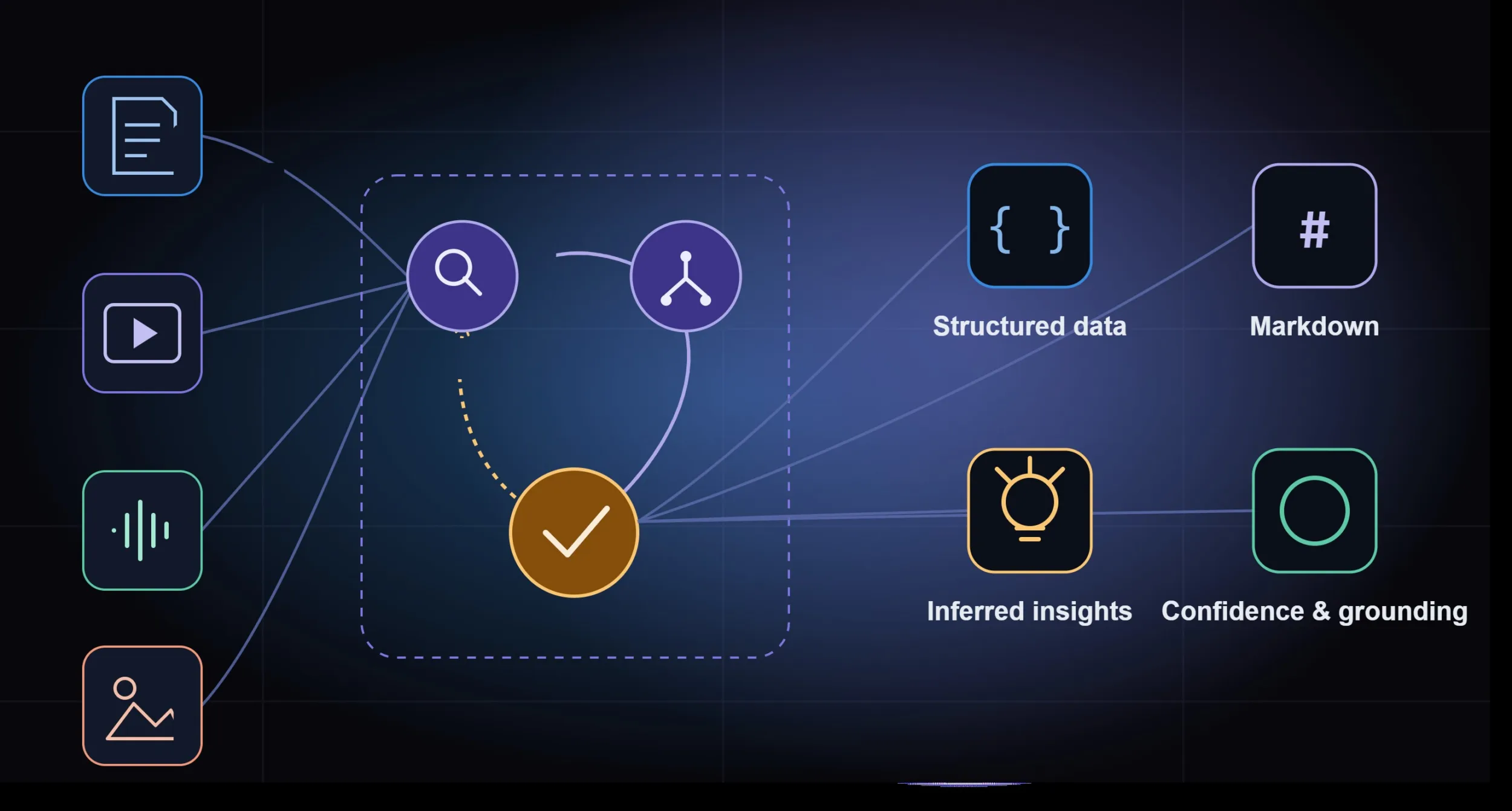
そこで重要になるのが可観測性だ。各実行のトレース、ツール呼び出しの履歴、入出力の評価スコアなどを収集し、エージェントの振る舞いを可視化する。Microsoft Foundryは、こうしたトレースや評価機能を提供し、本番運用での品質劣化や安全性リスクを早期に検知できるようにすると見られる。評価の場面では、応答の正確さや根拠の妥当性、有害コンテンツの有無などを自動でスコアリングする手法が一般的になりつつある。
Foundryの特徴は、特定のフレームワークに縛られない点にあるとされる。LangChainやSemantic Kernel、AutoGenなど多様なエージェント開発基盤が併存するなか、フレームワークを横断して観測・評価できることは、既存資産を活かしたい企業にとって導入のハードルを下げる可能性がある。
最終的な狙いは、可観測性を投資対効果(ROI)の証明につなげることだ。エージェントが実際にどれだけ業務を効率化し、コストを削減したのかを数値で示せなければ、本番展開の継続的な承認は得にくい。同様の課題はGoogleやAWS、OpenAIなど競合各社も抱えており、エージェントの「運用と測定」をめぐる競争は今後さらに激しくなるとみられる。観測から成果へという流れを定量化できるかどうかが、エージェント活用の成否を左右する焦点になりそうだ。
Microsoft used its Build 2026 developer conference to push a message that has become central to enterprise AI: deploying an agent is comparatively simple, but operating one reliably in production is where most teams struggle. In a Microsoft Foundry blog post, Sebastian Kohlmeier frames the problem around a single uncomfortable fact about modern agents. They are non-deterministic, meaning the same input can produce different outputs across runs, which complicates the accuracy, safety, and accountability that businesses expect from software they depend on.
That non-determinism is the crux of the observability challenge. Traditional application monitoring assumes predictable execution paths, fixed inputs and outputs, and error states that can be reproduced. Agents built on large language models behave differently. They reason over multiple steps, call external tools, retrieve documents, and sometimes loop or branch in ways that are difficult to anticipate. When something goes wrong, engineers need to see not just that a failure occurred but why the agent made a particular decision, which tool it invoked, what context it retrieved, and how its reasoning unfolded. Without that visibility, debugging becomes guesswork and governance becomes nearly impossible.
The Foundry approach, as described, treats observability as the foundation rather than an afterthought. The emphasis on supporting agents on any framework is notable. Many teams have already built on open-source orchestration libraries such as LangChain, LlamaIndex, Semantic Kernel, or AutoGen, and they are reluctant to rewrite working systems to fit a single vendor's runtime. By positioning its tooling as framework-agnostic, Microsoft appears to be acknowledging that enterprises run heterogeneous stacks and wants Foundry to act as a monitoring and evaluation layer above whatever orchestration code already exists. This is consistent with the broader industry shift toward standardized telemetry, where OpenTelemetry conventions for generative AI and agent traces are increasingly used to capture spans for model calls, tool usage, and token consumption in a portable way.
Beyond raw tracing, the article points toward a pipeline that runs from observability through evaluation to return on investment. Tracing answers what happened. Evaluation asks whether the outcome was good, using techniques such as automated scoring, LLM-as-a-judge methods, and human review against defined criteria like factual accuracy, relevance, safety, and adherence to policy. These evaluations can be run continuously in production or as part of pre-deployment testing, allowing teams to catch regressions when a model version changes or a prompt is updated. Safety and accountability fit into this layer as well, since logging decisions and grounding data creates an audit trail that compliance and risk teams can inspect.
The final and arguably hardest step is connecting all of this to ROI. Measuring the business value of an agent is more nuanced than tracking uptime or latency. Organizations want to know whether an agent resolves customer issues, reduces manual workload, or shortens process times, and whether it does so at an acceptable cost given token pricing and infrastructure. Linking operational telemetry to outcome metrics is where many deployments stall, because the data lives in separate systems. Foundry's pitch appears to be that a unified view from trace to outcome makes that link easier to establish, though the practical value will depend heavily on how teams instrument their own success metrics.
This positioning sits within a competitive landscape. Specialized observability vendors such as LangSmith, Arize, and Langfuse have built businesses around tracing and evaluating LLM applications, and cloud rivals including Amazon and Google offer their own agent tooling. Microsoft's advantage is likely its integration with Azure, its enterprise customer base, and the broader Foundry portfolio that spans model access, agent building, and deployment. The strategic logic is that customers who already evaluate and monitor inside Foundry are more likely to keep their production workloads there.
For practitioners, the underlying lesson is durable regardless of which vendor they choose. Production AI agents demand the same operational discipline as any critical system, plus additional layers for non-deterministic behavior. Establishing tracing, defining evaluation criteria early, and tying performance back to business outcomes are becoming prerequisites for moving agents beyond pilots. Whether Foundry delivers on the full observability-to-ROI promise will become clearer as teams report real deployment results in the months ahead.
ポコとTECHガイドPoko & TECH Guide
ポコと当サイトのTECHガイドが、記事の要約と収集した情報から読みどころを語るAI生成の対話です。Poko and TECH Dashboard's own TECH Guide discuss the article's highlights in an AI-generated conversation based on its summary and collected source details.
- ポコPokoAIエージェントが「非決定論的」って、それって何? 同じ仕事でも動きが変わるの?What does it mean for an AI agent to be “non-deterministic”? Can it behave differently even on the same kind of task?
- TECHガイドTECH Guide簡単に言うと、振る舞いが常に同じとは限らないということじゃな。記事によれば、モデル更新やツール、利用傾向の変化で動きがずれるそうじゃ。Simply put, its behavior may not always stay the same. According to the article, model updates, tool changes, and evolving traffic patterns can cause it to drift.
- ポコPokoじゃあ、可観測性からROIまで見られると何がうれしいの?So what’s the benefit of tracking everything from observability to ROI?
- TECHガイドTECH Guide可観測性は、動作や変化を追えるようにすることじゃ。記事では、精度・安全性・説明責任を保ちつつ、成果をROIで測るまで支援するとしておる。Observability means being able to track behavior and changes. The article says Microsoft Foundry supports accuracy, safety, and accountability in production, through to measuring results as ROI.
- ポコPokoなるほど。作って終わりじゃなく、どのフレームワークのエージェントでも動きを見守り、成果まで確かめるんだね。Got it. It’s not over once an agent ships—you monitor agents on any framework and check the results too.
- TECHガイドTECH Guideその通りじゃ。記事によれば変化はデモ後に気づかれないまま進むこともあるので、本番環境で継続して追えるかが見どころじゃな。Exactly. The article notes that drift can happen silently long after the demo, so the key thing to watch is whether teams can keep tracking agents in production.