NVIDIA Vera Rubin、ワット当たり性能とトークンコストで世界のパートナーに優位性をもたらすNVIDIA Vera Rubin Driving Performance Per Watt, Lowest Token Cost for Partners Worldwide
匿名の公開いいねです。記事の保存・お気に入りではなく、Featured、Top 3、重要度、掲載順位には影響しません。仕組みとプライバシーAnonymous public likes are reactions, not saved articles or bookmarks. They do not affect Featured, Top 3, importance, or listing order.How it works and privacy
NVIDIAの新アーキテクチャ「Vera Rubin」は、ワット当たり性能を大幅に向上させ、AI推論のトークンコストを削減することで、データセンター運用コストの最適化に貢献する。
NVIDIA's Vera Rubin platform delivers significant gains in performance per watt and reduces per-token inference costs, giving cloud and enterprise partners a more efficient and economical path to large-scale AI deployment.
本ページの本文と要約は AI による自動生成です。日本語版と英語版は言語ごとに独立して生成されるため、表現や詳しさが異なる場合があります。正確性は元記事 (blogs.nvidia.com) をご確認ください。The body and summaries are AI-generated independently for each language, so wording and detail may differ. Verify accuracy at the original source (blogs.nvidia.com).
要約と収集メタデータに基づく AI 解説。元記事全文の転載・翻訳ではありません。AI explainer based on the summaries and collected metadata, not a copy or translation of the full source article.
NVIDIAは次世代AIプラットフォーム「Vera Rubin」について、ワット当たり性能の大幅な向上と、AI推論におけるトークン当たりコストの削減を訴求している。データセンターの電力と運用費が高騰するなか、これらの指標は大規模AIを展開するクラウド事業者や企業にとって導入判断を左右する要素となりつつある。
Vera Rubinは、「Vera」と名付けられたCPUと「Rubin」と呼ばれるGPUを組み合わせた構成とされる。名称は、銀河の回転から暗黒物質の存在を示唆する観測で知られる天文学者ヴェラ・ルービンにちなむ。現行のBlackwell世代を継ぐ位置づけで、次世代の広帯域メモリや高速インターコネクトの採用により、演算性能とデータ供給能力の両面を引き上げる狙いがあると見られる。
近年のAI基盤では、モデルの学習だけでなく、実運用で文章や画像を生成し続ける「推論」の比重が急速に高まっている。生成AIサービスは利用者への応答をトークン単位で処理するため、1トークンを生成するのにかかる電力とコストが、そのままサービスの採算性に直結する。ワット当たり性能を高めることは、同じ電力枠でより多くの処理をこなせることを意味し、電力供給に制約のあるデータセンターでは特に重要となる。
背景には、AI向けアクセラレータをめぐる競争の激化がある。AMDはInstinctシリーズを、Googleは自社開発のTPUを展開し、クラウド各社も独自チップの内製を進めている。NVIDIAはGPUに加え、NVLinkやネットワーク技術、ソフトウェア基盤CUDAを含む一体的なエコシステムで優位を保ってきた経緯があり、Vera Rubinもそうした総合力の延長線上に位置づけられる。
一方で、実際の性能や効率は、運用するモデルやワークロード、冷却・電力設備の条件によって変わり得る。公表される数値がどの程度まで実環境で再現されるかは、今後の第三者による検証や導入事例を通じて明らかになっていくとみられる。供給時期や価格の詳細を含め、実運用に向けた情報は段階的に示される可能性がある。
NVIDIA has positioned its Vera Rubin platform as a step change in the economics of running artificial intelligence at scale, emphasizing two metrics that increasingly determine whether large deployments are viable: performance per watt and the cost of generating each token during inference. As demand for generative AI services grows, operators are less concerned with raw peak throughput and more focused on how much useful work a data center can produce within fixed power and budget constraints. Vera Rubin is aimed squarely at that shift.
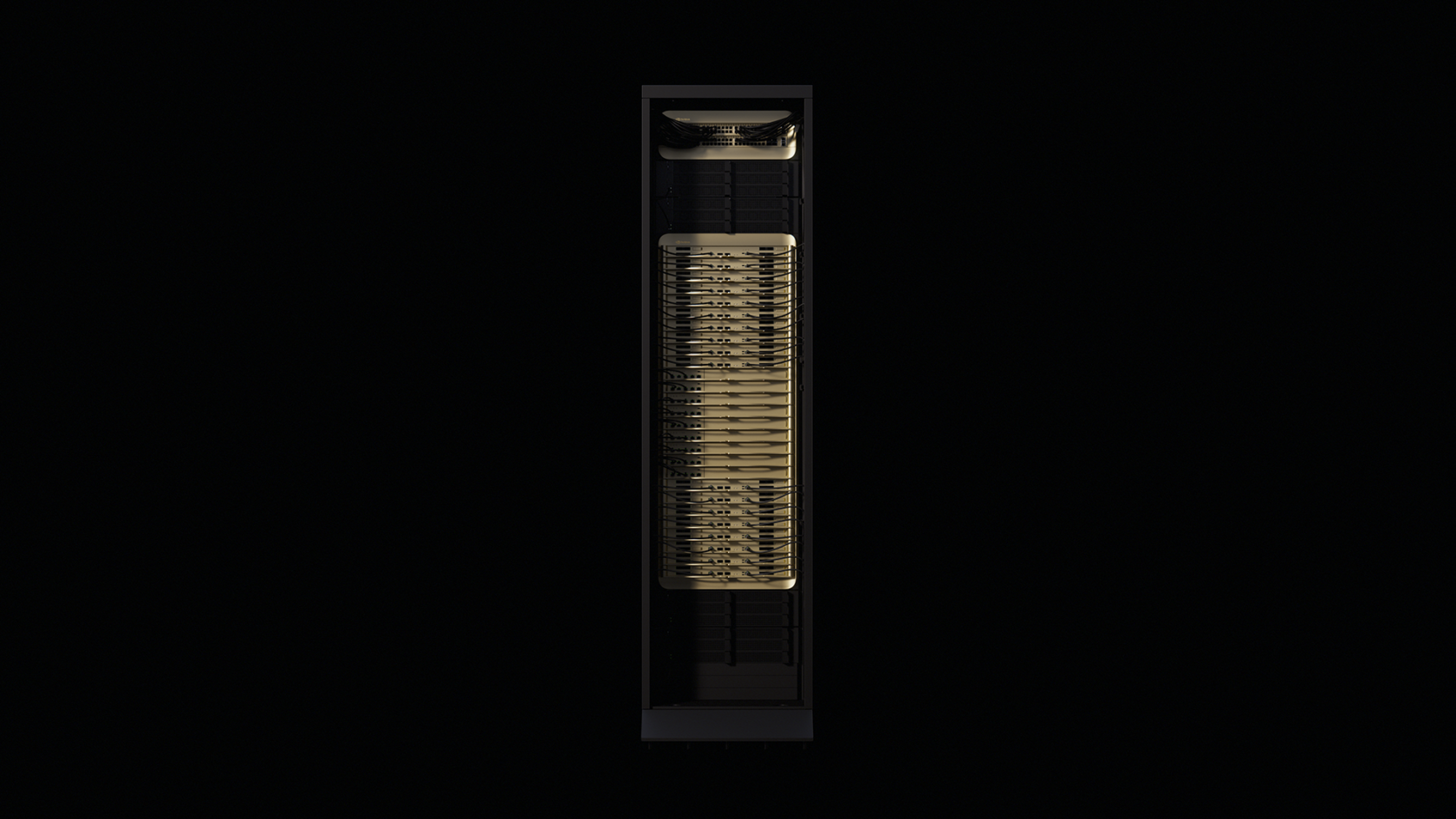
The platform pairs a new NVIDIA-designed CPU, named Vera, with a next-generation GPU called Rubin, both named after the American astronomer Vera Rubin, whose work provided evidence for dark matter. This follows NVIDIA's established pattern of naming architectures after scientists, and it succeeds the Grace CPU and Blackwell GPU generation. The tight coupling of CPU and GPU through high-bandwidth NVLink interconnects is central to the design, allowing memory and compute resources to be treated more like a single large system than a collection of discrete chips. Rubin is expected to use next-generation high-bandwidth memory, reported to be HBM4, which increases the bandwidth available for feeding data to the processor, a common bottleneck in large language model workloads.
Performance per watt matters because power, not floor space or even chip supply, has become the limiting factor for many operators. Grid connections, cooling capacity, and electricity costs cap how many accelerators a facility can realistically run. If Vera Rubin can deliver more tokens or more training throughput for the same amount of energy, an operator can either serve more customers within an existing power envelope or lower the energy cost embedded in every AI query. NVIDIA frames this in terms of what it calls AI factories, where the relevant output is tokens produced and the relevant input is energy consumed, making efficiency a direct driver of margin.
The emphasis on per-token cost reflects how the industry's center of gravity has moved from training to inference. Training a model is a large but finite expense, whereas inference recurs every time a user interacts with a service, and at scale it can dominate total cost of ownership. Lowering the cost per token therefore has an outsized effect on the profitability of AI products, which is why cloud providers and enterprises evaluating deployments watch this figure closely. NVIDIA argues that architectural gains, combined with software optimizations in its inference stack such as TensorRT and the Dynamo serving framework, compound to reduce that cost. Actual savings will depend heavily on model size, workload mix, and how effectively customers tune their systems, so specific figures should be treated as vendor projections until independent benchmarks appear.
Context helps explain the stakes. Vera Rubin arrives as competition intensifies. AMD continues to push its Instinct MI300 and successor accelerators, while hyperscalers including Google, Amazon, and Microsoft are investing in custom silicon, such as TPUs, Trainium, and in-house designs, partly to reduce dependence on any single supplier. Efficiency claims are one way NVIDIA seeks to defend its dominant position, which rests not only on hardware but on the CUDA software ecosystem that many developers already rely on. The company's broader strategy also spans networking, through its Spectrum-X and NVLink technologies, and reference rack designs that integrate compute, memory, and cooling, reflecting a move toward selling systems rather than components.
For partners, the practical appeal is a more predictable path to scaling AI services without proportionally scaling energy bills or capital outlay. Rack-scale integration is likely to matter as much as the chips themselves, because dense, power-hungry accelerators increasingly require liquid cooling and carefully engineered power delivery that individual buyers struggle to assemble alone. Prospective customers will nonetheless want to weigh migration effort, supply availability, and total cost against alternatives before committing.
As with any newly introduced architecture, real-world results will become clearer once systems ship in volume and third parties publish comparative measurements. Until then, Vera Rubin represents NVIDIA's stated direction for the next phase of AI infrastructure, one in which efficiency and token economics, rather than headline performance alone, appear to be the decisive competitive terrain.
ポコとTECHガイドPoko & TECH Guide
ポコと当サイトのTECHガイドが、記事の要約と収集した情報から読みどころを語るAI生成の対話です。Poko and TECH Dashboard's own TECH Guide discuss the article's highlights in an AI-generated conversation based on its summary and collected source details.
- ポコPokoVera Rubinって、何が新しいの?「ワット当たり性能」と「トークンコスト」もよく分からない!What’s new about Vera Rubin? I’m also not sure what “performance per watt” or “token cost” means!
- TECHガイドTECH Guide簡単に言うと、少ない電力でより多く処理し、AIが扱う言葉の小さな単位ごとの推論費用も抑える設計じゃよ。Simply put, it’s designed to do more processing with less power and lower the inference cost for each small unit of text an AI handles.
- ポコPokoへえ、それって何が嬉しいの?AIをたくさん動かす会社ほど助かるってこと?Oh, nice! So does that help companies that need to run lots of AI?
- TECHガイドTECH Guide記事によれば、データセンターの運用コストを最適化し、大規模なAI導入をより効率的で経済的にできるということじゃな。According to the article, it can optimize data center operating costs and offer a more efficient, economical path to deploying AI at scale.
- ポコPokoつまり、電力を効率よく使って、AIの回答を作る費用も抑えられるのが強みなんだね!So the big advantage is using power more efficiently while reducing the cost of generating AI responses!
- TECHガイドTECH Guideその通りじゃ。生産が拡大中で、記事に挙がるクラウド各社のラックが稼働している点も今後の見どころじゃよ。Exactly. Production is ramping up, and another point to watch is that racks are already running at the cloud partners named in the article.